
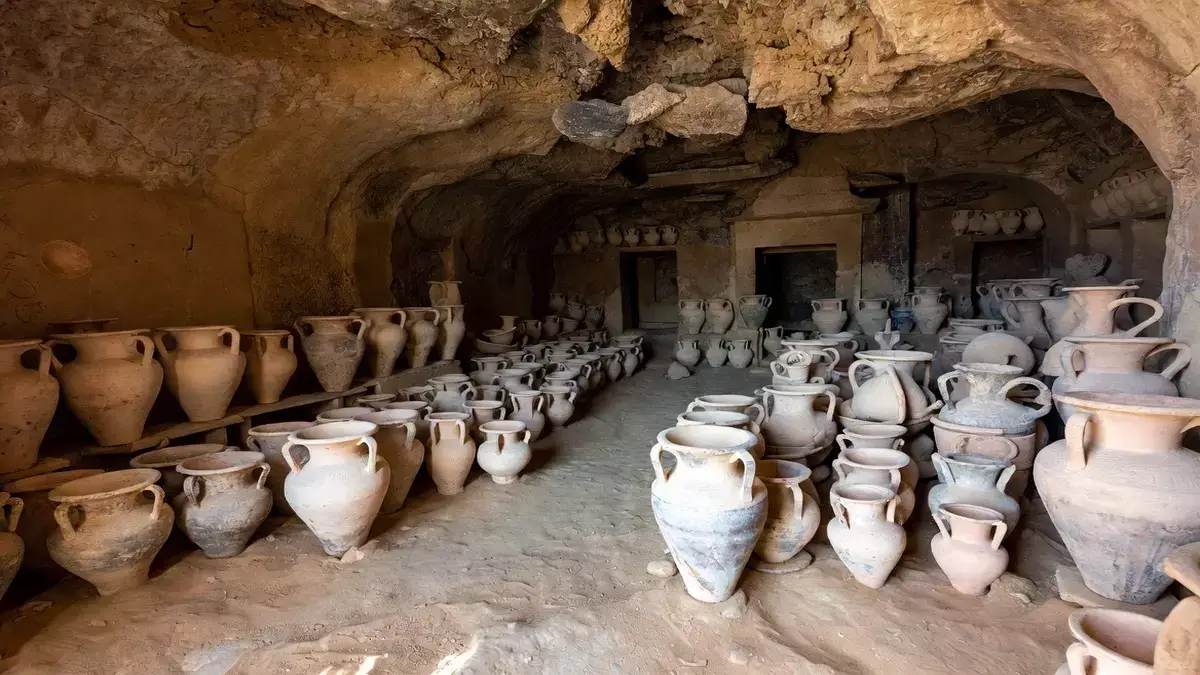
**160 Pottery Vessels Discovered in Old Kingdom Tombs at Qubbet el Hawa**
Archaeologists in Egypt have made a remarkable discovery at Qubbet el Hawa, uncovering a cluster of rock-cut tombs from the Old Kingdom filled with an impressive collection of pottery and other artifacts. This find sheds new light on ancient Egyptian burial practices, elite life along the southern frontier, and how generations reused sacred spaces over centuries in the Aswan region.
Located on the west bank of the Nile, Qubbet el Hawa continues to reveal secrets of Egypt’s rich past. The latest excavations by the Supreme Council of Antiquities have exposed well-preserved chambers and shafts containing around 160 pottery vessels, many still intact after more than 4,000 years. These discoveries offer a vivid glimpse into funerary customs and daily provisions for the afterlife during one of ancient Egypt’s most iconic periods.
160 Pottery Vessels Discovered in Old Kingdom Tombs at Qubbet el Hawa
 Manual of Egyptian Archaeology (PDF)
### The Latest Discoveries at Qubbet el Hawa
The newly uncovered tombs date primarily to the Old Kingdom (approximately 2686–2181 BCE), a golden age of pyramid construction and strong central government. Carved directly into the rocky hillside overlooking the First Cataract of the Nile, these burial complexes served high-ranking officials and governors responsible for managing Egypt’s vital southern border.
Excavators cleared a network of shafts and chambers, revealing sophisticated rock-cut architecture typical of the era. The tombs were not isolated; evidence shows they were reused during the First Intermediate Period and again in the Middle Kingdom. Changes in blocking stones, layered deposits, and artifact placement demonstrate how later Egyptians adapted and expanded earlier burial sites to meet their needs.
This long-term reuse highlights the enduring sacred nature of Qubbet el Hawa. Families and officials returned to ancestral tombs, adding new burials and goods while respecting the original structures—an important insight into Egyptian concepts of continuity between generations and the afterlife.
### A Treasure Trove of Pottery Vessels
One of the most exciting aspects of the discovery is the large assemblage of approximately 160 pottery vessels recovered from two main chambers. Many were found intact, a rare occurrence that provides exceptional detail about ancient Egyptian craftsmanship and funerary provisioning.
Several jars bear hieratic inscriptions—cursive script used for everyday and administrative records. These markings likely noted contents such as oils, beer, wine, or grain, essential offerings to sustain the deceased in the next world. The careful arrangement of vessels suggests deliberate placement rather than haphazard deposition, reflecting organized funerary rituals.
For archaeologists, this collection is invaluable. It reveals the types of foods and liquids prepared for burial in southern Egypt during the Old Kingdom. The vessels also offer clues about local production techniques, trade networks reaching up the Nile, and the economic resources available to elite families at the frontier.
### Grave Goods Revealing Middle Kingdom Reuse
While the core tombs originated in the Old Kingdom, objects found in the outer courtyard point to later activity. Middle Kingdom items (around 2055–1650 BCE) include elegant copper alloy mirrors, alabaster containers for kohl (eyeliner), colorful bead necklaces, and protective amulets. These personal items reflect evolving burial customs and the continued importance of the site.
Mirrors and cosmetic containers were common in elite women’s burials, symbolizing beauty and renewal in the afterlife. Beads and amulets carried magical protection, highlighting the deeply spiritual nature of Egyptian funerary practices. Their presence alongside older pottery demonstrates how the tomb complex served multiple generations, with later users honoring earlier burials while adding their own contributions.
### Qubbet el Hawa: Guardian of Egypt’s Southern Frontier
Qubbet el Hawa, meaning “Dome of the Wind,” has long been recognized as one of Aswan’s most significant necropolises. Perched on a hill with commanding views of the Nile, it housed tombs of powerful governors who controlled trade, defended borders, and facilitated expeditions into Nubia.
Burials here span from the early Old Kingdom through the Greco-Roman period, creating a remarkable stratigraphic record of cultural and political changes. Officials buried at the site oversaw quarrying of granite for royal monuments, managed caravans, and maintained diplomatic relations with southern neighbors.
The new tombs add depth to this timeline. They provide fresh evidence of how frontier elites prepared for eternity, blending local traditions with broader Egyptian religious beliefs centered on the journey to the afterlife.
### Insights into Ancient Egyptian Burial Customs
Egyptian tombs were more than resting places—they were equipped as eternal homes stocked with everything needed for the next life. The 160 vessels at Qubbet el Hawa exemplify this belief. Grain and liquids represented sustenance, while personal items like mirrors and amulets ensured comfort and protection.
The reuse of tombs also reveals practical and cultural adaptations. During unstable periods like the First Intermediate Period, families may have consolidated resources by returning to established ancestral sites. By the Middle Kingdom, renewed prosperity allowed for renewed investment in older sacred spaces.
Hieratic inscriptions on pottery are particularly exciting. They offer potential direct evidence of names, titles, or offerings, which could help identify specific individuals or families. Ongoing study of these texts, combined with architectural analysis, promises richer biographies of the buried officials.
### Scientific Methods and Ongoing Research
The Egyptian mission is meticulously documenting every aspect of the discovery. Detailed recording of tomb architecture, pottery styles, inscriptions, and small finds will contribute to broader studies of Old and Middle Kingdom material culture in Upper Egypt.
Future excavations nearby aim to explore additional chambers and clarify patterns of reuse. Advanced techniques, such as residue analysis on pottery or 3D modeling of the complex, may reveal even more about ancient diets, trade, and ritual practices.
This work aligns with Egypt’s commitment to preserving and studying its heritage while sharing discoveries with the world. Finds like these enhance our understanding of daily life and belief systems along the Nile.
### Why These Discoveries Matter Today
Ancient Egyptian tombs continue to captivate global audiences because they connect us to universal human concerns: mortality, legacy, and hope for an afterlife. The Qubbet el Hawa finds humanize elite officials who once managed a strategic frontier, showing their practical preparations for death alongside their powerful roles in life.
For modern Egyptology, such discoveries refine chronologies, illuminate regional variations in burial customs, and demonstrate cultural resilience across turbulent periods. They also underscore the value of continued excavation in well-known sites, where new layers of history still await revelation.
As climate change and tourism pressures affect Nile-side monuments, careful archaeological work helps preserve these irreplaceable sites for future generations.
### The Enduring Legacy of Qubbet el Hawa
Qubbet el Hawa stands as a testament to the enduring importance of the Aswan region in ancient Egyptian civilization. From Old Kingdom governors overseeing grand construction projects to Middle Kingdom families honoring their ancestors, the hill encapsulates centuries of history, faith, and adaptation.
The 160 pottery vessels and associated artifacts bring us closer to the individuals who shaped Egypt’s southern frontier. Each intact jar and inscribed sherd tells a story of care, belief, and continuity that transcends time.
**Conclusion**
The recent discoveries at Qubbet el Hawa enrich our knowledge of Old Kingdom burial practices while illustrating how later generations interacted with their ancestors’ resting places. With 160 pottery vessels, elegant grave goods, and clear evidence of multi-period use, these tombs provide an exceptional window into life and death in ancient Upper Egypt.
As researchers continue their careful work, Qubbet el Hawa will undoubtedly yield more insights into the social, economic, and spiritual world of Egypt’s frontier elite. These finds remind us why Egypt’s ancient heritage continues to inspire awe and fascination worldwide, offering timeless lessons about human preparation for eternity and the enduring power of memory.
### FAQ
**What is Qubbet el Hawa?**
A major ancient necropolis on the west bank of the Nile at Aswan, known for rock-cut tombs of officials and governors spanning multiple Egyptian historical periods.
**How many pottery vessels were discovered?**
Approximately 160 vessels, many intact and some bearing hieratic inscriptions, primarily from the Old Kingdom.
**When were the tombs originally built?**
During the Old Kingdom (around 2686–2181 BCE), with clear evidence of reuse in the First Intermediate Period and Middle Kingdom.
**What other artifacts were found?**
Middle Kingdom items including copper mirrors, alabaster kohl containers, bead necklaces, and amulets, alongside the earlier pottery.
**Why is this discovery important?**
It provides direct evidence of funerary provisioning, tomb reuse practices, and daily goods in southern Egypt, enhancing understanding of elite burial customs over centuries.
**Who is excavating the site?**
An Egyptian archaeological mission from the Supreme Council of Antiquities, focusing on documentation and further exploration of the area.
**Can visitors see the new tombs at Qubbet el Hawa?**
Some areas are accessible to tourists, but active excavation zones may have restrictions. Check with Egyptian antiquities authorities for current access and museum displays of related artifacts.