
**Prehistoric Polish Farmers Master New Crops and Strategies**
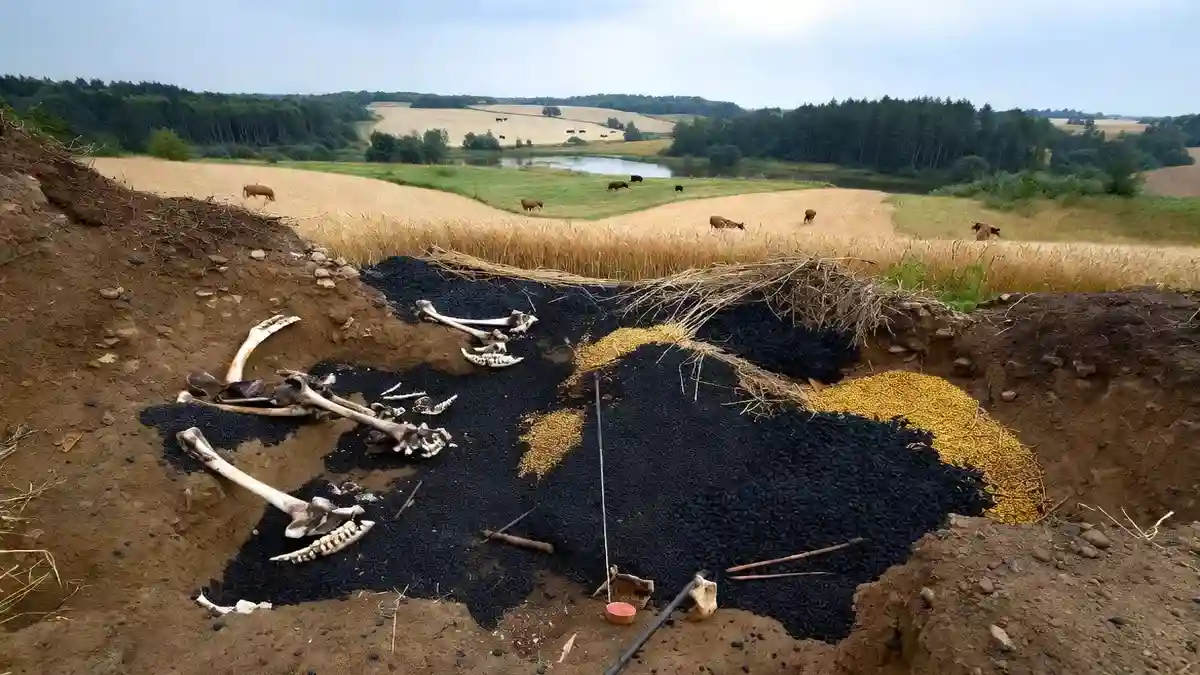
Ancient communities in north-central Poland demonstrated remarkable adaptability, transforming their diets and farming practices over more than 3,000 years. A groundbreaking study from the Kuyavia region reveals how Neolithic and Bronze Age societies navigated environmental challenges, cultural shifts, and social changes through clever adjustments in crop choices, herding patterns, and resource use between 4100 and 1230 BCE.
By analyzing bones, teeth, animal remains, and charred plants from 84 individuals, researchers have painted a detailed picture of daily life in a region often overlooked due to poor preservation of organic materials. These findings challenge simplistic views of prehistoric Europe and highlight how local innovation shaped long-term survival in forested and riverine landscapes.
Prehistoric Polish Farmers Master New Crops and Strategies

### Reconstructing Diets in a Challenging Landscape
Kuyavia, located in north-central Poland, features a mix of woodlands, river valleys, and fertile soils that supported human settlement for millennia. However, acidic soils and decaying wooden structures left few artifacts for traditional study. Stable isotope analysis of carbon and nitrogen in human and animal bones, combined with precise radiocarbon dating, filled these gaps effectively.
Middle and Late Neolithic farmers (roughly 4100–2800 BCE) built their economy around cereals and cattle. High nitrogen levels in charred grains indicate intensive manuring practices—spreading animal waste on fields to boost yields. This technique enriched crops but also affected human isotope signatures, leading earlier studies to overestimate meat consumption. In reality, plant foods formed the dietary foundation, with cattle providing secondary resources like milk and traction power.

Livestock grazed in diverse environments, from wooded edges to wet valleys, rather than open pastures. This flexible herding strategy maximized available resources while minimizing conflict with neighboring groups.
### The Arrival of Corded Ware Communities
Around 2800 BCE, new groups associated with the Corded Ware culture entered the region, bringing distinct traditions. Early Corded Ware herders utilized forest margins and river valleys—areas less intensively farmed by established communities. Isotope data from their livestock reflect this separation, suggesting initial avoidance of prime agricultural land.
 Popcorn’s discovery 7,000 years ago: archaeologist explores its ancient appeal in the Americas
Over generations, however, dietary patterns converged. Later Corded Ware individuals show isotope values closer to those of long-term farmers, indicating increased interaction, trade, and shared herding practices. This gradual integration demonstrates how cultural newcomers adapted to local conditions while influencing existing systems.
Such transitions were not abrupt replacements but complex processes of exchange and negotiation that strengthened regional resilience.
### Millet Revolution in the Middle Bronze Age
One of the most significant dietary shifts occurred around 1200 BCE with the introduction of broomcorn millet—a fast-growing C4 crop well-suited to varied climates. Millet’s distinct carbon isotope signature appears clearly in human bone collagen from this period.
Adoption was uneven across communities. Some groups embraced millet heavily, benefiting from its reliability as a supplementary or staple food. Others continued traditional cereal-based diets with minimal change. This variation likely reflected differences in soil suitability, labor organization, and cultural preferences.
Burial practices evolved alongside food choices. Certain groups reused communal tombs over generations, emphasizing ancestry and continuity. Others adopted paired burials in elongated pits—sometimes placing individuals foot-to-foot—possibly signaling new social identities or alliances. These patterns suggest that dietary innovation and ritual behavior helped mark group boundaries even within the same region.
### Social Inequality Hidden in Bones
Nitrogen isotope variation reveals unequal access to animal protein, particularly during the Early Bronze Age. Wider spreads in values indicate that some households enjoyed more meat or dairy while others relied more heavily on plants. Remarkably, these dietary differences appear despite relatively modest grave goods, showing that social distinctions existed but expressed themselves subtly in daily life rather than flashy displays of wealth.
This finding underscores a key insight: prehistoric inequality often left biochemical rather than monumental traces. In Kuyavia, status may have been tied to control of herds, access to manured fields, or participation in emerging trade networks.
### Environmental Adaptation and Mixed Farming Continuity
Throughout the 3,000-year span, communities maintained a mixed farming system centered on cereals and cattle. Within this continuity, they demonstrated flexibility—shifting herding zones to avoid overexploitation, incorporating new crops like millet during periods of climatic or demographic pressure, and adjusting to interactions with incoming groups.
Peripheral regions like Kuyavia did not passively follow trends from central Europe. Local farmers tailored strategies to their specific mosaic of forests, wetlands, and arable land. River valleys provided seasonal grazing and fishing opportunities, while woodlands supplied timber, fodder, and wild resources.
This adaptive approach helped sustain populations through cultural transitions, including the spread of Corded Ware and later Tumulus culture influences visible in Middle Bronze Age graves.
### Why Isotope Analysis Transforms Our Understanding
Traditional archaeology in areas with poor preservation often struggles to reconstruct subsistence. Stable isotopes offer a direct window into what people actually ate and how they moved across landscapes. Carbon isotopes distinguish between C3 plants (like wheat and barley) and C4 plants (like millet), while nitrogen levels reflect manuring and trophic position in the food chain.
When paired with radiocarbon dating of each individual, these methods create high-resolution timelines that link specific people to broader economic changes. The Kuyavia project exemplifies this powerful interdisciplinary approach, combining bioarchaeology, archaeobotany, and zooarchaeology.
### Broader Context in European Prehistory
The Polish findings align with wider patterns across Neolithic and Bronze Age Europe. The Corded Ware phenomenon involved both migration and cultural diffusion, with diets adapting to new environments. Millet’s spread in the Bronze Age reflects growing connectivity and experimentation with drought-resistant crops amid fluctuating climates.
In northern Europe, where growing seasons are shorter, such innovations were particularly valuable. Communities that successfully integrated millet gained advantages in food security, potentially supporting population growth or specialization.
Comparisons with neighboring regions reveal both shared trends and local distinctiveness. Kuyavia’s emphasis on woodland and valley herding contrasts with more open-plain strategies elsewhere, illustrating the importance of regional studies.
### Modern Lessons from Ancient Adaptability
Understanding how prehistoric societies modified diets and farming offers valuable perspectives for today. As climate change challenges modern agriculture, lessons from Kuyavia—flexible land use, crop diversification, and integration of new species—feel increasingly relevant.
Sustainable manuring practices, mixed farming systems, and attention to social equity in resource access are principles with ancient roots. Bioarchaeological research like this also enriches public appreciation of heritage, showing how ordinary people drove long-term cultural and economic transformations.
### Ongoing Research and Future Directions
The University of Gdansk-led team continues to refine interpretations through additional analyses. Future work may incorporate more plant remains, dental calculus for direct dietary evidence, and ancient DNA to explore population movements and health impacts.
Expanding the sample size and comparing results with other Polish and European sites will further clarify regional variations. As techniques improve, researchers hope to reconstruct seasonal dietary patterns and individual life histories in even greater detail.
**Conclusion**
Ancient communities in prehistoric Kuyavia mastered changing environments and cultural landscapes through thoughtful adaptations in diet, farming, and herding. From manured cereal fields and woodland grazing in the Neolithic to millet integration and subtle social distinctions in the Bronze Age, these societies demonstrated resilience and innovation that sustained them for millennia.
This research, published in *Royal Society Open Science*, moves beyond broad cultural labels to reveal the lived experiences of real people. It shows how food choices intertwined with social identity, ritual practice, and economic strategy in one corner of prehistoric Europe.
By illuminating these deep-time adaptations, archaeologists provide not only historical insight but also inspiration for addressing contemporary challenges in food security and environmental management. The bones and grains from Kuyavia remind us that human ingenuity in the face of change is one of our oldest and most enduring traits.
### FAQ
**What time period does the Kuyavia study cover?**
The research examines diets and economies from the Middle Neolithic to the Middle Bronze Age, spanning approximately 4100 to 1230 BCE.
**How did researchers determine ancient diets?**
They used stable carbon and nitrogen isotope analysis on human and animal bones, combined with charred plant remains and precise radiocarbon dating.
**What was the role of millet in Bronze Age Poland?**
Broomcorn millet became an important C4 crop around 1200 BCE, adopted unevenly by communities and often linked to changes in burial practices.
**Did social status affect prehistoric diets in Kuyavia?**
Yes. Isotope data reveal unequal access to animal protein, indicating dietary differences even when grave goods showed limited material inequality.
**How did Corded Ware groups adapt to the region?**
Early herders used different landscapes than established farmers, but diets gradually aligned over centuries through interaction and shared practices.
**Why is this study important for understanding European prehistory?**
It demonstrates local adaptations rather than uniform cultural shifts, highlighting the value of isotope methods in regions with poor artifact preservation.
**What farming strategies persisted across millennia?**
Mixed cereal cultivation and cattle herding remained central, with flexible use of woodlands, valleys, and manuring techniques supporting long-term sustainability.