
Table of Contents
- 1. The Biomolecular Revolution in Roman Archaeology
- 1.1. Extracting Hidden Data from Ancient Skins
- 2. Ground Zero for Preservation: The Vindolanda Vault
- 2.1. Mapping Regional Trends Across Europe
- 3. Public Impact and Saving Threatened History
- 3.1. A Race Against Climate Change
- 4. Frequently Asked Questions
- 4.1. Why has the Roman leather economy been ignored for so long compared to other industries?
- 4.2. How can scientists determine an animal’s geographic origin from an old shoe?
- 4.3. What makes the Vindolanda archaeological site so important for organic materials?
- 4.4. How did the Roman military utilize leather on a daily basis?
- 4.5. How is modern climate change threatening undiscovered Roman artifacts?
Unlocking the Secrets of the Roman Empire’s Massive Leather Economy
A pioneering, multi-year research project is set to fundamentally challenge our current understanding of the Roman Empire’s economy by focusing on an overlooked yet critical material: leather. Despite being absolutely central to ancient civilization—driving everything from frontline military logistics to transcontinental trade and daily civilian life—the leather trade has historically received little attention compared to stone, currency, or ceramics.
This major three-year scientific initiative, spearheaded by Teesside University, will explore how leather was produced, distributed, and utilized across ancient Roman territories. By deploying advanced scientific techniques, the project aims to solve long-standing historical mysteries caused by the naturally poor survival of organic materials in the archaeological record.
Unlocking the Secrets of the Roman Empire’s Massive Leather Economy
The Biomolecular Revolution in Roman Archaeology
The ambitious project marks a major milestone as the first large-scale biomolecular investigation ever conducted on Roman leather artifacts. Leading the international effort is Dr. Gillian Taylor, an associate professor at Teesside University’s School of Health and Life Sciences.
To bridge the gap between hard science and historical analysis, Dr. Taylor is collaborating with a network of specialists from University College London (UCL), Western University in Canada, and North Carolina State University in the United States.
Extracting Hidden Data from Ancient Skins
Instead of relying solely on visual assessments, the research team will combine cutting-edge laboratory techniques with traditional archaeological and historical expertise. By analyzing leather objects recovered from key Roman strongholds across Britain, the Netherlands, and Syria, the team will extract biomolecular data capable of answering specific questions:
Species Identification: Determining exactly what types of animals were farmed to supply the empire’s insatiable demand for hides.
Sex and Age Profiles: Mapping out whether specific manufacturing pipelines favored male or female animals, or younger versus older livestock.
Geographical Sourcing: Tracking the chemical signatures within the leather to figure out if hides were processed locally or transported across vast imperial supply lines.
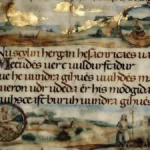
The resulting dataset will allow historians to reconstruct complex patterns of ancient animal husbandry, manufacturing practices, and the sprawling logistical networks that sustained both heavily armored legions and civilian populations throughout the Mediterranean and Europe.
Ground Zero for Preservation: The Vindolanda Vault
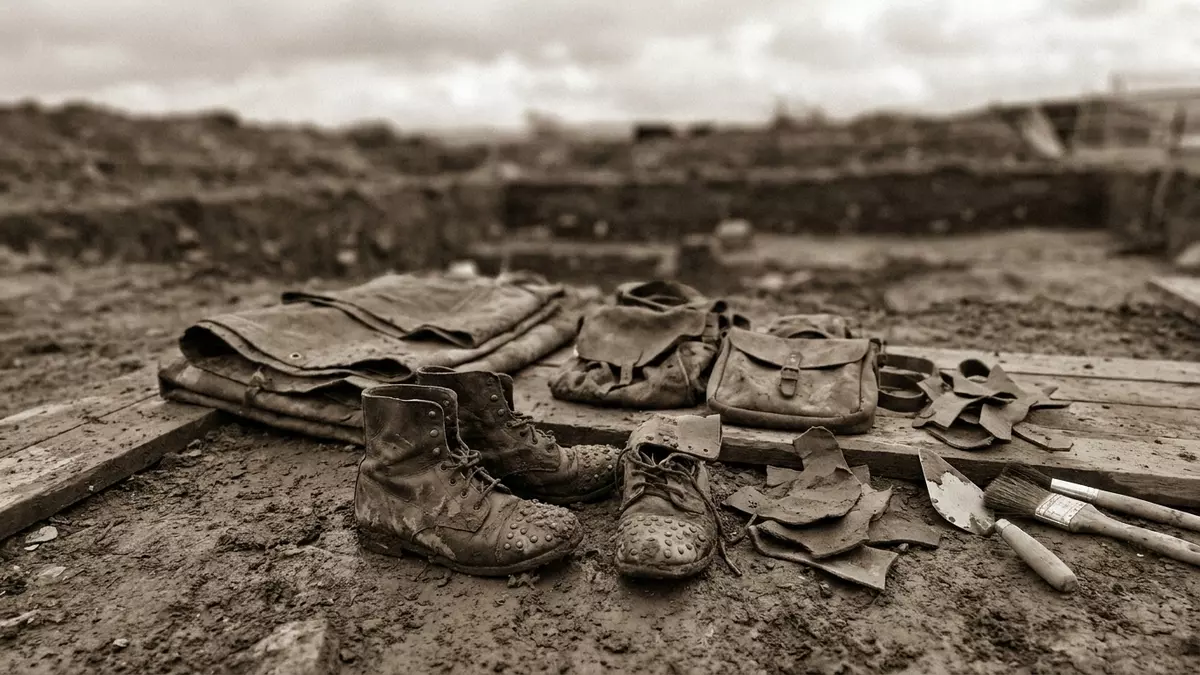
The empirical core of this groundbreaking study is Vindolanda, an ancient Roman auxiliary fort situated just south of Hadrian’s Wall in northern England. Vindolanda is world-renowned among archaeologists for its unique, oxygen-free, waterlogged soil conditions. This anaerobic environment acts as a natural time capsule, preventing the bacteria that normally rot organic matter from destroying delicate artifacts.
┌────────────────────────────────────────────────────────┐
│             VINDOLANDA'S ANAEROBIC TIME CAPSULE         │
│                                                        │
│  [Waterlogged Soil] ──► [Blocks Oxygen] ──► [Prevents]  │
│                                             Decay      │
│                                                        │
│   Preserved Artifacts Yielding Ancient DNA:            │
│   • Military footwear (Caligae)                        │
│   • Heavy leather marching tents                       │
│   • Everyday bags, clothing, and offcuts               │
└────────────────────────────────────────────────────────┘
Because of these unique preservation conditions, Vindolanda boasts the largest and most diverse collection of Roman-era leather artifacts found anywhere in the world. Thousands of everyday objects, including intricately designed shoes, heavy leather marching tents, utility bags, and scrap offcuts, have emerged from the mud in near-perfect structural condition.
Mapping Regional Trends Across Europe
To prevent the study from becoming too localized, the research team is expanding its scope far beyond northern Britain. They are pulling additional artifact data from extensive excavations at Trimontium in Scotland, as well as the key continental Roman settlements of Valkenburg and Vechten in the Netherlands.
By comparing the biomolecular data across these diverse geographic zones, the team will be able to perform detailed regional comparisons. This will reveal whether leather production was standardized by the Roman military state or if local populations adapted their tanning and manufacturing styles to fit their specific local environments.
Public Impact and Saving Threatened History
This sweeping international project relies on close, cross-border institutional cooperation. Teesside University is working hand-in-hand with major cultural custodians, including the Vindolanda Trust, the National Museum of Scotland, and the National Museum of Antiquities in the Netherlands. These partners are providing scientists with direct physical access to their guarded collections while co-developing public engagement initiatives to share these historic discoveries with global audiences.
A Race Against Climate Change
Beyond expanding our knowledge of early European trade, the study carries a vital, time-sensitive application for modern conservation science. Rapidly shifting global climate patterns are actively accelerating the destruction of crucial archaeological sites worldwide.
As water tables drop and soils dry out due to prolonged droughts, oxygen is penetrating previously sealed archaeological layers. This environmental shift triggers rapid decay, threatens to permanently dissolve delicate organic materials like leather, wood, and textiles before they can ever be discovered.
The preservation models and chemical insights generated by Dr. Taylor’s team will provide modern field archaeologists with advanced strategies to rapidly identify, recover, and stabilize endangered organic artifacts. In doing so, this dive into the ancient Roman economy will directly help save the world’s remaining hidden heritage from turning to dust.
Frequently Asked Questions
Why has the Roman leather economy been ignored for so long compared to other industries?
Leather is an organic material that rots rapidly when exposed to oxygen and moisture. Because it rarely survives in the archaeological record, historians naturally focused on durable materials like pottery, stone inscriptions, and coins. This project uses advanced biomolecular tools to finally extract data from rare, surviving specimens.
How can scientists determine an animal’s geographic origin from an old shoe?
By analyzing ancient DNA (aDNA) and tracing stable isotope signatures preserved inside the collagen proteins of the tanned leather, scientists can match the biological profile of the hide to specific geographic regions and livestock breeds of the ancient world.
What makes the Vindolanda archaeological site so important for organic materials?
Vindolanda features highly unique, waterlogged soil conditions that completely seal out oxygen. This anaerobic environment prevents the micro-organisms responsible for decomposition from surviving, preserving thousands of delicate leather shoes, tents, and written wooden tablets for nearly two millennia.
How did the Roman military utilize leather on a daily basis?
Leather was an essential military resource. Beyond footwear like marching boots (caligae), the Roman army required massive amounts of leather to manufacture standard-issue multi-man marching tents, protective shields, horse tack, saddles, utility bags, and clothing linings.
How is modern climate change threatening undiscovered Roman artifacts?
Many undiscovered organic artifacts are preserved precisely because they are sealed within wet, waterlogged soils. As climate change causes severe droughts and shifting water tables, these soils are drying out, allowing oxygen to rapidly rot away priceless historic treasures before they can be excavated.