
Table of Contents
- 1. A Dual Legacy: Domestication and Devotion Under the Earth
- 2. The Hellenistic Cult Structure: Worshiping the Water Gods
- 3. Expanding Europe’s Only Underground Pile Dwelling
- 3.1. The Preservation of the Bronze Age Chisel
- 3.2. Unlocking the Tree Rings
- 4. Pioneering the Future of Underground Archaeology
- 5. Conclusion
- 6. Frequently Asked Questions
- 6.1. What makes the pile dwelling in the Pertosa-Auletta Caves unique?
- 6.2. How did a wooden handle survive for over 3,000 years without rotting?
- 6.3. Which deities were worshipped at the underground Hellenistic shrine?
- 6.4. Is the underground river inside the caves open to the public?
- 6.5. What is “speleo-archaeology” and why does it need special standards?
Subterranean Secrets: Hellenistic Shrine and Bronze Age Wonders Uncovered in Italian Cave
Deep within the karst topography of southern Italy, a subterranean world has just yielded a treasure trove of historical secrets. Archaeologists working inside the majestic Pertosa-Auletta Caves have announced the discovery of a Hellenistic-era sacred sanctuary alongside unprecedented expansions of a prehistoric, underground village.
Located in the Salerno province of Campania, this sprawling 2,500-meter-long cavern network—popularly known as the Grotte dell’Angelo—features Italy’s only navigable underground river. While scientists have long known that humans sought shelter here as far back as 8,000 years ago, the latest excavation season has completely rewritten our understanding of how ancient societies utilized this dark, watery underworld for both survival and spiritual worship.
Subterranean Secrets Hellenistic Shrine and Bronze Age Wonders Uncovered in Italian Cave
A Dual Legacy: Domestication and Devotion Under the Earth
The latest field campaign, successfully executed last year during the 2025 excavation season, conclusively proves that the Pertosa-Auletta complex simultaneously fulfilled two vital roles for ancient populations: it was both a bustling domestic settlement and a deeply revered sacred ground.
+---------------------------+---------------------------------------------------------+
| Cave Feature              | Archaeological Detail                                   |
+---------------------------+---------------------------------------------------------+
| Total System Length       | Approximately 2,500 meters                              |
| Distinctive Landscape     | Karst cave network with navigable subterranean river    |
| Earliest Human Activity   | Roughly 8,000 years before present                      |
| Primary Excavation Teams  | Central Institute for Archaeology (ICA) & MIdA Foundation|
+---------------------------+---------------------------------------------------------+
By carefully navigating the treacherous, humid chambers along the path of the subterranean river, researchers managed to pin down occupational strata separating millennia of human history. The unique subterranean ecosystem, characterized by stable temperatures and intense humidity, acted as a natural time capsule, locking artifacts in place and preventing organic degradation that would have occurred in open-air environments.
The Hellenistic Cult Structure: Worshiping the Water Gods
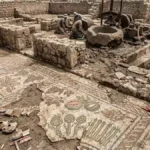
Among the most thrilling announcements from the team is the documentation of a Hellenistic cult shrine dating from the fourth to the first centuries BCE. Erected directly along the banks of the roaring underground river, this sanctuary served as a focal point for intense ritualistic activity for hundreds of years.
Ancient worshippers braved the pitch-black depths of the cavern, guided only by flickering torches, to leave votive offerings to deities associated with water, fertility, and the underworld. The excavation team unearthed an incredible assortment of these sacred items, including:
Sculpted Figurines: Small clay statues representing deities or devotees.
Terracotta Ornaments & Vessels: Finely crafted incense burners and delicate unguent jars used for holding sacred oils or perfumes.
Ancient Coinage: Currency deposited directly into the sanctuary as symbolic tribute.
Botanical Remains: Microscopic traces of deliberately burned plants, pointing to ancient sacrificial smoke rituals.

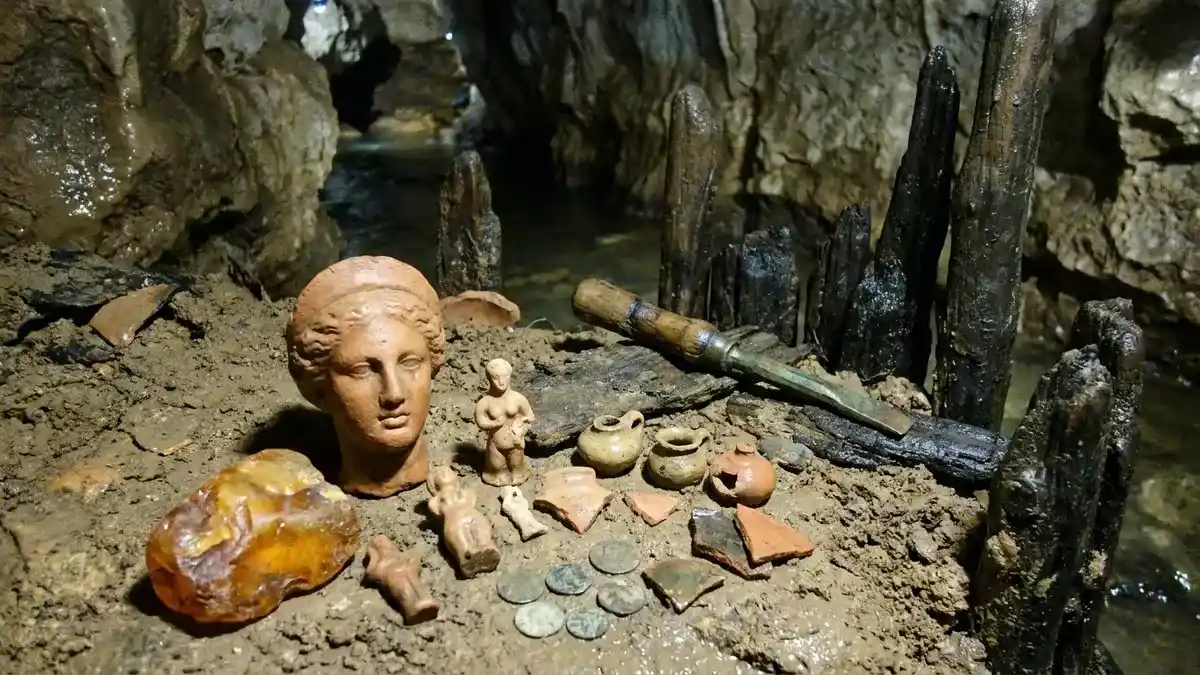
Two artifacts stood out for their exceptional beauty and ritual significance. Archaeologists recovered a remarkably large piece of raw amber, a highly prized luxury trade good in the ancient Mediterranean. Alongside it lay a beautifully preserved terracotta female head. Experts believe this expressive face likely represented a water nymph or a fertility goddess, serving as the literal face of the subterranean cult.
Expanding Europe’s Only Underground Pile Dwelling
Beyond the Hellenistic shrine, the 2025 team pushed deeper into the cave’s prehistoric layers, expanding on previous discoveries of a Middle Bronze Age village dating back to the second millennium BCE.
This structure is a true archaeological anomaly: it is the only known example in all of Europe of a pile-built dwelling—traditionally constructed over open lakes or marshes—erected entirely inside an underground cavern. The Bronze Age inhabitants drove massive wooden stilts directly into the cave floor to suspend their living platforms above the subterranean water levels.
The Preservation of the Bronze Age Chisel
The latest dig uncovered entirely new architectural extensions of this stilt-village. Even more astonishingly, researchers pulled a rare Bronze Age chisel from the sediment.
Thanks to the cave’s perpetual moisture and lack of destructive open-air weathering, the tool’s original wooden handle remained completely intact. Finding preserved organic material attached to a metal tool from more than 3,000 years ago is an exceedingly rare event in Mediterranean archaeology, offering an undiluted look at prehistoric tool engineering.
Unlocking the Tree Rings
The recovered structural wood samples are currently undergoing rigorous laboratory analysis. By employing dendrochronology (tree-ring dating) and isotopic testing, scientists hope to reconstruct the exact engineering techniques used by these prehistoric builders, as well as the precise environmental and climatic conditions that gripped southern Italy over three millennia ago.
Pioneering the Future of Underground Archaeology
Because excavating inside a volatile karst cave system presents extreme physical and preservation challenges, Italy’s Ministry of Culture is using the Pertosa-Auletta project to set a global precedent. The Central Institute for Archaeology (ICA), alongside the MIdA Foundation (which manages the cave system), has launched an innovative pilot project aimed at establishes new methodological standards for the field of speleo-archaeology.
This cutting-edge approach merges traditional, precise dirt-archaeology with advanced digital documentation, 3D laser scanning, and specialized conservation workflows designed specifically for high-humidity environments.
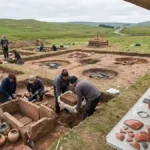
Furthermore, the project has embraced community-driven science by creating an immersive educational pipeline. Local high school students were invited directly into the trenches during the campaign, working alongside elite scientists to discover, document, and preserve the hidden, underground history of their own backyards.
Conclusion
The stunning discoveries inside the Pertosa-Auletta Caves remind us that human history is rarely flat. Beneath the surface of southern Italy lies a complex, multi-layered narrative where Bronze Age engineers built floating homes in total darkness and Hellenistic pilgrims prayed to the gods of the deep. As lab results continue to stream in from the 2025 season, the Grotte dell’Angelo will undoubtedly continue to shed light on the resilient, creative spirit of our ancestors.
Frequently Asked Questions
What makes the pile dwelling in the Pertosa-Auletta Caves unique?
While Bronze Age pile dwellings (stilt houses) are found across various alpine lakes and wetlands in Europe, the structure inside the Pertosa-Auletta Caves is completely unique because it is the continent’s only known example built entirely inside a subterranean cavern system.
How did a wooden handle survive for over 3,000 years without rotting?
Wood normally rots rapidly when exposed to oxygen, fungi, and shifting weather patterns. However, the deep interior of the Pertosa-Auletta Caves maintains a constant, stable humidity level and isolated atmosphere that effectively shielded the organic wood of the Bronze Age chisel from typical decomposition processes.
Which deities were worshipped at the underground Hellenistic shrine?
While no explicit inscriptions have been decoded yet, the shrine’s position right next to a subterranean river, combined with the discovery of a terracotta female head and fertility offerings, strongly suggests the cult was dedicated to water spirits, nymphs, or chthonic (underworld) fertility deities.
Is the underground river inside the caves open to the public?
Yes, the Pertosa-Auletta Caves (Grotte dell’Angelo) are managed by the MIdA Foundation and feature a famous navigable underground river. Visitors can access portions of the cave system via specialized boats, though active archaeological sectors remain restricted to research teams.
What is “speleo-archaeology” and why does it need special standards?
Speleo-archaeology is the specialized study of human archaeological remains inside caves and subterranean cavities. It requires distinct scientific standards because cave environments feature high humidity, unique sediment layers, fragile ecosystems, and complex logistical challenges that make traditional open-air digging methods impractical or dangerous to the artifacts.