
Table of Contents
- 1. The Ill-Fated Voyage of the 1715 Treasure Fleet
- 1.1. A Fleet Burdened with Empire’s Wealth
- 1.2. Caught in a Monstrous Hurricane
- 2. Uncovering the Deep-Sea Cache: What Was Found?
- 2.1. The Legendary Pieces of Eight
- 2.2. Royal Gold and Rare Artifacts
- 3. Exploring Florida’s Famous “Treasure Coast”
- 3.1. Stringent Archaeological Controls and Preservation
- 3.2. From the Ocean Floor to Local Museums
- 4. The True Value: A Bridge to the Colonial Past
- 5. Frequently Asked Questions
- 5.1. What was the 1715 Spanish Treasure Fleet?
- 5.2. Where exactly was this new treasure discovered?
- 5.3. What kind of coins were recovered in the latest find?
- 5.4. Who owns the treasure found off the coast of Florida?
- 5.5. Why are the coins in such good condition after 300 years underwater?
Historic 1715 Spanish Treasure Fleet Yields Over 1,000 Rare Coins
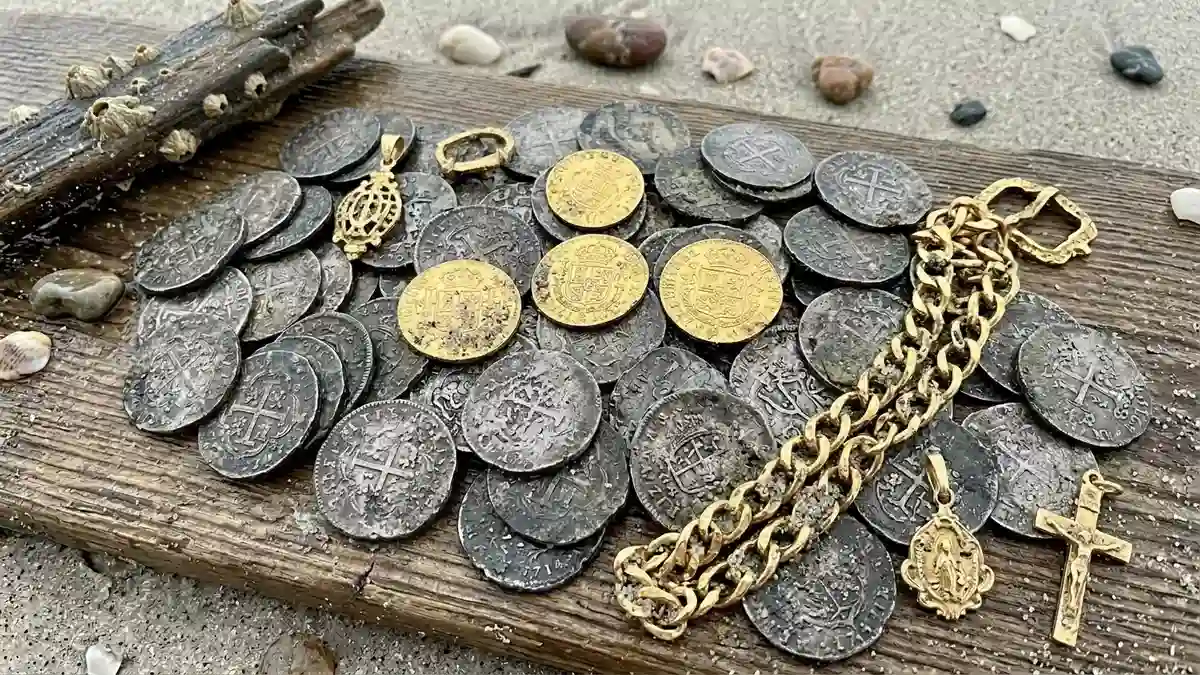
A stunning underwater discovery off Florida’s Atlantic coast has breathed new life into one of the most captivating maritime mysteries in American history. Salvage divers have successfully retrieved a massive hoard of more than 1,000 historic gold and silver coins from the wreckage of the legendary 1715 Spanish Treasure Fleet.
The extraordinary find, recovered by the specialized salvage group 1715 Fleet – Queens Jewels, LLC, represents a major breakthrough in modern marine archaeology. For more than three centuries, this immense wealth lay hidden beneath the shifting ocean sands. Today, its recovery offers an unprecedented window into the height of Spain’s colonial empire and the perilous nature of transatlantic trade during the early 18th century.
Historic 1715 Spanish Treasure Fleet Yields Over 1,000 Rare Coins
The Ill-Fated Voyage of the 1715 Treasure Fleet
To understand the immense historical weight of this discovery, one must look back to the summer of 1715. Spain’s royal treasury was running dangerously low, depleted by years of costly European conflicts during the War of the Spanish Succession. The empire desperately needed an influx of capital, making the safe return of the New World treasure fleet an absolute priority for King Philip V.
A Fleet Burdened with Empire’s Wealth
In late July 1715, a convoy of 12 Spanish vessels—collectively known as the Flota de la Plata or “Plate Fleet”—set sail from the harbor of Havana, Cuba. The ships were heavily laden with an astonishing accumulation of wealth extracted from Spain’s colonial territories across the Americas. Deep within the holds of these wooden galleons lay tons of silver, gold, emeralds, pearls, and Chinese porcelain, collected from the rich mining hubs of Peru, Mexico, and Bolivia.
Caught in a Monstrous Hurricane
The timing of the voyage proved to be a fatal miscalculation. Just days after departing Cuba, as the fleet navigated the treacherous waters of the Florida Straits, the convoy was ambushed by a catastrophic, fast-moving hurricane.
On July 31, 1715, ferocious winds and towering waves battered the wooden fleet, driving the ships violently toward the shallow, jagged reefs of Florida’s eastern coastline. The devastation was absolute. Out of the 12 ships, 11 were utterly destroyed, shattered by the storm and swallowed by the sea.
 Ancient shipwreck with 300 amphorae found off Italy could reshape views of Mediterranean wine trade
Hundreds of sailors and officers perished in the turbulent waters. Historians estimate that the storm claimed valuables worth upwards of $400 million in modern currency. While Spanish authorities and localized salvagers managed to recover portions of the scattered cargo in the immediate years following the tragedy, the vast majority of the wealth sank into the ocean floor, forgotten by time but preserved by the sea.
Uncovering the Deep-Sea Cache: What Was Found?
The latest recovery operation has yielded a remarkably concentrated cache of treasure, a feat that experts note is incredibly rare for modern salvage operations. The sheer volume of artifacts found in a single location suggests that the dive team may have pinpointed the exact spot where a primary cargo hold or a heavily reinforced treasure chest burst open during the ship’s violent destruction.
The Legendary Pieces of Eight
The vast majority of the newly recovered treasure consists of more than 1,000 silver reales. In the 18th century, these heavy silver coins were international currency, popularly known across the globe and in pirate lore as “pieces of eight.”
 14,400 Years Ago, Five People and a Canid Entered an Italian Cave Using Pine Twigs for Light
What makes this particular find so extraordinary is the exceptional condition of the coins. Despite spending more than 310 years submerged in highly corrosive saltwater, many of the silver pieces retain crisp details. Marine archaeologists and numismatists have already identified distinct dates and colonial mint marks stamped into the metal, tracking their origins directly back to the royal Spanish mints operating in Mexico and South America.
Royal Gold and Rare Artifacts
In addition to the massive haul of silver, the salvage team brought up five pristine gold escudos alongside several highly unique, hand-crafted gold artifacts. These gold pieces served as elite currency, often reserved for high-ranking nobility and royal transactions within the Spanish Empire.
This discovery builds upon previous high-profile finds from the 1715 Fleet wrecks. In recent years, treasure hunters working the area have uncovered breathtaking artifacts, including intricate, multi-foot-long gold chains, heavy gold bullion, and a nearly priceless Spanish “tricentennial royal” coin—a flawless piece specially minted to honor King Philip V.
Exploring Florida’s Famous “Treasure Coast”
The dramatic loss of the 1715 fleet permanently transformed the geography and identity of Florida’s eastern seaboard. Today, the 50-mile stretch of coastline spanning from Sebastian to Jupiter is globally renowned as the “Treasure Coast,” drawing history enthusiasts, professional divers, and beachcombers alike.
Stringent Archaeological Controls and Preservation
While the allure of gold and silver evokes images of unregulated pirate treasure hunts, modern recovery efforts on the 1715 Fleet wrecks are highly sophisticated, scientific operations. 1715 Fleet – Queens Jewels, LLC operates under strict management and oversight by the State of Florida.
Every dive is conducted using precise archaeological guidelines to ensure that the exact context, depth, and location of each artifact are meticulously documented. This systematic approach guarantees that the historical data surrounding the shipwreck is preserved alongside the physical objects themselves.
From the Ocean Floor to Local Museums
Once brought to the surface, the coins and artifacts undergo an extensive conservation process. Centuries of exposure to saltwater, marine life, and shifting sands leave the metals vulnerable to rapid deterioration once exposed to oxygen. Experts utilize specialized chemical baths and stabilization techniques to carefully clean and protect the artifacts.
Plans are already underway to distribute a selection of the newly recovered silver reales and gold escudos to various museums throughout Florida. These public exhibitions will provide visitors with a tangible connection to a defining moment in global maritime history, allowing people to stand face-to-face with the authentic riches of the Spanish Empire.
The True Value: A Bridge to the Colonial Past
While the market value of over a thousand colonial-era gold and silver coins is undeniably immense, project historians emphasize that the cultural and educational value far outweighs the monetary worth. Each coin is far more than a piece of precious metal; it is a historical time capsule.
By analyzing the specific mint marks, imperfections, and metal compositions of these coins, researchers can gain deeper insights into:
Colonial Economies: The scale of silver and gold extraction across Peru, Bolivia, and Mexico.
Shipboard Life: The daily realities, wealth disparities, and personal belongings of the sailors who manned these vulnerable wooden fleets.
Transatlantic Trade Networks: The complex global logistics connecting the Americas, Europe, and Asia during the age of sail.
Despite more than three centuries of continuous exploration and landmark discoveries, marine archaeologists are certain that the story of the 1715 Spanish Treasure Fleet is far from over. Millions of dollars in gold, silver, and historical artifacts are believed to remain buried beneath the shifting sands and turbulent surf of the Treasure Coast, waiting for the next storm or the next team of dedicated divers to bring them to light.
Frequently Asked Questions
What was the 1715 Spanish Treasure Fleet?
The 1715 Spanish Treasure Fleet was a convoy of 12 Spanish ships traveling from Havana, Cuba, to Spain. Loaded with massive amounts of silver, gold, and other valuable colonial goods, the fleet was struck by a powerful hurricane off the coast of Florida on July 31, 1715. Eleven of the twelve ships sank, resulting in the loss of hundreds of lives and millions of dollars in treasure.
Where exactly was this new treasure discovered?
The coins and artifacts were discovered off the eastern coast of Florida in an area known as the “Treasure Coast.” This specific region spans roughly 50 miles of coastline where the ships of the 1715 fleet broke apart and scattered their cargo.
What kind of coins were recovered in the latest find?
The recent recovery includes more than 1,000 silver reales (commonly referred to as “pieces of eight”), five gold escudos, and several rare, hand-crafted gold artifacts. Many of the coins feature visible dates and mint marks from Spanish colonial operations.
Who owns the treasure found off the coast of Florida?
Modern salvage operations on historical shipwrecks in Florida waters are strictly regulated by state law. Entities like 1715 Fleet – Queens Jewels, LLC operate under state contracts. The recovery process follows strict archaeological protocols, and a portion of the artifacts is typically retained by the State of Florida for preservation and public display in museums.
Why are the coins in such good condition after 300 years underwater?
Gold is a noble metal that does not corrode or tarnish in saltwater, meaning gold coins often emerge from the ocean looking exactly as they did when they sank. While silver does tarnish and form a protective crust (concretion) in seawater, many of these coins were buried quickly under protective layers of sand, preserving their intricate details for over three centuries.