
Table of Contents
Enigma of the Headless Dead: 7,000-Year-Old Neolithic Mass Grave Intrigues Archaeologists in Slovakia
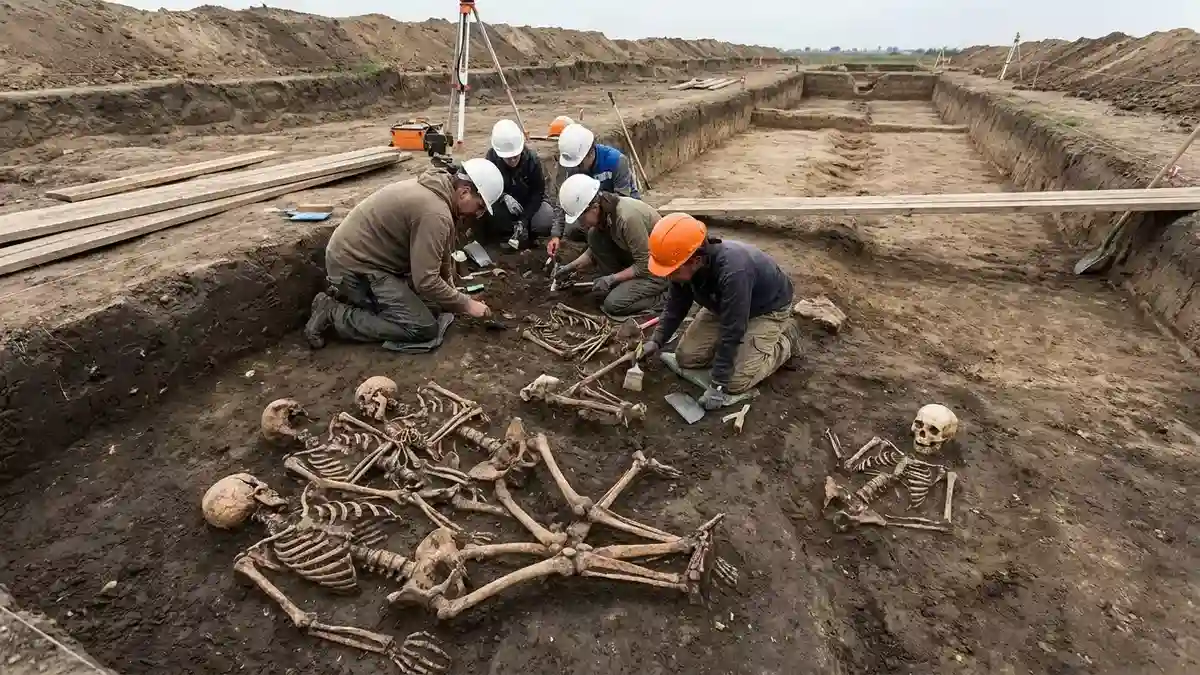
At first glance, the sight is the stuff of ancient nightmares. Deep within a prehistoric defensive trench system in southwestern Slovakia, dozens of human skeletons lie tangled together, thrown on top of one another in an chaotic heap. Most chillingly, out of the tens of bodies systematically pulled from the earth, nearly every single one is entirely missing its skull.
While such a scene initially evokes images of a brutal, primitive slaughter, a groundbreaking study published in the Proceedings of the Prehistoric Society is challenging the narrative of a prehistoric massacre. Instead, international researchers argue that these headless bodies represent a complex, highly deliberate, and deeply ritualized mortuary tradition practiced by some of Europe’s very first farming communities.
The discoveries were made at Vráble-Veľké Lehemby, an archaeological jewel from the Early Neolithic period. Flourishing between 5250 and 4950 BCE, Vráble represents one of the largest and most influential settlement networks of the famous Linear Pottery culture—traditionally referred to by archaeologists as the LBK (Linearbandkeramik). The sprawling site features the remains of more than 300 massive Neolithic longhouses, with up to 80 occupied simultaneously during its peak operational phases.
Enigma of the Headless Dead 7,000-Year-Old Neolithic Mass Grave Intrigues Archaeologists in Slovakia
The Haunting Inventory of the Outer Ditch
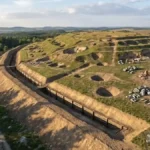
The focus of the latest excavations, which have been systematically carried out since 2022, settled upon a massive defensive ditch enclosing one section of the town. While previous work had turned up sporadic human bones, nothing prepared excavators for the sheer density of human remains concentrated near one of the primary entrance gateways.
The initial excavation reported a shocking 37 skeletons. However, as archaeologists dug deeper into the trench, that number more than doubled, bringing the total count to at least 78 individuals.
Skeletal Demographics at the Vráble Entrance Ditch
├── Total Skeletons Uncovered: 78
├── Skeletons Missing Skulls: 77
└── Skeletons with Skulls Intact: 1 (A single young child)
The physical positioning of the bodies was completely chaotic. Some individuals were laid flat on their backs, others lay face down, and several were twisted into contorted angles, their limbs overlapping and intertwining with neighboring skeletons. Loose, isolated human bones from completely separate individuals were also found floating throughout the sediment layers, underscoring the dynamic nature of the burial pit.
Decapitation vs. Meticulous Disarticulation
The absolute absence of 77 heads has become one of the greatest archaeological mysteries of the 21st century. To determine whether these individuals were violently decapitated in battle or modified after death, anthropologists conducted microscopic examinations of the surviving neck vertebrae.
The results completely altered the direction of the investigation. The bones showed almost no signs of the violent, forceful chopping or crushing trauma typically associated with battle axes, heavy clubs, or messy executions. Instead, the fine cut marks are highly consistent with the precise, surgical, and careful separation of the skull from the body using sharp, delicate tools.
Neolithic Forensic Evidence Checklist
├── Well-articulated neck, hand, and foot joints (Proves bodies were fresh when buried)
├── Microscopic, clean slice marks on cervical vertebrae (Rules out heavy chopping/bludgeoning)
└── Near-total absence of skull fragments in the trench (Proves heads were taken elsewhere)
Furthermore, the state of the skeletons proves that this processing happened perimortem—either immediately before or very shortly after death. The tiny, exceptionally fragile joints of the neck, hands, and feet were found perfectly articulated and intact within the soil. If the bodies had been left to rot or decompose on a battlefield for weeks before being thrown into the ditch, these delicate connections would have instantly fallen apart during transport. The heads were removed while the bodies were entirely fresh.
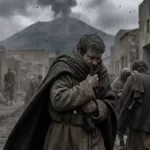
Where Did the Skulls Go?
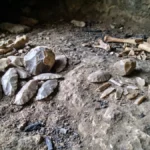
The destination of the 77 missing heads remains a profound mystery. Despite excavating massive swaths of the ditch system, archaeologists recovered only a handful of tiny, isolated skull fragments.
While some prehistoric global cultures are known to have kept, decorated, or publicly displayed the skulls of ancestors or enemies as trophies or religious icons, no direct material evidence for skull storage has yet been uncovered inside the Vráble settlement. The heads simply vanished.
A Broad Culture of Ritual Modification
While the final centuries of the LBK farming culture are frequently associated with rising social instability, resource scarcity, and regional warfare across Central Europe, the authors of the new study believe Vráble represents a far more nuanced, long-term societal practice.
The 78-person mass grave is not an isolated incident. Across the entire site, over 100 individuals have been mapped within the enclosure ditches, showcasing an incredible variety of burial styles. Archaeologists have discovered standard complete burials, isolated limb bones, pairs of headless individuals buried side-by-side, and heavily mixed skeletal deposits.
Varied Funerary Contexts Across the Vráble Settlement
├── Formal Burials: Complete skeletons buried with traditional grave goods
├── Isolated Elements: Rogue limb bones placed inside standard trash pits
└── Mass Depositions: Tailored groupings of headless skeletons near entrance gates
This staggering level of variation proves that skull removal was not a sudden emergency response to a single catastrophic event. Instead, it was a structured, deeply meaningful language of the dead that local communities repeatedly turned to over generations.
To these early farmers, the human head likely held a highly sacred status, acting as the ultimate seat of personal identity, spiritual energy, or ancestral connection. By separating the head from the flesh, they may have been liberating the soul, creating protective boundary talismans to bury near the town gates, or absorbing the power of the deceased back into the living community.
The High-Tech Quest for Answers
As excavation work continues at Vráble, a multidisciplinary team of scientists is deploying an array of laboratory tests to solve the mystery of who these headless people actually were.
Ancient DNA (aDNA) Analysis: Testing is underway to determine if the 78 individuals belonged to a single extended biological family line or if they represented a diverse, mixed population.
Isotope Testing: By measuring strontium and oxygen isotopes locked within the bones, researchers will soon know if these people grew up drinking the local water of Vráble or if they were foreign outsiders captured from distant territories.
Paleopathology Scans: Detailed bone scans will look for signs of malnutrition, childhood disease, or healed injuries to map out the overall quality of life inside the Neolithic town.
For now, the headless dead of Vráble stand as a solemn reminder of the deep, often incomprehensible complexity of Europe’s earliest societies. They prove that 7,000 years ago, the line between life, death, and ancestral memory was shaped by rituals that continue to challenge our understanding of the ancient past.
Frequently Asked Questions
What exactly did archaeologists discover at the Vráble site in Slovakia?
Archaeologists discovered a massive Neolithic burial deposit containing at least 78 human skeletons huddled inside an ancient settlement ditch. Remarkably, 77 of these individuals were completely missing their skulls, with only a single young child buried with their head still attached.
Does this discovery prove that a massive prehistoric massacre took place?
Not necessarily. While the chaotic positioning of the bodies initially looks like a massacre, microscopic analysis of the bones reveals fine, precise cut marks rather than forceful chopping trauma. This suggests the skulls were carefully and surgically removed shortly after death as part of a complex, structured ritual rather than a random act of wartime violence.
How do scientists know the heads were removed while the bodies were fresh?
The skeletons—including the exceptionally fragile joints of the neck, spine, hands, and feet—were found perfectly joined together (articulated) in the ground. If the bodies had decomposed for a long period before losing their heads or being buried, these delicate bone connections would have separated completely.
What was the Linear Pottery (LBK) culture?
The Linear Pottery culture, or LBK, was a major early agricultural civilization that spread across Central Europe during the Early Neolithic period, roughly 7,000 years ago. They are famous for their standardized longhouse architecture, early defensive ditch systems, and distinctive pottery decorated with linear geometric patterns.
What are scientists doing next to solve the mystery of the headless skeletons?
An international team of specialists is currently conducting ancient DNA (aDNA) testing to see if the victims were biologically related, alongside tooth isotope analysis to determine if they were local residents or outsiders from a distant region. They are also meticulously studying bone decomposition patterns to narrow down the exact timeline of the burial.