
Table of Contents
- 1. The Gran Dolina Discovery: A Microscopic Crime Scene
- 1.1. Precision Butchery in the Early Pleistocene
- 1.2. Repeated Behavior Across Generations
- 2. Why Did Homo Antecessor Practice Cannibalism?
- 2.1. Anthropophagy as a Foraging Strategy
- 2.2. Warfare and Territorial Boundaries
- 3. High-Stakes Competition: Humans vs. Carnivores
- 3.1. The Hyena Latrine Clue
- 4. Unlocking the Future of Paleoanthropology
- 5. Frequently Asked Questions
- 5.1. Which human species practiced cannibalism at Atapuerca?
- 5.2. How do scientists prove that ancient bones were cannibalized?
- 5.3. Was cannibalism at Gran Dolina caused by a lack of food?
- 5.4. Why were children targeted in these prehistoric practices?
- 5.5. What is the significance of the hyena coprolites found at the site?
850,000-Year-Old Child Decapitation Confirms Prehistoric Cannibalism
Deep within the trenches of the Sierra de Atapuerca in northern Spain, a chilling discovery has forced anthropologists to confront the brutal realities of early human survival. Archaeologists excavating the famous Gran Dolina cave site have unearthed the cervical vertebra of a child who lived approximately 850,000 years ago. The ancient bone bears unmistakable, highly precise incisions that point to a grim conclusion: the child was intentionally decapitated and consumed by fellow hominins.
This remarkable find offers unprecedented insights into Homo antecessor, a pioneer human species that navigated a perilous European landscape during the Early Pleistocene. Far from being an isolated incident of desperate starvation, the evidence suggests that cannibalism was a structured, recurring aspect of their behavioral repertoire. By analyzing these microscopic battle scars on ancient bone, researchers are piecing together a complex narrative of territorial warfare, dietary strategies, and the grueling daily struggle for dominance between early humans and apex predators.
850,000-Year-Old Child Decapitation Confirms Prehistoric Cannibalism
The Gran Dolina Discovery: A Microscopic Crime Scene
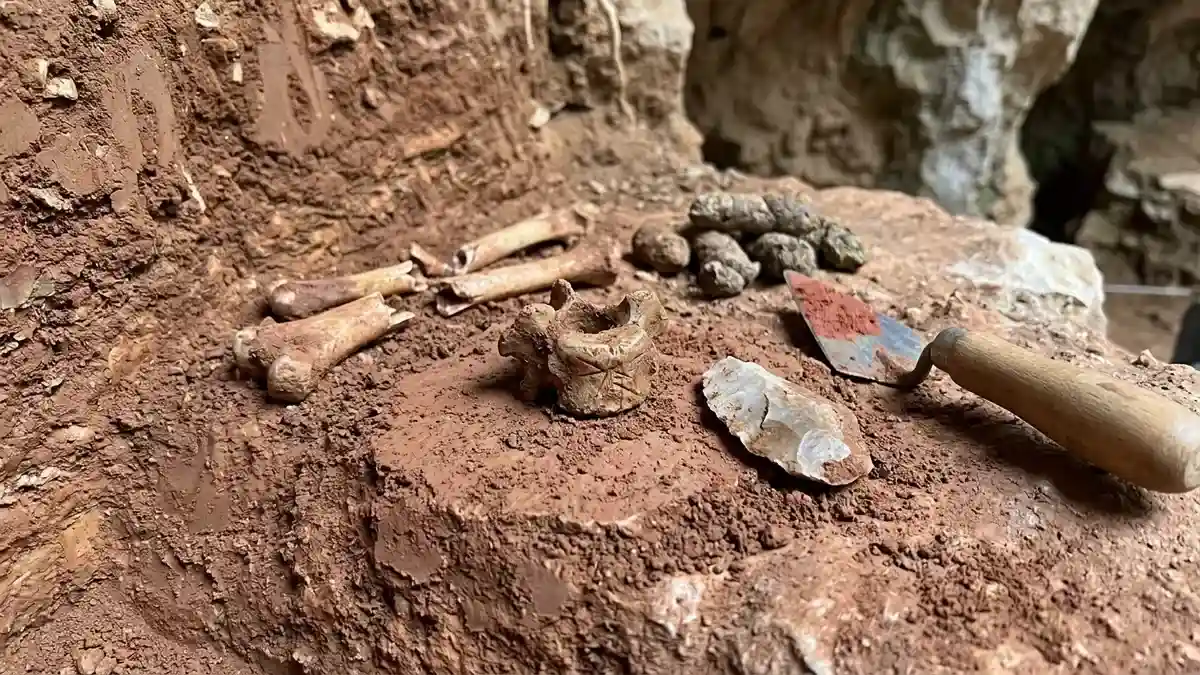
The breakthrough occurred at level TD6 of the Gran Dolina excavation site, a sediment layer world-renowned for preserving some of the oldest hominin remains in Europe. During the recent field season, the IPHES-CERCA (Catalan Institute of Human Paleoecology and Social Evolution) research team recovered ten human bones, all attributed to Homo antecessor. Among these fragments, the neck vertebra of a child aged between two and four years old stood out.
Precision Butchery in the Early Pleistocene
What makes this specific cervical vertebra extraordinary is the meticulous nature of the alterations. According to Dr. Palmira Saladié, a taphonomy expert and co-director of the Gran Dolina excavation, the incisions were not accidental or hurried. Instead, the cut marks match the exact anatomical points required to efficiently sever a head from a torso using stone tools.
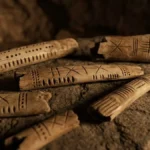
The presence of these deliberate butchery marks indicates that the child was processed using the exact same systematic methods Homo antecessor applied to hunted wildlife. The carcass was defleshed, and the bones were intentionally fractured to access the nutrient-rich bone marrow inside, leaving no doubt about the dietary motivation behind the act.
Repeated Behavior Across Generations
This discovery is not the first time Gran Dolina has yielded evidence of anthropophagy. Nearly thirty years ago, the very same TD6 archaeological layer provided scientists with the world’s earliest confirmed evidence of human cannibalism.
The latest find is crucial because it establishes continuity. The processing of human meat was not a freak occurrence born out of a sudden, catastrophic famine. Rather, it represents a habitual practice that persisted through generations. The data suggests that early humans viewed deceased members of their own genus—including the most vulnerable youngsters—as a standard component of their meat exploitation strategies.
Why Did Homo Antecessor Practice Cannibalism?
To modern minds, the consumption of another human is the ultimate taboo. However, in the harsh climate of Pleistocene Europe, evolutionary pressures dictated radically different survival strategies. Anthropologists believe that Homo antecessor engaged in cannibalism for two primary reasons: nutritional necessity and territorial dominance.

+-----------------------------------------------------------------------+
|                 DRIVERS OF PREHISTORIC CANNIBALISM                    |
+-----------------------------------------------------------------------+
|  1. Nutritional Abundance: Human meat provided valuable calories,     |
|     proteins, and fats without the high risk of hunting megafauna.    |
|                                                                       |
|  2. Territorial Warfare: Consuming members of rival groups served as  |
|     a mechanism to defend rich foraging grounds and limit competition.|
+-----------------------------------------------------------------------+
Anthropophagy as a Foraging Strategy
From a purely energetic standpoint, human meat is highly nutritious. In an era where hunting large mammals like bison or horses carried an immense risk of injury or death, encountering a rival group of hominins offered a high-calorie alternative. Children, who lacked the defensive capabilities of adults, unfortunately became prime targets for groups seeking low-risk, high-reward sustenance.
Warfare and Territorial Boundaries
Beyond simple nutrition, many researchers hypothesize that systematic cannibalism functioned as an early form of warfare. The Sierra de Atapuerca was a prime real estate zone, filled with caves, fresh water, and abundant game. Rival bands of Homo antecessor likely fought fiercely over these resources. By killing and consuming the offspring of competing groups, a dominant band could successfully suppress the population growth of its rivals, effectively securing territorial control over the region.
High-Stakes Competition: Humans vs. Carnivores
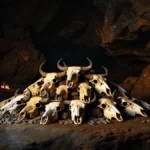
The environment of ancient Spain was far from an easy sanctuary. The TD6 layer at Gran Dolina paints a vivid picture of a landscape teeming with danger, where humans were simultaneously the hunters and the hunted.
The Hyena Latrine Clue
During the same excavation season, researchers made a fascinating discovery just inches away from the human remains: an ancient hyena latrine containing more than 1,300 fossilized fecal droppings, known as coprolites. The extreme vertical proximity between the hominin bones and the carnivore waste provides critical chronological data.
This stratigraphical overlap reveals that Homo antecessor and large prehistoric hyenas occupied the exact same cave spaces in alternating cycles. When human bands moved out, carnivores moved in, and vice versa. This constant rotation underscores the brutal ecological pressure of the era. Early humans were locked in a perpetual, bloody chess match against powerful apex predators for shelter and food, making cohesive group survival strategies all the more vital.
Unlocking the Future of Paleoanthropology
The Sierra de Atapuerca remains one of the most significant archaeological complexes on Earth, offering a continuous record of human evolution spanning over a million years. The IPHES-CERCA team emphasizes that the unexcavated depths of the TD6 layer likely hold many more secrets.
As digital imaging technologies, microscopic wear analysis, and biomolecular archaeology continue to advance, scientists will be able to extract even more data from these ancient fragments. Every tooth, jawbone, and vertebra pulled from the red clay of Gran Dolina forces a reassessment of our evolutionary family tree. They remind us that the journey toward modern humanity was paved with extreme violence, remarkable adaptability, and an uncompromising drive to survive.
Frequently Asked Questions
Which human species practiced cannibalism at Atapuerca?
The cannibalistic practices documented at the Gran Dolina site are attributed to Homo antecessor. Living approximately 850,000 years ago, this extinct hominin species is considered by many paleoanthropologists to be one of the earliest direct ancestors or close relatives of both Neanderthals and modern humans (Homo sapiens) in Europe.
How do scientists prove that ancient bones were cannibalized?
Taphonomists identify cannibalism by looking for specific modifications on human bones that match those found on butchered animal remains. These include V-shaped cut marks left by stone tools during defleshing, percussion marks from breaking open bones to extract marrow, and deliberate decapitation or disarticulation scores at joint junctions.
Was cannibalism at Gran Dolina caused by a lack of food?
While starvation can trigger cannibalism, the evidence at Gran Dolina suggests a cultural or strategic habit rather than an emergency measure. Because human remains with butchery marks are found alongside abundant animal bones across different sub-layers, it appears that Homo antecessor hunted and consumed other humans as a regular part of their diet and territorial strategy.
Why were children targeted in these prehistoric practices?
In a competitive, resource-scarce environment, children from rival groups represented both a vulnerability and an opportunity. They were easier to capture and kill than adult hominins, offering a low-risk source of nutrition while simultaneously eliminating the future workforce and reproductive potential of a competing tribe.
What is the significance of the hyena coprolites found at the site?
The discovery of over 1,300 hyena coprolites (fossilized dung) directly layered with human bones proves that humans and large carnivores frequently alternated ownership of the cave. This indicates intense ecological competition for prime shelter and suggests that Homo antecessor had to constantly defend its territory from deadly predators.