
Table of Contents
- 1. The Alchemy of Statecraft: Crafting the Psychedelic Brew
- 1.1. The Power of Vilca
- 2. The Courtyard Strategy: Intimate Settings for Sacred Alliances
- 3. The Neurobiology of Empire: The Lasting “Afterglow”
- 4. Archival and Subterranean Clues
- 5. Conclusion
- 6. Frequently Asked Questions
- 6.1. What exactly was the Wari civilization, and when did it exist?
- 6.2. What is vilca, and how does it affect the human brain?
- 6.3. How did making chicha from pepper berries differ from standard Andean beer?
- 6.4. Why did the Wari host these psychedelic feasts in private courtyards?
- 6.5. Is there definitive proof that the Wari mixed beer and vilca together?
Pre-Inca Empire May Have Used Hallucinogenic Beer to Forge Unity
Centuries before the Incas engineered their famous mountain road networks, another massive superpower dominated the rugged spine of the Andes. The Wari civilization, which flourished between 600 and 1000 CE, established sprawling stone cities, engineered sophisticated agricultural terraces, and masterfully cast complex metals across present-day Peru, Chile, and Argentina.
Yet, for decades, a foundational historical riddle has puzzled South American archaeologists: How did the Wari successfully maintain peace and political unity across such a massive, ethnically diverse empire without the use of a large standing army or modern administrative communication?
The answer, according to a compelling study published in La Revista de Arqueología Americana, may lie inside an ancient ceramic drinking vessel. Researchers hypothesize that the Wari state maintained geopolitical stability by serving a highly potent, psychoactive concoction—a hallucinogenic beer—to visiting regional leaders during state-sponsored feasts. This mind-altering ritual served as a potent form of political diplomacy, transforming potential foreign rivals into deeply connected imperial allies.
Pre-Inca Empire May Have Used Hallucinogenic Beer to Forge Unity
The Alchemy of Statecraft: Crafting the Psychedelic Brew
At the heart of this ancient geopolitical strategy was a highly intentional, chemical recipe. The study suggests that Wari elite brewers masterfully combined two distinct native plants to formulate their signature beverage:
+------------------------+----------------------------------------------------+
| Beverage Ingredient    | Botanical and Chemical Properties                  |
+------------------------+----------------------------------------------------+
| Chicha Base            | Fermented beer brewed from Schinus molle berries  |
| Psychedelic Additive   | Vilca, derived from Anadenanthera colubrina seeds  |
| Physiological Impact   | Short, intense hallucination followed by "afterglow"|
| Primary Political Goal | Increasing empathy and trust among diverse groups  |
+------------------------+----------------------------------------------------+
The base of the drink was chicha, a traditional Andean beer. While modern chicha is typically made from corn, the Wari preferred a distinct variety brewed from the bright pink berries of the Schinus molle tree (commonly known as the Peruvian peppertree). This peppery alcohol was already a central pillar of Andean hospitality, serving as the primary refreshment at state dinners, diplomatic functions, and funerals.
The Power of Vilca
To elevate a standard political dinner into a transformative, state-binding event, Wari elites added a secretive ingredient: vilca. Vilca is a powerful hallucinogen extracted from the roasted, ground seeds of the Anadenanthera colubrina tree.
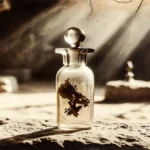
When consumed on its own, vilca traditionally induces a rapid, intense, and sometimes disorienting visionary experience. However, by infusing the drug directly into a steady stream of fermented Schinus molle chicha, the Wari brewers effectively altered its delivery mechanism. The alcohol slowed down and elongated the chemical uptake, resulting in a manageable, highly euphoric psychedelic trip.
The Courtyard Strategy: Intimate Settings for Sacred Alliances
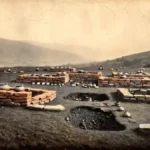
The physical layout of Wari imperial compounds strongly supports the theory that these feasts were highly calculated, exclusive political events. Rather than hosting massive public festivals for thousands of everyday citizens, the Wari built secure, high-walled, enclosed courtyards inside their palatial compounds.

                    THE WARI DIPLOMATIC INITIATION LOOP

  [ Secure Enclosed Courtyard ] ===> [ Intimate Communal Feasting ]
  * Keeps out the public chaos        * Small group of local leaders
  * Creates an elite sanctuary         * Shared prayers and peppery food
               ||                                    ||
               v                                     v
  [ Long-Term Imperial Alliance ] <== [ The Vilca 'Afterglow' Experience ]
  * Rivals transformed into peers     * Deep feelings of empathy and trust
These intimate sanctuaries were explicitly engineered to host just a few dozen select individuals at a time. Local lords, community chiefs, and foreign emissaries from newly annexed border territories were invited into these private spaces to sit face-to-face with the Wari elite.
Over the course of several hours, this small group would consume the peppery, vilca-infused chicha, partake in communal meals, and engage in shared prayers. The psychological impacts of this specific setting were profound. Stripped of the distractions of the outside world and bound together by a shared, extraordinary sensory experience, the participants formed intense interpersonal connections that defied traditional tribal animosities.
The Neurobiology of Empire: The Lasting “Afterglow”
The authors of the study, J. Keer and J. Jennings, stress that the long-term psychological impacts of psychoactive substances have been vastly overlooked in traditional anthropological modeling. Beyond the immediate, colorful visions experienced during a feast, the true geopolitical genius of the vilca beer lay in its chemical aftermath.
Modern neurobiological and psychological research on similar psychoactive compounds demonstrates that the substance induces a prolonged period of cognitive openness, characterized by:
Elevated Pro-Social Behavior: A long-term increase in altruistic feelings and group cooperation.
Heightened Empathy: An enhanced capacity to understand and validate the perspectives of outsiders or former adversaries.
The “Afterglow” Effect: A lingering state of mental peace and social interconnectedness that persists for weeks or even months after the substance has completely left the body.
                    THE GEOPOLITICAL IMPACT OF AFTERGLOW

  [ Battlefield Conquest ] ===============> Subdues a region through fear.
  [ The Psychedelic Feast ] ==============> Replaces fear with trust and empathy.
  [ Sustained Imperial Order ] ===========> Keeps tax structures moving smoothly.
For the Wari administration, hosting just a handful of these elite, mind-altering banquets each year functioned as a spectacular form of low-cost social glue. When regional chiefs left the Wari capital to return to their distant home provinces, they carried with them a profound, chemically reinforced sense of loyalty and shared destiny. This lingering feeling of deep spiritual unity made them far more willing to cooperate with imperial tax structures, provide labor for state infrastructure projects, and maintain internal peace on the empire’s frontiers.
Archival and Subterranean Clues
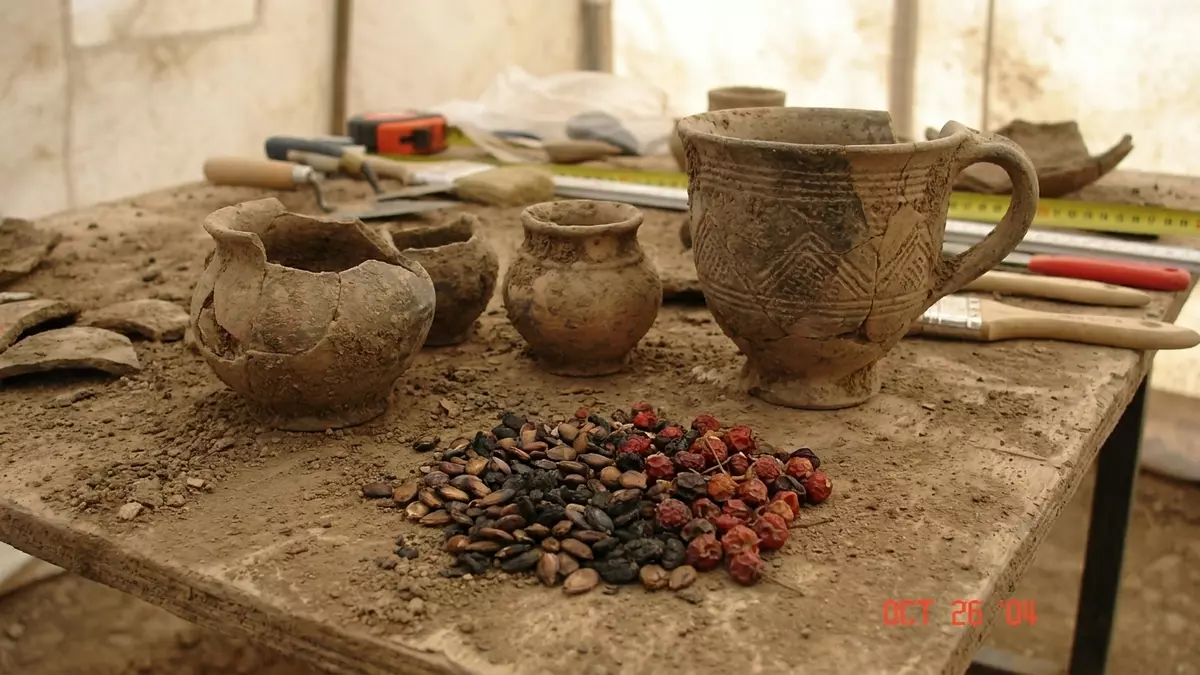
While some contemporary archaeologists urge scientific caution until direct, liquid residue testing can definitively prove that the two ingredients were mixed inside the same jar, the circumstantial evidence recovered from active dig sites is incredibly strong.
At major Wari urban administrative centers, excavators have repeatedly unburied caches of charred Anadenanthera colubrina vilca seeds resting directly alongside large-scale, industrial-sized processing areas designed for Schinus molle chicha brewing. The co-location of these specific botanical materials confirms that the two substances were being managed, stored, and utilized simultaneously by the state’s elite administrators for ritualistic and political output.
Conclusion
The revolutionary insights generated by the 2025 Andes study remind us that the construction of ancient empires required far more than simple military brutality and architectural stone engineering. To bind a fractured world together, the Wari chose to look inward, masterfully using the rich botanical chemistry of their environment to re-engineer the human mind itself. By utilizing the lingering, pro-social afterglow of a shared psychedelic experience, these ancient leaders successfully built a unified Andean identity, proving that a cup of beer could be just as powerful an instrument of statecraft as a bronze spearhead.
Frequently Asked Questions
What exactly was the Wari civilization, and when did it exist?
The Wari was a highly sophisticated, expansive pre-Inca empire that dominated the central and coastal Andes regions from roughly 600 to 1000 CE. They are famous for inventing advanced terraced farming models, establishing major planned stone cities, and laying the geopolitical foundations that the Inca Empire would later inherit and expand upon.
What is vilca, and how does it affect the human brain?
Vilca is a powerful, naturally occurring psychedelic substance derived from the seeds of the Anadenanthera colubrina tree. It contains active psychoactive compounds that trigger vivid hallucinations, rapid shifts in perception, and a prolonged, positive chemical “afterglow” marked by increased feelings of trust, empathy, and social connectedness.
How did making chicha from pepper berries differ from standard Andean beer?
While classic Andean chicha was traditionally fermented from corn (maize), the Wari specialized in brewing a premium version utilizing the sugary berries of the Schinus molle (peppertree). This resulted in a distinct, highly peppery alcoholic beverage that carried immense cultural prestige and served as the perfect chemical vehicle to mask and dissolve the bitter vilca seeds.
Why did the Wari host these psychedelic feasts in private courtyards?
Private, high-walled courtyards were utilized to create an exclusive, completely controlled environment. By isolating a small group of 20 to 30 tribal leaders away from the public, the Wari elites could ensure a safe, distraction-free setting that maximized the intimate bonding, spiritual prayers, and pro-social psychological impacts of the medicated brew.
Is there definitive proof that the Wari mixed beer and vilca together?
While scientists have successfully recovered vilca seeds and chicha processing equipment from the exact same storage rooms at Wari archaeological sites, direct biomolecular residue testing inside a single cup is still underway. However, the botanical context seamlessly aligns with everything historians know about how ancient Andean states routinely deployed psychoactive substances to cement political alliances.