
Table of Contents
- 1. Unearthing the Havelland Cross
- 1.1. The Spandau Connection
- 2. Geopolitics of the 10th-Century Slavic Borderlands
- 2.1. The Great Slavic Revolt of 983
- 3. The Power of Citizen Science in Modern Archaeology
- 4. A Historic Reunion in Brandenburg an der Havel
- 5. Frequently Asked Questions
- 5.1. What is a wheel cross?
- 5.2. Who discovered the Havelland cross?
- 5.3. Why is the connection to the Spandau mold significant?
- 5.4. Did the Slavic population accept Christianity in the 10th century?
- 5.5. How can volunteers participate in German archaeology?
Rare 10th-Century Wheel Cross Found, Rewriting Early Slavic History
A remarkable archaeological discovery in Germany is shedding new light on the complex religious landscape of medieval Europe. During a routine metal-detecting survey in the Havelland region of Brandenburg, a volunteer heritage conservator unearthed a rare 10th-century bronze wheel cross. This single artifact offers tangible evidence of early Christian influence among Slavic populations east of the Elbe River, arriving much earlier than previously thought.
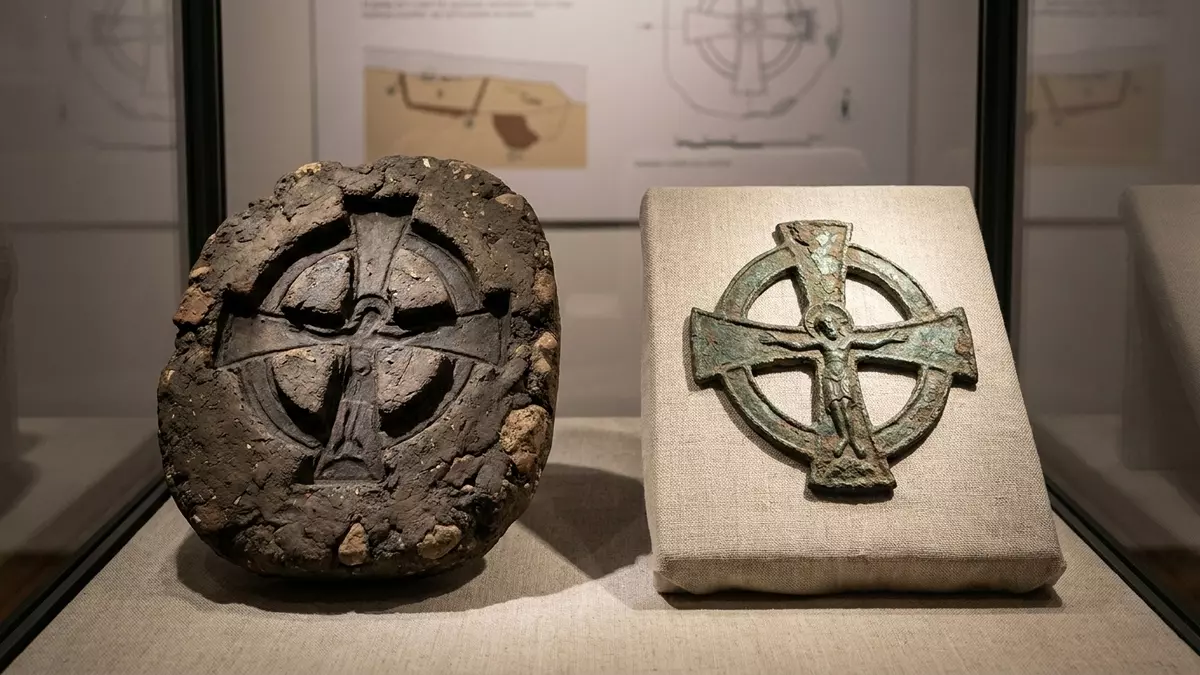
What makes this find extraordinary is its direct connection to a famous piece of history. Laboratory analysis confirmed that the newly found cross matches a medieval casting mold discovered over four decades ago at a Slavic hillfort in Berlin-Spandau. For the first time, historians have both the mold and the final product, bridging a gap in our understanding of cultural exchange during a time of intense political and spiritual transition.
Rare 10th-Century Wheel Cross Found, Rewriting Early Slavic History
Unearthing the Havelland Cross
The discovery was made by Juliane Rangnow, a trained volunteer heritage conservator conducting a systematic sweep of the Havelland landscape. While scanning the soil, her equipment picked up signals that led to a hoard of medieval treasures. Alongside the bronze wheel cross, the site yielded a collection of silver coins, fragments of partially gilded jewelry, and several iron weapons.

The artifact itself is classified as a “wheel cross” or ringed cross, characterized by a circular band that connects the four arms of the structure. At its center is a stylized, early medieval depiction of Jesus Christ. Experts at the Brandenburg State Archaeological Museum immediately recognized the stylistic features of the piece, sparking a series of high-precision measurements and comparative analyses.
The Spandau Connection
Archaeologists compared the Havelland cross to a famous artifact in their archives: a casting mold excavated in 1983 at the Slavic hillfort of Berlin-Spandau. Known historically as the “Spandau Cross” mold, it was originally found near the structural remains of an early wooden church.
For 43 years, that mold stood as an isolated anomaly. It was clear evidence that Christian symbols were being manufactured locally between the Elbe and Oder rivers, but no actual metallic object cast from that specific mold had ever been found—until now. The physical dimensions, engraving marks, and artistic proportions of the Havelland cross match the Spandau mold exactly, proving they are part of the same production line.
[1983: Spandau Mold Discovered] ───> Forty-Three Year Gap ───> [2026: Havelland Cross Found]
Geopolitics of the 10th-Century Slavic Borderlands
To understand the weight of this discovery, one must look at the volatile geopolitical climate of northeastern Germany during the 10th and 11th centuries. At the time, the territories now encompassing Berlin and Brandenburg were a frontier zone. The region was occupied by indigenous Slavic tribes, but it faced intense pressure, military incursions, and missionary efforts from the expanding East Frankish Kingdom.
The presence of a locally cast Christian cross indicates that Christian iconography was circulating among the Slavic population. Rather than being an imported luxury item owned exclusively by foreign elites, the cross demonstrates that Christian symbols were being manufactured locally, suggesting a deeper level of cultural integration and religious dialogue than narrative chronicles usually record.
The Great Slavic Revolt of 983
While artifacts like the wheel cross show that Christianity was making inroads, the transition was far from peaceful. New political and religious elites attempted to enforce conversion and extract heavy tithes from the local populations. This friction reached a boiling point in 983 CE with the Lutizen Revolt (also known as the Great Slavic Rising).
During this massive uprising, a confederation of Slavic tribes successfully overthrew the rule of the German bishops and military margraves. The revolt accomplished several major historical shifts:
It destroyed the newly established dioceses of Brandenburg and Havelberg.
It halted German eastward expansion for nearly two generations.
It restored local political sovereignty and indigenous pagan religious practices.
It preserved Slavic autonomy in the region for roughly 150 years.
Sustained, permanent Christianization and cultural assimilation did not take hold until the mid-12th century, when the region was systematically conquered and integrated into the Margraviate of Brandenburg under Albert the Bear.
The Power of Citizen Science in Modern Archaeology
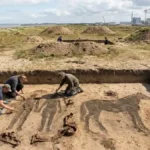
Beyond its historical implications, the recovery of the Havelland cross highlights the vital role that citizen science plays in modern European archaeology. Brandenburg is home to a vast archaeological landscape, with over 40,000 registered sites spanning hundreds of thousands of years. These sites hold everything from Neanderthal flint tools dating back 130,000 years to clandestine escape tunnels dug beneath the 20th-century border fortifications of the German Democratic Republic (GDR).
Professional state agencies cannot monitor this vast expanse of land alone. To protect these treasures from industrial development, agricultural erosion, and illicit looters, the Brandenburg State Office for Monument Preservation (BLDAM) relies heavily on a network of approximately 350 officially trained and certified volunteer heritage conservators.
Brandenburg Archaeological Network:
├── 40,000+ Registered Historical Sites
├── 130,000 Years of Human History (Neanderthal to Cold War)
└── 350+ Trained Citizen Volunteers Coordinating with State Specialists
To maximize the efficacy of these citizen scientists, the BLDAM designated a dedicated staff position in 2022 specifically to educate, support, and coordinate with volunteers. This systematic cooperation ensures that metal-detecting surveys are carried out ethically, stratigraphy is recorded properly, and finds are reported to state repositories where they can be preserved for future generations.
A Historic Reunion in Brandenburg an der Havel
To celebrate this monumental find, the Brandenburg State Archaeological Museum in Brandenburg an der Havel organized a special exhibition running from January 24 to March 11, 2026. For the first time in history, the original 1983 Spandau casting mold and the newly discovered 10th-century Havelland bronze wheel cross were displayed side-by-side.
This exhibition provided the public and academic communities with a visual showcase of early medieval craftsmanship. Seeing the negative space of the ancient clay-and-stone mold next to the positive relief of the survival artifact offers a rare connection to the anonymous artisan who poured molten bronze into that very matrix over a millennium ago.
Frequently Asked Questions
What is a wheel cross?
A wheel cross, also known as a ringed cross, is a specific type of religious artifact where a circular ring connects the four arms of the cross. This design was popular in various parts of early medieval Europe and often featured stylized imagery of Christ at the center.
Who discovered the Havelland cross?
The artifact was discovered by Juliane Rangnow, an officially trained and certified volunteer heritage conservator, during a systematic metal-detecting survey in the Havelland region of Brandenburg, Germany.
Why is the connection to the Spandau mold significant?
The Spandau mold, found in 1983, proved that Christian items were being manufactured locally in Slavic territories during the 10th century, but no artifact made from it had ever been seen. The Havelland cross matches the mold perfectly, providing the missing physical proof of production.
Did the Slavic population accept Christianity in the 10th century?
The historical record shows a mixed reaction. While artifacts like the wheel cross show that Christian symbols were present and produced locally, the population largely resisted forced conversion. This resistance culminated in the Lutizen Revolt of 983 CE, which rejected German rule and restored pagan autonomy for 150 years.
How can volunteers participate in German archaeology?
Brandenburg utilizes a state-supported program where around 350 volunteers undergo specialized heritage preservation training. They are granted official permission to conduct surveys, helping professional archaeologists monitor and protect the region’s 40,000+ historical sites.