
Table of Contents
**UK Metal Detectorist Uncovers ‘Richard’s Secret’ Medieval Treasure**
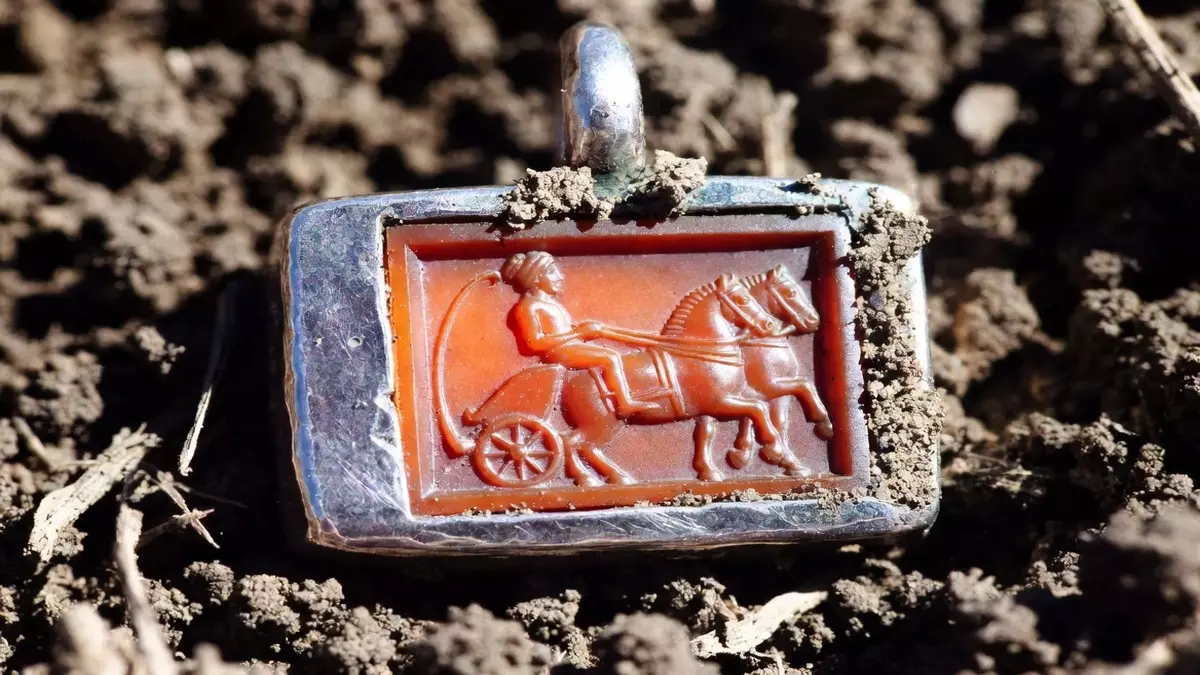
A remarkable discovery in the English countryside has captivated historians and archaeology enthusiasts alike. In September 2024, a metal detectorist stumbled upon a unique medieval seal matrix on farmland near Gosfield, north of Braintree in Essex. This small but extraordinary artifact combines medieval silver craftsmanship with a much older Roman gemstone, offering a fascinating glimpse into how people centuries ago valued and reused ancient treasures.
The find highlights the enduring appeal of Roman artistry in medieval Europe and underscores the importance of citizen scientists in preserving Britain’s rich heritage through schemes like the Portable Antiquities Scheme (PAS).
UK Metal Detectorist Uncovers ‘Richard’s Secret’ Medieval Treasure
 Catching the Scents of Ancient Egypt: Scientists Decode Mummy Embalming Recipes from Thin Air
### The Discovery That Bridges Two Eras
Metal detecting remains a popular hobby across the United Kingdom, often leading to significant archaeological finds. This particular object, unearthed in a plowed field, measures just 27.5 millimeters in length and weighs 6.44 grams. Despite its modest size, it tells a compelling story of craftsmanship, personal identity, and cultural continuity spanning nearly 2,000 years.
Experts from the Portable Antiquities Scheme quickly examined the piece. They confirmed it as a silver seal matrix from the medieval period, featuring a reused Roman intaglio at its center. The object’s loop indicates it was likely worn as a pendant, allowing its owner easy access for authenticating documents.

### Decoding the Inscription: ‘Richard’s Secret’
One of the most intriguing aspects of this seal is its inscription. Engraved in mirror image around the oval bezel, the Latin text reads “SECRETVM.RICARDI,” translating to “Richard’s Secret.” A small cross pattée symbol accompanies the lettering, a common motif in medieval Christian contexts that adds a layer of spiritual significance.
This personal seal would have been used by its owner, presumably a man named Richard, to create wax impressions on letters, contracts, and official records. In an era before widespread literacy and modern security, such seals served as crucial tools for verifying identity and ensuring the integrity of communications. The reversed text ensured that when pressed into soft wax, the resulting imprint appeared correctly oriented and legible.

### The Roman Heart: A Carnelian Chariot Scene
At the center of the medieval silver setting lies a polished carnelian intaglio depicting a dynamic racing scene. A charioteer stands in a two-horse chariot (known as a *biga*), gripping reins in one hand and a whip in the other. Art historians date this gemstone to the late first century BCE or early first century CE, placing its creation during the height of the Roman Empire.
Such intaglios were popular across the Roman world, often adorning rings, amulets, or other personal items. The chariot motif symbolized speed, victory, and the excitement of public games, themes that resonated deeply in Roman culture. When used in the medieval seal, pressing it into wax would produce a raised relief of this ancient scene, blending classical imagery with practical medieval utility.
The choice of carnelian—a reddish-orange variety of chalcedony prized for its durability and vibrant color—further demonstrates the skill of ancient gem cutters. These stones were not only beautiful but also symbolically significant, sometimes associated with protection and vitality.
### Medieval Craftsmanship Meets Ancient Reuse
The silver body of the seal dates to between approximately 1200 and 1400 CE. During this time, personal seal matrices became essential for nobility, clergy, merchants, and landowners. They authenticated everything from royal charters to private correspondence.
What makes this Gosfield find particularly rare is the deliberate incorporation of the Roman gemstone. Medieval Europeans had a deep fascination with classical antiquity. Roman intaglios circulated through trade, were discovered in fields, or were unearthed during construction. Craftspeople often reset these “exotic” artifacts into new objects, viewing them as connections to a prestigious past.
This practice reflects broader trends in medieval material culture. Ancient gems appeared in ecclesiastical treasures, royal regalia, and personal jewelry. Reusing them wasn’t mere practicality—it signaled status, education, and a link to the grandeur of Rome. In Britain, where Roman occupation left abundant artifacts, such finds provided ready-made embellishments for local artisans.
### The Role of the Portable Antiquities Scheme
The Portable Antiquities Scheme plays a vital role in recording and studying finds like this one. Established to encourage responsible reporting by metal detectorists and the public, PAS has documented millions of objects, significantly enhancing our understanding of Britain’s history.
After discovery, the seal underwent thorough analysis by specialists at the Colchester and Ipswich Museum Service. Detailed photographs reveal the artifact from multiple angles, showcasing the intricate engraving and the seamless integration of the ancient stone into the medieval frame.
Under the UK’s Treasure Act of 1996, a coroner reviewed the case. Because of its age and precious metal content, the seal was officially declared treasure. This designation ensures proper conservation and often leads to acquisition by museums for public benefit. Braintree Museum has expressed strong interest in adding it to their collection, where it could educate visitors about layered histories and cross-cultural influences.
### Why This Find Matters: Historical and Cultural Context
This Gosfield seal isn’t just a pretty object—it’s a window into medieval mindsets. Owners of such seals held social and legal power. The inclusion of a Roman chariot scene might have evoked ideas of triumph or classical learning, appealing to an educated or ambitious individual named Richard.
In the broader sweep of European history, the reuse of Roman artifacts peaked in the 12th and 13th centuries. Scholars note that intaglios set in medieval seals often indicated high status or political connections. Some may have been family heirlooms or acquired through pilgrimage and trade routes linking Britain to the Mediterranean.
Archaeologically, combined-period objects like this remain uncommon. Most finds are purely medieval or Roman. This hybrid piece illustrates how everyday people interacted with the material remnants of earlier civilizations, integrating them into new social practices like document sealing.
The discovery also highlights advances in non-invasive archaeology. Modern imaging and expert collaboration allow detailed study without damaging fragile artifacts, preserving them for future generations.
### Expanding Our Understanding of Essex History
Essex has a rich archaeological landscape, shaped by Roman settlements, Saxon migrations, and medieval prosperity. Areas around Braintree and Gosfield were active farmlands for centuries, occasionally yielding treasures from the soil. This find adds to a growing list of significant PAS-recorded items from the region, contributing to local and national heritage narratives.
For metal detectorists, stories like this one inspire careful, responsible searching. The hobby, when done ethically with landowner permission and prompt reporting, continues to rewrite history books one find at a time.
### Conclusion: A Timeless Connection
The ‘Richard’s Secret’ seal stands as a powerful reminder of humanity’s enduring relationship with the past. By setting a 2,000-year-old Roman carving into a 13th- or 14th-century silver matrix, its creator forged a tangible link between ancient Rome and medieval England. Today, this artifact continues to spark wonder, inviting us to appreciate the layers of history beneath our feet and the ingenuity of those who came before.
As Braintree Museum potentially prepares it for display, the seal promises to engage new audiences, illustrating how one small object can embody grand themes of reuse, identity, and cultural appreciation. Discoveries like this enrich our collective story, proving that the past is never truly buried—it simply waits for the right moment to reveal its secrets.
### FAQ: Everything You Want to Know About the ‘Richard’s Secret’ Seal
**What exactly is a seal matrix?**
A seal matrix is a handheld tool with a carved design used to create impressions in wax for authenticating documents. Medieval examples like this one were personal items, often inscribed with the owner’s name or motto.
**Why was a Roman gemstone used in a medieval seal?**
Medieval people admired Roman craftsmanship and frequently reused intaglios. These stones were durable, beautiful, and carried an aura of antiquity, making them ideal for resetting into new jewelry or functional objects like seals.
**How was the seal found and reported?**
A metal detectorist discovered it on farmland near Gosfield in September 2024. Following standard protocol, it was reported to the Portable Antiquities Scheme for expert recording and analysis.
**What does ‘SECRETVM.RICARDI’ mean?**
It translates from Latin as “Richard’s Secret” or “The Secret of Richard.” The mirror-image engraving ensured correct orientation in wax seals.
**Will the public be able to see this artifact?**
Yes—Braintree Museum has shown interest in acquiring it for public display. Once conserved and accessioned, visitors will be able to examine the medieval silverwork and Roman carving up close.
**Are there other similar finds?**
While rare, other medieval seals incorporating Roman intaglios exist. They provide valuable evidence of the medieval appreciation for classical art and the circulation of ancient artifacts in Europe.
**How does the Treasure Act protect such finds?**
The 1996 Act requires reporting of qualifying items. It ensures archaeological context is preserved, rewards finders fairly, and allows museums the opportunity to acquire important pieces for the public good.