
Table of Contents
- 1. The Capacocha Ritual: Sacrifices on the Edge of the Sky
- 2. Shattering Colonial Myths: Trauma and Chronic Disease
- 3. The Mystery of Ampato 4: A Human Relic Modified by Hand
- 4. Mummies as Tools of Imperial Geopolitics
- 5. Frequently Asked Questions
- 5.1. What new discovery was made about Inca child sacrifices?
- 5.2. How did scientists look inside the mummies without damaging them?
- 5.3. Did the Inca only sacrifice perfectly healthy children?
- 5.4. What inside the body of “Ampato 4” proved she was intentionally mummified?
- 5.5. Where were these mummies originally discovered?
First Case of Deliberate Mummification Discovered in Inca Child Sacrifice
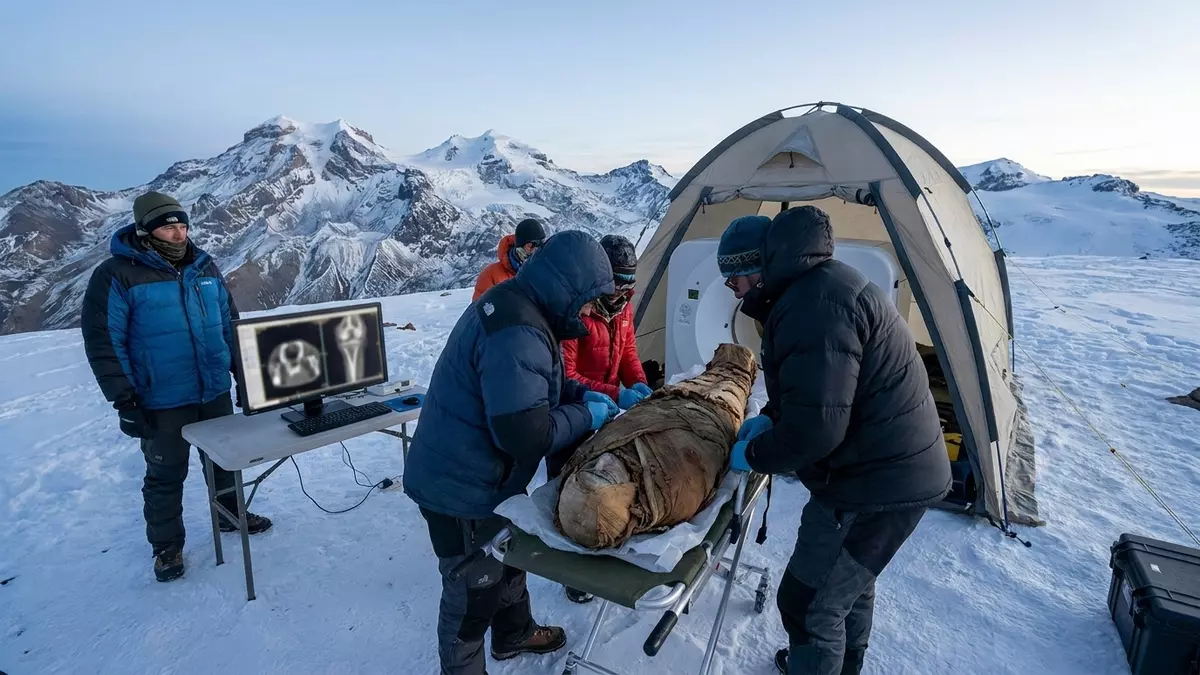
An international paleoradiology study has exposed a stunning secret hidden beneath the frozen wrappings of an Inca child sacrifice. By utilizing advanced Computed Tomography (CT) scans on frozen bodies recovered from high Andean volcanic peaks, archaeologists have documented the first definitive evidence of deliberate postmortem mummification in a capacocha ritual—overturning centuries of belief that these ice mummies were preserved purely by natural freezing.
First Case of Deliberate Mummification Discovered in Inca Child Sacrifice
The Capacocha Ritual: Sacrifices on the Edge of the Sky
During the height of the Inca Empire, capacocha stood as one of the most solemn and powerful state ceremonies. According to 16th-century Spanish colonial chronicles, the Inca selected young women and children from across the empire, leading them in massive, thousands-of-kilometer processions to the highest volcanic summits of the Andes. There, they were sacrificed to appease the mountain gods (apus), secure imperial control, and ensure cosmic balance.
Because these burials occurred at extreme, oxygen-deprived altitudes exceeding 6,000 meters, the freezing environment naturally mummified the victims, locking their soft tissues, internal organs, and elaborate textile bundles in a pristine, deep-freeze time capsule.
Shattering Colonial Myths: Trauma and Chronic Disease
The breakthrough investigation, led by Dr. Dagmara Socha of the University of Warsaw and published in the Journal of Archaeological Science: Reports, focused on four frozen children recovered from the summits of the Ampato and Sara Sara volcanoes in southern Peru.
Rather than physically unwrapping and destroying the fragile, sacred bundles, the multi-disciplinary team used high-resolution CT scanners to peer through the layers of ancient clothing. The digital autopsies revealed violent realities and medical conditions that directly contradict Spanish colonial records:
Fatal Blunt-Force Trauma: All four children suffered catastrophic, intentional head injuries. The scan of an 8-year-old girl revealed a massive intracranial hematoma (internal bleeding inside the skull), proving she was struck down by a powerful blow to the head.
The Myth of the “Perfect” Child: Spanish chroniclers claimed the Inca only sacrificed physically flawless, perfectly healthy children. However, the scans of the same 8-year-old girl exposed severe, chronic illness. She suffered from advanced Chagas disease, evidenced by a severely enlarged esophagus and heavy calcium deposits in her lung tissues.
The Screaming Volcanoes: Scans of the world-famous “Lady of Ampato” (popularly known as Juanita) revealed extensive fractures across her chest, shoulders, and pelvis. Furthermore, several of the bodies bore severe skeletal shattering and scorched outer textiles from lightning strikes—a continuous, violent hazard on exposed, metal-rich volcanic peaks.
The Mystery of Ampato 4: A Human Relic Modified by Hand
The most revolutionary discovery of the project centered on a young girl cataloged as Ampato 4. While her companions showed standard signs of freezing alongside natural decomposition, her internal anatomy was completely scrambled.
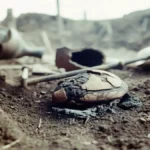
The CT scans revealed that several of her skeletal bones were entirely missing, while other remaining bones were violently displaced. Most shockingly, the girl’s original internal organs had been extracted, and her empty abdominal cavity was tightly packed with a combination of loose river stones and folded fragments of textiles.
[Level 1: Primary Fatality]
Child dies or is sacrificed at a lower-altitude staging settlement.
              │
              ▼
[Level 2: Postmortem Modification]
The body is opened, organs are removed, and the abdominal cavity is stuffed with stones & textiles.
              │
              ▼
[Level 3: Strategic Relocation & Reburial]
The modified mummy is carried up the volcano as a powerful totem during forced population shifts.
This structural arrangement is impossible under natural freezing conditions. It represents a deliberate, highly calculated postmortem surgical modification. Archaeologists conclude that the girl died at a completely different geographic location. Following her death, religious practitioners opened her body, eviscerated her organs, and intentionally transformed her corpse into a portable, durable mummy before transporting her up Mount Ampato for final burial.
Mummies as Tools of Imperial Geopolitics
To explain why the Inca would deliberately alter and move a child’s body across the landscape, researchers point to the imperial policy of mitimaes—the massive, forced resettlement of entire conquered communities to unfamiliar, frontier territories of the empire.
When these displaced groups were marched across the Andes, they frequently carried their most sacred objects, including the mummies of their ancestors (mallquis), to establish spiritual anchors and claim legitimacy in their new homes.
The physical modification of Ampato 4 proves that capacocha victims were not always sacrificed directly on the mountain peak where they were found. Instead, some functioned as active, long-term religious relics. Their preserved bodies were carried across territories to sanctify mountain summits, reinforce the crushing presence of the Inca state, and bind local, displaced populations to the religious matrix of the empire.
With fieldwork resuming on these soaring peaks under renewed funding, scientists are preparing deep genetic, isotopic, and textile analyses to further illuminate the lives, journeys, and ultimate fates of these ancient children of the sun.
Frequently Asked Questions
What new discovery was made about Inca child sacrifices?
Scientists identified the first clear case of deliberate postmortem mummification in a capacocha child sacrifice (Ampato 4), proving the Inca actively modified some bodies rather than relying solely on natural freezing.
How did scientists look inside the mummies without damaging them?
The international research team utilized non-invasive computed tomography (CT) scans, allowing them to create high-resolution 3D digital x-rays of the children’s bones, internal cavities, and artifacts while keeping their textile wrappings perfectly sealed.
Did the Inca only sacrifice perfectly healthy children?
No. While Spanish colonial accounts claim only physically perfect children were chosen, CT scans revealed that an 8-year-old sacrificed girl suffered from chronic Chagas disease, which caused an enlarged esophagus and calcified lung damage.
What inside the body of “Ampato 4” proved she was intentionally mummified?
Her internal organs were completely removed, her bones were displaced or missing, and her empty abdominal cavity was packed by hand with loose stones and textile fragments, indicating an intentional postmortem preservation process.
Where were these mummies originally discovered?
The frozen mummies analyzed in this study were recovered from the freezing, high-altitude volcanic summits of Mount Ampato and Mount Sara Sara, located in the rugged Andes mountains of southern Peru.