
**1,000 Ancient Features Uncovered Along Czech High-Speed Railway**
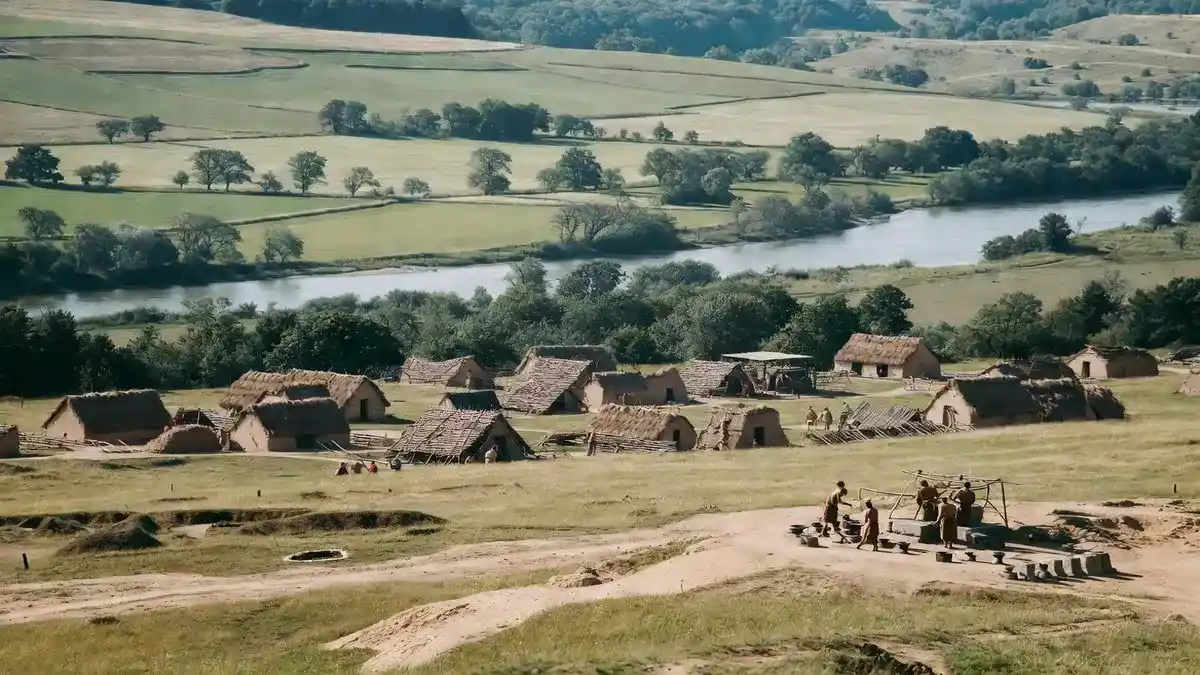
Archaeologists in the Czech Republic have made an extraordinary discovery during preparations for a new high-speed rail line, revealing more than 1,000 archaeological features packed into a small stretch of the Haná River valley. This major find offers a detailed timeline of human settlement spanning from the Early Bronze Age through the Roman period, showcasing centuries of cultural evolution in central Europe.
The rich assemblage includes well-preserved house remains, ritual burials, evidence of specialized metalworking, and rare tools that are shedding new light on daily life, craftsmanship, and traditions in the region.
1,000 Ancient Features Uncovered Along Czech High-Speed Railway

### Massive Rescue Excavation Along the Brno-Přerov Railway
The discoveries came to light during upgrades to the Brno to Přerov railway corridor. Focus centered on a 1.2-kilometer section between Nezamyslice and Kojetín within a broader 9.6-kilometer construction zone. A dedicated team from the Archaeological Centre Olomouc conducted intensive fieldwork from April through late October of last year.
What they found exceeded expectations. The high density of features ranks this location among the most significant settlement complexes in the area, turning a routine infrastructure project into a scientific treasure trove.
 Ancient shipwreck with 300 amphorae found off Italy could reshape views of Mediterranean wine trade
Drone views captured the scale of the site, where layers of history lay just beneath the surface. Such rescue excavations are vital in Europe, where modern development frequently intersects with fragile archaeological landscapes. Without these efforts, countless insights into our shared past would be lost forever.
### Early Bronze Age Věteřov Culture Settlements
The oldest occupation phase belongs to the Věteřov culture of the Early Bronze Age. Excavators identified clear traces of post-built houses constructed with wattle-and-daub walls. When fires swept through the settlement, the clay walls hardened like pottery, preserving remarkable details for millennia.
Some fragments show smooth, finished exterior surfaces, while others retain perfect imprints of woven branches from the interior framework. These clues allow researchers to reconstruct exactly how prehistoric builders engineered their homes.
Accompanying artifacts paint a vivid picture of daily life. Pottery shards, spindle whorls for textile production, decorative beads, and a finely crafted bone pin emerged from the layers. A distinctive bronze pin with a Cypriot-style head hints at possible long-distance connections or earlier activity in the area.
Two settlement burials stood out: one containing an adult and a child placed together. These remains are now undergoing detailed anthropological examination to reveal age, health, diet, and possible family relationships.
### Urnfield Culture: Ritual Practices and Bronze Metalworking
Later phases connect to the Urnfield culture, particularly the Silesian group in the Late Bronze Age and the Platěnice group during the Early Iron Age. Excavators documented numerous settlement pits filled with pottery fragments and pieces of daub from destroyed structures.
Four features containing human remains captured special attention. In one striking example, six skulls were carefully arranged side by side within the pit fill. While cremation was the dominant funerary practice in this culture, these partial remains suggest unique ritual behaviors that researchers are eager to understand better through further study.
At the settlement’s edge, clear evidence of bronze production came to light. Stone casting molds and broken crucible fragments indicate active metalworking workshops. A small collection of finished bronze items—including axes, pins, a bracelet, and a knife—dates to the transition between the Bronze and Early Iron Ages.
A beautifully preserved clay ladle likely played a role in handling molten metal. Laboratory analysis will test the molds for metal residues and determine whether the recovered objects were manufactured on-site or traded into the community. Such specialized craft production highlights growing economic complexity and technical skill in the region.
### Iron Age La Tène and Roman Period Traces
The site also yielded evidence of later Iron Age occupation linked to the La Tène culture, known for its distinctive artistic styles and expanding Celtic influences across Europe.
The most recent phase dates to the Roman period, when Germanic groups inhabited the area. Among the finds is a lime kiln used to produce material for wall plaster or pottery decoration—a key technology supporting more permanent construction.
Perhaps the most remarkable artifact is a well-preserved drawplate, a specialized tool for pulling metal into thin wires. Residues inside the holes may preserve traces of the materials processed. Scientists plan advanced spectrometric analysis to identify the metals, which could relate to the production of chain mail armor or fine jewelry. Tools of this type are exceptionally rare in Central Europe, making this discovery particularly significant.
### The Broader Importance of Haná River Valley Archaeology
The Haná River valley has long been recognized as an important corridor for human movement and settlement in central Europe. Its fertile soils, reliable water sources, and strategic location made it attractive across multiple eras. This latest excavation adds rich detail to that story, showing continuous occupation and adaptation over more than two millennia.
From Early Bronze Age farming communities building sturdy homes to Urnfield metalworkers developing specialized crafts, and later Germanic groups during Roman times, the site captures layers of cultural change. It demonstrates how local populations interacted with wider European trends while maintaining distinct regional characteristics.
Rescue archaeology like this plays a crucial role in modern Europe. Infrastructure projects often provide the only opportunity to investigate sites that would otherwise remain hidden. However, experts warn that fluctuating funding and evolving legislation could threaten future work, potentially leading to irreversible loss of heritage.
### Ongoing Laboratory Analysis and Future Publications
All materials recovered from the site have been transferred to laboratories in Olomouc. Teams are carefully cleaning, conserving, and documenting thousands of artifacts. Human remains will receive thorough osteological and possibly isotopic study to reconstruct life histories, mobility, and health conditions.
As results emerge, researchers plan to publish detailed reports and interpretations. These findings will contribute to broader understanding of Bronze Age and Iron Age societies in Moravia and beyond.
The project also underscores the value of interdisciplinary collaboration. Archaeologists, anthropologists, materials scientists, and conservation specialists work together to extract maximum information from every fragment.
### What These Discoveries Reveal About Prehistoric Life
This excavation provides more than just objects—it offers intimate glimpses into ancient lives. House construction techniques show engineering knowledge passed down through generations. Metalworking evidence points to skilled artisans and economic networks. Unusual burial practices hint at complex spiritual beliefs and rituals.
The presence of both settlement and burial features allows researchers to connect where people lived with how they honored their dead. The adult-child burial, for instance, may reflect family structures or responses to tragedy. The arranged skulls could relate to ancestor veneration or specific funerary customs during times of social stress.
In the context of European prehistory, such sites help trace the development of metallurgy, the spread of new technologies, and the impact of cultural exchanges. The Cypriot-type pin and rare drawplate suggest connections that extended surprisingly far, even in prehistoric times.
### Challenges and Opportunities in Modern Archaeology
Large-scale rescue digs require significant time, resources, and expertise. Weather, tight construction schedules, and the sheer volume of material create logistical challenges. Yet they also create unique opportunities to study landscapes at scale.
The Czech Republic has a strong tradition of professional archaeology, and centers like the one in Olomouc play a leading role in balancing development with heritage protection. Public awareness and support for this work remain essential for preserving history for future generations.
**Conclusion**
The uncovering of over 1,000 archaeological features along the planned Czech high-speed railway stands as a testament to the rich heritage lying beneath our feet. From Bronze Age villages and sophisticated metal workshops to Roman-era innovations, the Haná River valley site illuminates centuries of human ingenuity and adaptation in central Europe.
These discoveries not only enrich academic knowledge but also connect modern audiences with ancestors who faced similar challenges of innovation, community building, and cultural change. As laboratory work continues, we can look forward to even deeper insights into this remarkable chapter of European prehistory.
The project serves as a powerful reminder of why protecting archaeological resources matters—each feature tells part of humanity’s long and fascinating story.
**FAQ**
**Q: How many archaeological features were discovered at the Czech railway site?**
A: More than 1,000 features were recorded in just a 1.2-kilometer stretch, making it one of the densest settlement complexes in the region.
**Q: What time periods are represented in the excavation?**
A: The site spans from the Early Bronze Age (Věteřov culture) through the Late Bronze Age and Early Iron Age (Urnfield culture), La Tène Iron Age, and into the Roman period with Germanic occupation.
**Q: What evidence of metalworking was found?**
A: Stone casting molds, crucible fragments, a clay ladle, and finished bronze objects like axes and pins indicate active bronze production. A rare drawplate for wire-making was also recovered.
**Q: Were any human remains discovered?**
A: Yes. Two Early Bronze Age settlement burials (including one with an adult and child) and four Urnfield features with human bones, notably one containing six arranged skulls, were uncovered.
**Q: Why is the drawplate discovery significant?**
A: This specialized tool for pulling metal wire is very rare in Central Europe. Analysis may link it to chain mail or jewelry production during the Roman period.
**Q: What happens to the artifacts after excavation?**
A: All materials are being cleaned, conserved, and analyzed in Olomouc laboratories. Results will be published as studies progress, contributing to regional archaeological knowledge.
This major find continues to captivate both experts and the public, highlighting the endless surprises still waiting beneath the soil of Europe’s ancient landscapes.