Rare 9th-Century Copy of Earliest English Poem Found

**Rare 9th-Century Copy of Earliest English Poem Found** Scholars have made an exciting breakthrough in the history of English literature with the discovery of a previously overlooked copy of Cædmon’s Hymn in a manuscript at Rome’s National Central Library. This early ninth-century find represents one of the oldest surviving versions of what many consider the … Read more

DNA Study Reveals Small Migrations Reshaped Europe After Rome

**DNA Study Reveals Small Migrations Reshaped Europe After Rome** A groundbreaking ancient DNA analysis is rewriting the story of what happened after the Western Roman Empire collapsed in Central Europe. Far from the massive barbarian invasions often depicted in popular accounts, the research shows that smaller movements of families and communities, combined with gradual integration, … Read more

Medieval Art Triggered Sounds in Pilgrims’ Minds

**Medieval Art Triggered Sounds in Pilgrims’ Minds** New research reveals that medieval manuscripts and religious images were far from silent experiences. Instead, intricate illustrations in sacred texts actively sparked imagined sounds in the minds of viewers, creating rich multisensory encounters during the early Middle Ages in England. This fresh perspective transforms how we understand medieval … Read more

Neanderthal Babies Grew Twice as Fast as Modern Humans

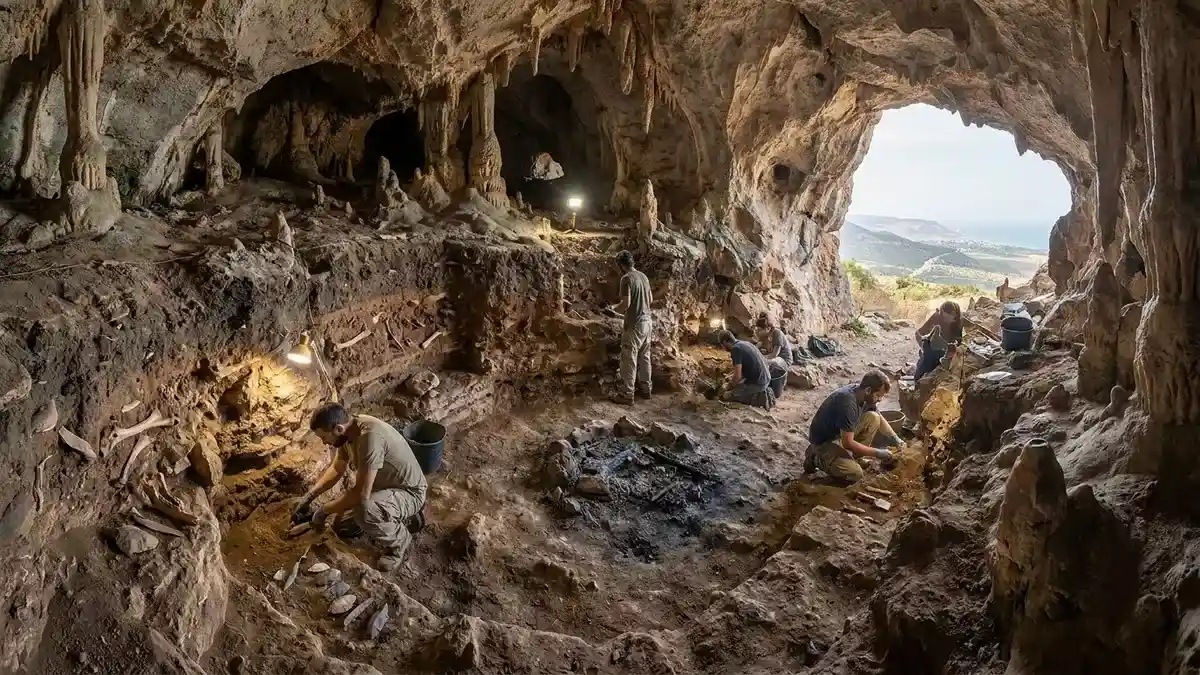
**Neanderthal Babies Grew Twice as Fast as Modern Humans** A groundbreaking study reveals that Neanderthal infants developed at a remarkably accelerated pace compared to today’s children, offering fresh clues about how our ancient relatives adapted to harsh Ice Age environments. Researchers examining the well-preserved remains of a Neanderthal baby from Amud Cave in northern Israel … Read more

Roman York Babies Buried in Rare Purple and Gold Cloth

**Roman York Babies Buried in Rare Purple and Gold Cloth** Archaeologists have uncovered compelling evidence of wealth and deep parental devotion in ancient Roman Britain. Two infants laid to rest nearly 1,700 years ago in what is now York were wrapped in textiles dyed with Tyrian purple—one of the most luxurious and expensive fabrics in … Read more

Ancient Belgian Grave Reveals Post-Roman Trade Secrets

**Ancient Belgian Grave Reveals Post-Roman Trade Secrets** Archaeologists in Belgium have uncovered compelling evidence of how everyday commerce adapted after the Roman Empire’s monetary system collapsed in northwestern Europe. A 5th-century grave at the Roman coastal fort of Oudenburg contained a remarkable purse assemblage of old bronze coins and scrap metal, shedding new light on … Read more

Norway Unearths Record Viking Silver Hoard

**Norway Unearths Record Viking Silver Hoard** In a stunning breakthrough for Viking archaeology, metal detectorists in Norway have uncovered the largest collection of Viking Age coins ever found in the country. More than 3,150 silver pieces, many in remarkable condition, emerged from a quiet farmland field near Rena in Østerdalen. This extraordinary discovery, known as … Read more

2,000-Year-Old Roman Villa and Bathhouse Found in Alexandria

**2,000-Year-Old Roman Villa and Bathhouse Found in Alexandria** Archaeologists have made a remarkable discovery in Alexandria, Egypt, uncovering a well-preserved Roman villa with stunning mosaics alongside an ancient public bathhouse. This rescue excavation in the Moharam Bek district reveals layers of the city’s rich history, from the Ptolemaic founding through Roman and Byzantine times, offering … Read more

700-Year-Old Mummy Reveals Scarlet Fever in Pre-Columbian Americas

**700-Year-Old Mummy Reveals Scarlet Fever in Pre-Columbian Americas** Archaeologists and scientists have made a stunning discovery that rewrites the timeline of infectious diseases in the Western Hemisphere. DNA extracted from a 700-year-old mummy in Bolivia confirms that the bacterium behind scarlet fever and strep throat was already circulating among Indigenous populations in South America long … Read more

5,000-Year-Old Scottish Crannog Predates Stonehenge

**5,000-Year-Old Scottish Crannog Predates Stonehenge** Archaeologists have revealed astonishing new details about a 5,000-year-old artificial island submerged in a Scottish loch, proving that sophisticated Neolithic engineering thrived in Britain centuries before the construction of Stonehenge. This ancient crannog on the Isle of Lewis showcases the remarkable ingenuity of early communities who shaped their watery landscapes … Read more