
Table of Contents
- 1. The Role of Feast Diplomacy in the Andes
- 1.1. The Power of Chicha
- 1.2. Enclosed Courtyard Feasts
- 2. Infusing the Brew with Vilca
- 2.1. What is Vilca?
- 2.2. The Psychedelic Innovation of the Wari
- 3. The Psychological Afterglow and Imperial Unity
- 3.1. Inducing Empathy and Openness
- 3.2. The Lasting Impact of the “Afterglow”
- 4. Archaeological Evidence and a New Perspective
- 4.1. Overlooking Psychology in Archaeology
- 5. Frequently Asked Questions
- 5.1. What was the Wari Empire?
- 5.2. What is chicha?
- 5.3. What are the effects of vilca?
- 5.4. How did mixing the two substances change the experience?
- 5.5. Is there definitive proof that the Wari drank psychedelic beer?
Psychedelic Beer Helped Ancient Wari Leaders Build Pre-Inca Empire
Centuries before the Incas established their famous mountain citadels, another powerful civilization dominated the rugged landscape of the central Andes. The Wari Empire, which flourished between 600 and 1000 CE, managed to unite a vast, multiethnic territory spanning across modern-day Peru, Chile, and Argentina. For decades, archaeologists have marveled at their advanced urban planning, intricate metalwork, and complex social structures. However, a groundbreaking new study suggests that the secret behind their remarkable political unity may not have just been military might or architectural genius, but rather a carefully crafted mind-altering beverage.
According to research published in the journal Revista de Arqueología Americana, Wari elites may have used a potent psychedelic beer to foster loyalty, forge alliances, and maintain peace among diverse groups of outsiders. By blending a traditional alcoholic drink with a powerful hallucinogen, ancient leaders created a shared psychological experience that acted as a literal social glue for their expanding empire.
Psychedelic Beer Helped Ancient Wari Leaders Build Pre-Inca Empire
The Role of Feast Diplomacy in the Andes
To understand how a beverage could hold an empire together, it is essential to look at the deeply rooted traditions of Andean politics. In Wari culture, governance and social cohesion were intimately tied to communal feasting. These events were far more than simple celebrations; they were highly formal diplomatic arenas where alliances were forged, loyalty was tested, and political power was consolidated.
The Power of Chicha
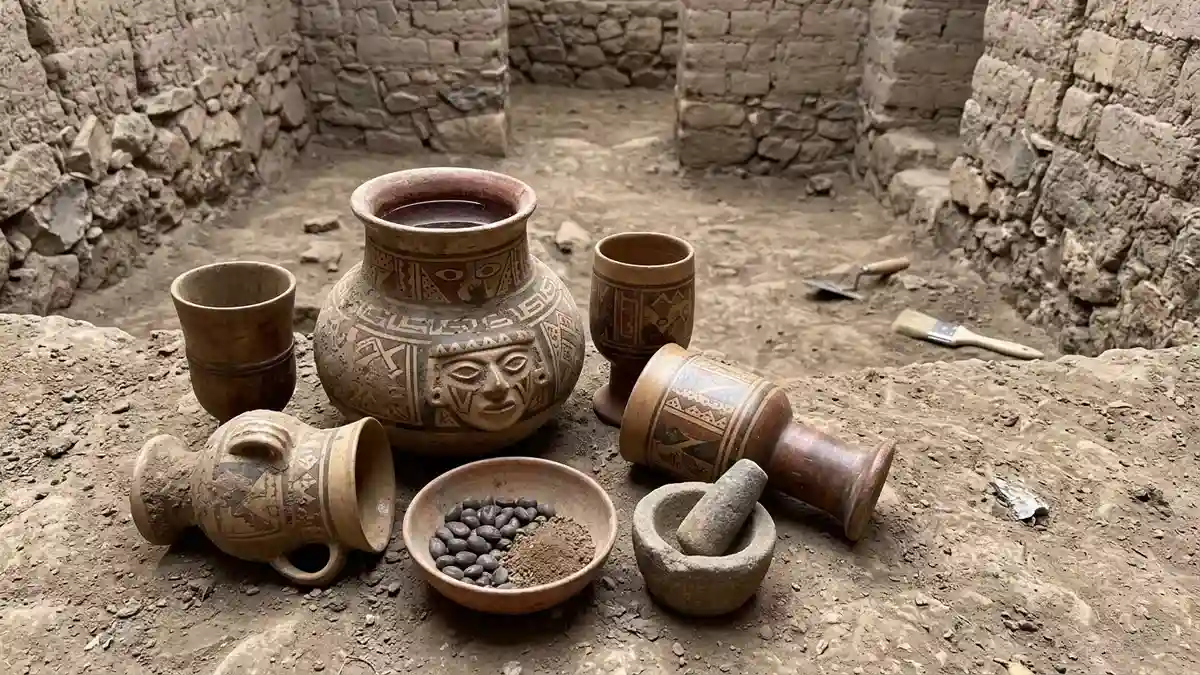
At the center of these gatherings was chicha, a traditional beer brewed from the bright red berries of the Schinus molle plant, commonly known as the Peruvian peppertree. Chicha production was a major state-sponsored enterprise. Elites hosted lavish banquets where massive quantities of this beer were consumed from beautifully crafted ceramic face-neck jars. By providing food and drink to regional leaders and newly conquered populations, Wari rulers demonstrated their generosity while subtly reinforcing their authority.
Enclosed Courtyard Feasts
Unlike the massive public spectacles of later empires, Wari feasts were often intimate, exclusive affairs. Archaeologists have discovered that these gatherings typically took place within highly secure, enclosed courtyards inside Wari architectural compounds. A select group of a few dozen people—including local elites, foreign dignitaries, and Wari rulers—would gather to eat, drink, and pray together for hours on end. The restrictive, private nature of these spaces created a sense of exclusivity and sacred brotherhood among the participants.
Infusing the Brew with Vilca
While chicha alone was enough to lower inhibitions and foster camaraderie, the new study suggests that the Wari took their diplomacy a step further. Researchers hypothesize that the empire’s elite intentionally enhanced the beer by mixing in a potent psychedelic substance known as vilca.
What is Vilca?
Vilca is a powerful hallucinogen derived from the seeds of the Anadenanthera colubrina tree, which grows natively in the tropical valleys of the Andes. Historically, many indigenous South American cultures utilized vilca by grinding the seeds into a fine powder and inhaling it through specialized snuffing tubes. This method produced an immediate, intense, and often overwhelming visionary experience.
The Psychedelic Innovation of the Wari
The authors of the study argue that the Wari innovated a different method of consumption. By dissolving the vilca seeds directly into the fruit-based chicha beer, they modified the delivery system of the drug. When ingested orally through an alcoholic medium, the psychoactive components of vilca are absorbed more slowly by the body. This combination would have softened the immediate, jarring intensity of the hallucinogen, transforming it into a more prolonged, manageable, and shared intoxicating experience.
 100,000-year-old Homo sapiens bones from Ethiopia may preserve earliest evidence of human cremation
The Psychological Afterglow and Imperial Unity
The true genius of the Wari strategy lay not just in the immediate intoxication, but in the long-term psychological effects of the psychedelic experience. Modern clinical research into psychoactive substances indicates that substances like vilca can profoundly alter human behavior, long after the initial hallucinations fade.
Inducing Empathy and Openness
Psychedelics are known to stimulate feelings of deep empathy, emotional openness, and interconnectedness. For individuals from rival factions or newly integrated cultures, sharing a mind-altering experience in a secure environment could break down deep-seated biases and mutual distrust. The drug essentially forced a sense of psychological alignment among the drinkers.
The Lasting Impact of the “Afterglow”
Perhaps the most significant aspect highlighted by the researchers is the concept of the psychedelic “afterglow”—a period of days or weeks following consumption characterized by elevated mood, openness, and pro-social behavior. The study suggests that this lingering sense of connection served as an invisible tool of statecraft.
A few strategically timed feasts each year could ensure that provincial leaders returned to their home regions with a lasting sense of loyalty and emotional bonding toward the Wari state. This psychological manipulation would have dramatically reduced the likelihood of rebellion and eased the friction of governing a sprawling, multicultural population.
Archaeological Evidence and a New Perspective
While proving a specific ancient recipe remains a challenge, substantial archaeological evidence supports this theory. Excavations at various Wari administrative centers have uncovered botanical remains of vilca seeds in immediate proximity to large-scale chicha brewing equipment and serving vessels.
Overlooking Psychology in Archaeology
The researchers note that the long-term emotional and behavioral impacts of psychoactive plants have historically been overlooked in the field of archaeology. Traditionally, scholars viewed the use of ritual drugs in ancient societies purely through a religious or spiritual lens—as a means for shamans to communicate with the gods.
This new study shifts the paradigm, framing psychedelics as practical tools for political manipulation and governance. In the case of the Wari, the strategic use of mind-altering substances may have allowed them to build an empire founded not just on military coercion, but on genuine psychological cooperation.
Although some experts in the field urge caution until direct chemical residues of vilca are identified inside the ceremonial beer vessels, the hypothesis offers a fascinating new look at ancient statecraft. It suggests that the Wari were master psychologists, utilizing the natural chemistry of the Andes to shape human behavior and secure their place in history.
Frequently Asked Questions
What was the Wari Empire?
The Wari Empire was a major pre-Inca civilization that flourished in the central highlands of Peru between 600 and 1000 CE. They are known for their advanced urban centers, sophisticated road networks, and distinctive art and textiles.
What is chicha?
Chicha is a traditional South American alcoholic beverage. While it is commonly made from corn today, the Wari frequently brewed a specific variety using the berries of the Schinus molle (Peruvian peppertree) plant.
What are the effects of vilca?
Vilca is a natural hallucinogen containing psychoactive compounds. When consumed, it induces vivid hallucinations, altered perceptions of time and reality, and long-lasting feelings of empathy, emotional openness, and social connectedness.
How did mixing the two substances change the experience?
Inhaling vilca as a snuff creates a short, incredibly intense trip. By mixing it into alcoholic chicha, the Wari elites likely created a slower, more prolonged, and milder psychedelic experience that was easier to share collectively during long political feasts.
Is there definitive proof that the Wari drank psychedelic beer?
While archaeologists have found vilca seeds alongside ancient chicha brewing tools at Wari sites, direct chemical proof of the two being mixed in the same vessel has not yet been confirmed. The theory remains a highly compelling hypothesis supported by circumstantial and contextual evidence.