
Table of Contents
- 1. The Highway of Pietralata: An Ancient Transportation Core
- 2. The Sacellum of Hercules: Cattle, Coins, and Cult Worship
- 3. Elite Chamber Tombs and Ancient Brain Surgery
- 3.1. Tomb A: The Aristocratic Legacy
- 3.2. Tomb B: Evidence of Prehistoric Trepanation
- 4. The Monumental Basins: Submarine Rituals or High-Tech Industry?
- 4.1. The Eastern Basin
- 4.2. The Southern Basin
- 5. Redefining Ancient Rome as a Dispersed Metropolis
- 6. Frequently Asked Questions
- 6.1. Where was this Roman archaeological discovery made?
- 6.2. Why does this find change what historians thought about eastern Rome?
- 6.3. What was found inside the ancient shrine?
- 6.4. What is the most surprising medical discovery from the tombs?
- 6.5. What were the massive stone basins used for?
Republican-Era Tombs and Hercules Shrine Unearthed in Eastern Rome Reveal Centuries of Suburban Life
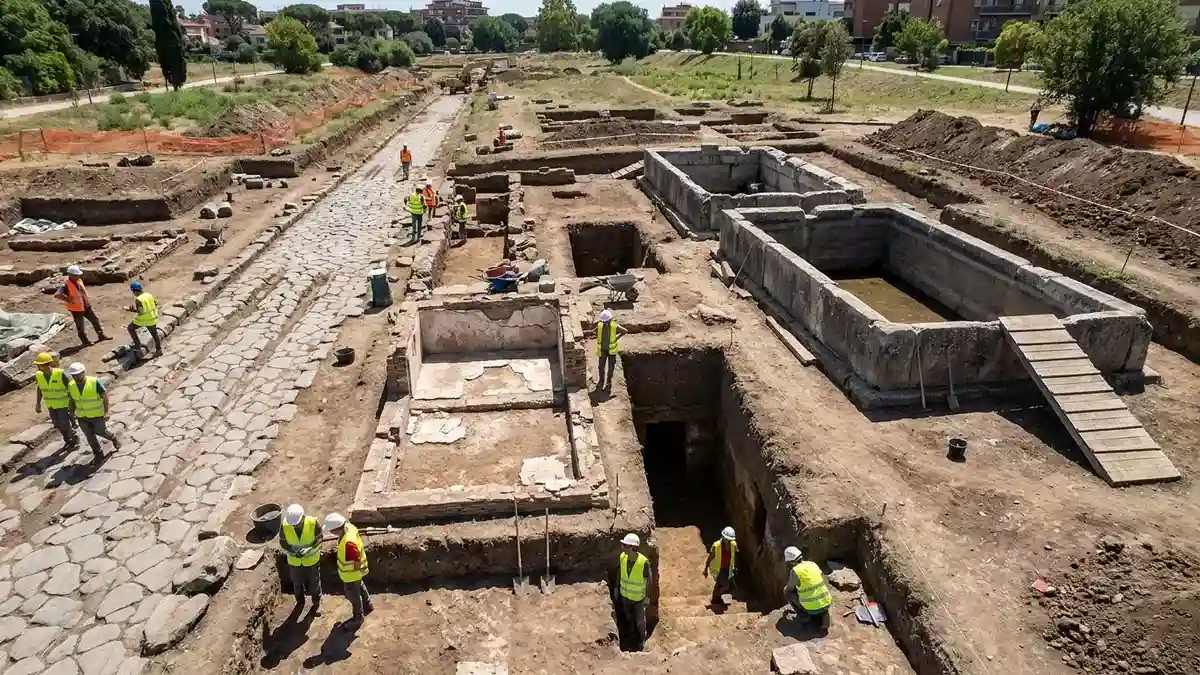
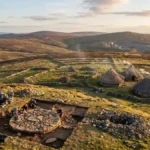
An extraordinary archaeological excavation in the Pietralata district of eastern Rome has radically transformed our understanding of the ancient city’s outskirts. Unearthing a sprawling, four-hectare site at Parco delle Acacie, researchers have documented a dense, continuous history of suburban life stretching from the fifth century BCE through the third century CE.
For generations, historians largely dismissed Rome’s eastern periphery as a marginal, undeveloped wasteland with little historical significance. However, this major investigation, directed by the Special Superintendency of Rome, shatters that assumption. The discovery of elite monumental tombs, massive water systems, an ancient thoroughfare, and a sacred shrine dedicated to Hercules proves that Rome’s suburbs were vibrant hubs of ritual, wealth, and engineering long before the rise of the emperors.
Republican-Era Tombs and Hercules Shrine Unearthed in Eastern Rome Reveal Centuries of Suburban Life
The Highway of Pietralata: An Ancient Transportation Core
The extensive project began in the summer of 2022 as a preventive archaeology campaign ahead of a major urban development program. At the heart of the square-kilometer excavation zone lies a highly trafficked ancient road that ran northwest to southeast, deliberately constructed to navigate a natural watercourse flowing toward the Aniene River.
The evolution of this road acts as a historical timeline for the site’s changing fortunes:
The Early Era (Pre-3rd Century BCE): The road began as a simple path of compacted earth. In sections closer to the modern Via Feronia, travelers carved a trail directly into the exposed tuff bedrock. Deep, parallel cart ruts worn into the stone offer undeniable physical proof of sustained commercial or agricultural traffic.
The Republican Expansion (3rd–2nd Century BCE): As Rome’s power grew, engineers formalized the route. Workers constructed a massive retaining wall out of hand-carved tuff blocks, which was upgraded a century later with advanced opus incertum masonry (irregular stones set in concrete).
The Imperial Peak & Decline (1st–3rd Century CE): During the early Empire, the road received fresh stone paving and monumental flanking walls styled in elegant opus reticulatum (diamond-shaped brickwork grid). The route remained a bustling artery until the late second and third centuries CE, when traffic faded, and the road was slowly reclaimed by modest, everyday pit graves.
The Sacellum of Hercules: Cattle, Coins, and Cult Worship
Flanking this major ancient highway stood a small, square religious shrine known as a sacellum. Measuring approximately 4.5 by 5.5 meters, the sacred building featured sturdy walls of opus incertum masonry that still bear fragments of their original, brilliant interior decorative plaster.
[Shrine Entrance] ──► [Square Plastered Altar] ──► [Rear Projection / Cult Statue Base]
                                                            │
                                                   (Excavation Under Floor)
                                                            │
                                               [Discarded Votive Deposit]
                                               (Terracotta Figures & Bovines)
Inside the entrance, a square plastered base served as the community’s sacrificial altar, while a distinct architectural projection at the rear of the chamber likely supported a sacred cult statue.
When archaeologists carefully excavated beneath the floorboards of the structure, they discovered a hidden, deactivated votive deposit filled with ancient offerings. The cache contained meticulously detailed terracotta human heads, feet, female figurines, and—most revealingly—two distinct bovine (cattle) figures.
Given the shrine’s proximity to the Via Tiburtina, a historic transhumance route used for driving cattle, these bovine figures firmly link the sanctuary to the cult of Hercules. In the Roman Republic, Hercules was widely revered not just as a god of strength, but as a deeply protective patron deity of shepherds, travelers, and livestock merchants. Bronze coins recovered from the soil date the construction of this holy site to the late third or second century BCE.
Elite Chamber Tombs and Ancient Brain Surgery
Just a short distance from the highway, archaeologists uncovered a monumental funerary complex consisting of two elite, parallel chamber tombs cut deep into the earth. The sheer scale and sophisticated architecture of these tombs point to ownership by a highly wealthy Roman gens (an aristocratic clan) that controlled and farmed this lucrative suburban territory during the Republican era.
Tomb A: The Aristocratic Legacy
Dating back to the fourth or early third century BCE, this chamber served as a multi-generational family crypt. Inside, researchers found a prestigious sarcophagus carved from peperino stone (a green-gray volcanic tuff), accompanied by three individual cremation urns. The dead were sent into the afterlife with premium grave goods, including fine imported ceramic vessels, sleek black-glazed cups, and an ornate bronze hand mirror.
Tomb B: Evidence of Prehistoric Trepanation
Probably constructed slightly later than its neighbor, Tomb B featured built-in stone benches designed for traditional inhumation (body burials).
Within this tomb, scientists made a stunning forensic discovery: the skull of an adult male that bore clear, undeniable evidence of surgical trepanation—the medical practice of drilling or scraping a hole into the human skull to treat trauma or neurological conditions.
The bone structure around the surgical site showed signs of healing, indicating that the patient remarkably survived this highly complex, high-risk ancient cranial operation.
The Monumental Basins: Submarine Rituals or High-Tech Industry?
The most visually dominant structures uncovered at the Pietralata site are two gargantuan stone water basins, highlighting a sophisticated local system of water management.
The Eastern Basin
Constructed during the second century BCE using durable opus incertum concrete, this massive reservoir measured an incredible 28 by 10 meters and plunged to a depth of over two meters. The structure was an engineering marvel, featuring beautiful vaulted architectural niches, a massive ceramic storage jar (dolium) permanently embedded into the concrete base, and a dedicated stone ramp descending into the pool.
While complex channels fed water directly into the basin from nearby hillside springs and local streams for potential agricultural or industrial production, the discovery of highly decorative architectural terracottas and inscribed ceramic fragments inside the reservoir’s fill suggests that the water feature also held deep ritual or religious significance for the community.
The Southern Basin
Located nearby, a second basin was carved directly into the solid tuff bedrock, reaching a dizzying depth of four meters. This subterranean pool was lined with heavy, squared stone blocks and featured later imperial expansions in opus reticulatum and opus quadratum.
Accessing the water required walking down two beautifully paved stone and concrete ramps. Intriguingly, archaeologists have found no clear inlet or outlet water channels for this deep pit. This specific structural mystery closely mirrors a famous third-century BCE sacred basin excavated at the nearby ancient city of Gabii, strongly supporting the theory that this southern pool was utilized exclusively for mysterious, subterranean religious immersion rituals.
Redefining Ancient Rome as a Dispersed Metropolis
Together, this complex network of highways, shrines, aristocratic tombs, and deep water basins portrays ancient Pietralata as a highly active, wealthy suburban zone. It proves that the growth, daily survival, and religious identity of Rome relied just as heavily on its bustling peripheral neighborhoods as it did on the monumental forums and temples of its historic city center.
Frequently Asked Questions
Where was this Roman archaeological discovery made?
The excavations were conducted at Parco delle Acacie in the Pietralata district, located in the eastern outskirts of Rome, Italy.
Why does this find change what historians thought about eastern Rome?
Previously, historians believed Rome’s eastern outskirts were marginal, undeveloped areas with very little historical depth. This discovery proves the area was actually a highly active, wealthy suburban center filled with grand architecture, elite tombs, and complex water systems for hundreds of years.
What was found inside the ancient shrine?
Archaeologists discovered a small religious building (sacellum) featuring an altar, plaster walls, and a hidden cache of votive offerings. These offerings included terracotta human body parts and two cattle figurines, linking the shrine to the worship of Hercules, the protective god of travelers and cattle merchants.
What is the most surprising medical discovery from the tombs?
Inside one of the elite family chamber tombs (Tomb B), researchers found the skull of an adult male that showed clear signs of surgical trepanation—an ancient form of brain surgery where a hole was drilled into the skull. Healing patterns on the bone prove the man survived the procedure.
What were the massive stone basins used for?
The site features two monumental water reservoirs. The Eastern Basin (28 by 10 meters) likely served dual purposes for agricultural production and water rituals. The Southern Basin, plunged four meters deep into solid rock with no visible water inlets, closely resembles known sacred immersion pools from the ancient city of Gabii.