
Table of Contents
- 1. The Faunal Wealth of Emporion Pistiros
- 2. Evidence of Systematic Butchery
- 3. Guard Dogs Turned Feast Protein
- 4. Debunking the Famine Myth
- 5. A Broad Mediterranean Tradition
- 6. Changing Attitudes Across Time
- 7. Frequently Asked Questions
- 7.1. Did ancient people in Bulgaria eat dog meat out of starvation?
- 7.2. How do archaeologists know the dogs were butchered for food?
- 7.3. What kinds of dogs were eaten in Iron Age Bulgaria?
- 7.4. Was eating dog meat common in the ancient world?
- 7.5. Did the practice of eating dogs change over time?
Iron Age Feasts: Dog Meat Consumed at Ancient Ritual Gatherings in Bulgaria
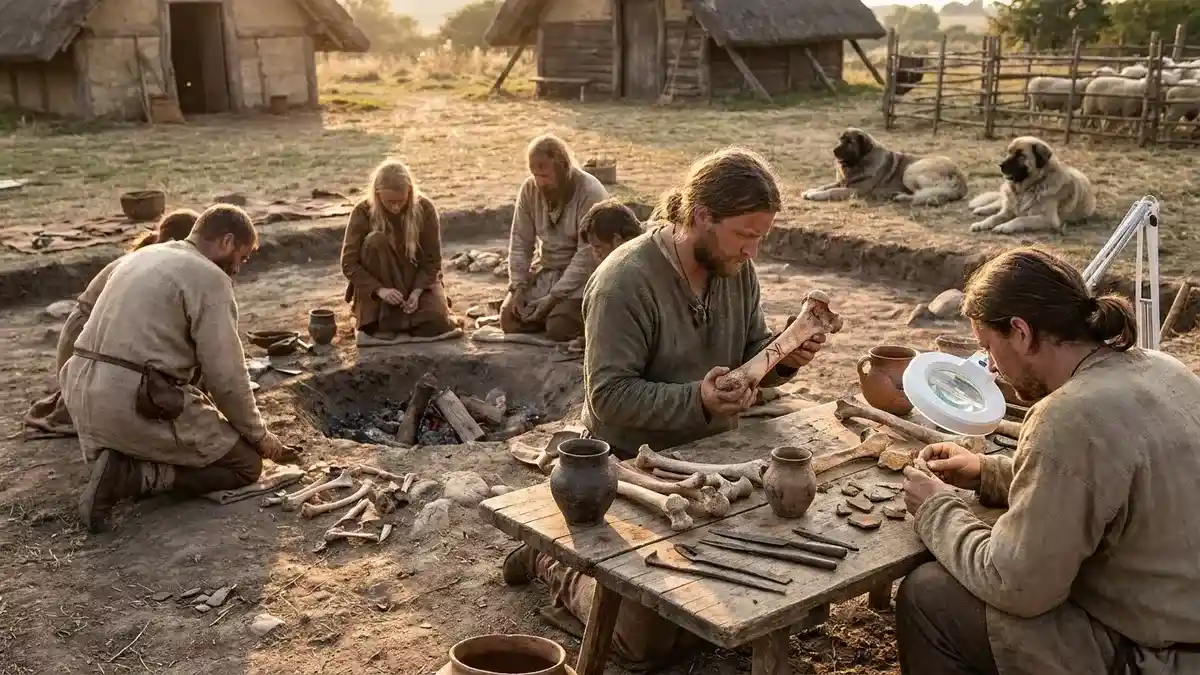
A comprehensive zooarchaeological analysis of animal remains from Late Iron Age settlements in Bulgaria has revealed compelling evidence of a forgotten dietary custom: the consumption of dog meat. Dating between the fifth and first centuries BCE, the study uncovers highly organized butchery patterns, skinning marks, and burning traces on canine bones.
For decades, the presence of dog bones in ancient refuse was often dismissed as evidence of desperate survival during times of famine. However, this new research completely upends that narrative. The data demonstrates that dog meat was a deliberate, consistent component of local culinary traditions and social feasting, rather than an emergency food source.
Iron Age Feasts Dog Meat Consumed at Ancient Ritual Gatherings in Bulgaria

The Faunal Wealth of Emporion Pistiros
The study, published in the International Journal of Osteoarchaeology by zooarchaeologist Stella Nikolova, examined animal bone assemblages from ten distinct archaeological sites across Bulgaria, alongside historical data from five other major settlements.
The most significant and revealing data came from Emporion Pistiros, a sprawling inland commercial hub that acted as a critical trading crossroads between Greek merchants and regional Thracian communities.
Excavations at Pistiros yielded an astonishing collection of more than 80,000 animal bone fragments. Within this massive dataset, dog remains consistently accounted for roughly 2% of the total bone count, while reaching as high as 10% at other contemporary regional settlements.
 Radiocarbon dating confirms Teutonic Knights built Feldioara Fortress in 13th-century Transylvania
Evidence of Systematic Butchery
When researchers subjected the Pistiros canine bones to high-magnification analysis, they discovered clear evidence of methodical processing. Nearly 20% of the recovered dog specimens bore distinct, sharp cut marks inflicted by heavy iron tools.
The spatial distribution of these cuts tells a highly specific story:
Hind Limbs: Numerous slices were concentrated around the upper hind legs, targeting the dense, protein-rich muscle tissue.
Ribs and Forelimbs: Precise slashes indicated systematic portioning of the torso and front limbs.
Marrow Extraction: Long bones were intentionally fractured and split open using the exact same impact techniques applied to cattle and sheep skeletons, a practice meant to harvest nutrient-dense bone marrow.
Furthermore, several recovered lower jaws (mandibles) exhibited localized burning on the teeth. Archaeologists note that this specific charring pattern is a direct byproduct of using open flames to singe away thick fur and toughened hide before the carcass was butchered for cooking.
Guard Dogs Turned Feast Protein
The physical profile of the consumed dogs adds another layer of intrigue. Unlike traditional livestock like pigs or lambs, which ancient herders typically slaughtered at a young age to maximize meat tenderness, the vast majority of the butchered dogs at Pistiros were fully grown adults.
Skeletal measurements revealed that these animals possessed medium-length snouts and medium-to-large skeletal frames, physically resembling modern working breeds such as German Shepherds.
Given their mature age and robust stature, these dogs likely spent their lives working as vital guards, protecting the community’s massive herds of sheep and cattle from predators before ultimately being selected for consumption.
Debunking the Famine Myth
The primary evidence against the “starvation food” hypothesis lies within the immediate archaeological context. The butchered dog bones were found thoroughly integrated into common household refuse pits and communal kitchen waste.
Crucially, these same trash strata were packed with an abundance of alternative, high-quality protein sources. The ancient inhabitants of Pistiros had regular, ample access to:
Domestic Livestock: Cattle, sheep, goats, and pigs.
Aquatic Resources: Diverse species of river fish.
Avian and Wild Game: Local birds and wild forest animals.
Because traditional meats were readily available, the choice to slaughter and eat adult dogs was clearly a matter of preference or ritual tradition rather than a desperate bid to stave off starvation. Instead, the intensive portioning of these animals points toward specialized social events, such as large-scale community feasts or sacred celebrations.
[Traditional Livestock] ──┐
[Wild Game & Fish]      ──┼─► Abundant Daily Protein Sources
[Poultry & Birds]       ──┘

[Adult Working Dogs]    ────► Deliberately Selected for Special Feasts & Social Rituals
A Broad Mediterranean Tradition
This practice was far from an isolated local anomaly. Similar butchery marks on canine bones have been documented at contemporary Iron Age sites stretching across Greece and Romania.
Furthermore, these archaeological discoveries perfectly align with classical written accounts. Several prominent ancient Mediterranean authors explicitly mentioned the consumption of dog meat in their historical and geographic texts. The physical evidence from Bulgaria confirms that these historical descriptions were entirely accurate, documenting a widespread, intercultural regional practice.
Changing Attitudes Across Time
Interestingly, the archaeological layers at Pistiros reveal that cultural traditions were not static. In the later chronological phases of the settlement, the treatment of dogs underwent a radical transformation.
The upper, more recent soil layers no longer contained scattered, butchered dog fragments mixed with kitchen garbage. Instead, archaeologists uncovered complete, intact canine burials. These dogs were laid to rest whole, showing absolutely no signs of butchery or tool marks.
This dramatic shift hints at a major cultural evolution in Thracian society, marking a transition in how dogs were perceived—moving from a source of ritual feast protein to respected companions worthy of formal burial. Ongoing research via the Corpus Animalium Thracicorum project continues to investigate these shifting social dynamics to map out how human-animal relationships evolved across the ancient Thracian world.
Frequently Asked Questions
Did ancient people in Bulgaria eat dog meat out of starvation?
No. The archaeological evidence shows that dog meat was consumed during times of abundance. The butchered dog bones were found mixed with plentiful remains of cattle, sheep, pigs, fish, and wild game, proving that the community had access to ample alternative proteins and ate dog meat as a cultural or ritual choice.
How do archaeologists know the dogs were butchered for food?
Scientists found unmistakable evidence of processing on the bones, including precision cut marks from iron tools on meat-heavy areas like the hind limbs and ribs. Additionally, systematic bone fracturing for marrow extraction and burn marks on teeth from fur-removal fires match the exact patterns seen on ancient livestock bones.
What kinds of dogs were eaten in Iron Age Bulgaria?
The skeletal remains indicate that the dogs were mostly fully grown adults with medium-length snouts and medium-to-large bodies, making them physically similar to modern working breeds like German Shepherds. They likely served as guard animals for livestock herds before being consumed.
Was eating dog meat common in the ancient world?
Yes, the study indicates it was a broader regional tradition. Similar physical evidence of canine consumption has been uncovered at Iron Age sites in neighboring Greece and Romania, and several classical Mediterranean authors wrote about the practice in their historical texts.
Did the practice of eating dogs change over time?
Yes. In the later historical layers of the Emporion Pistiros site, archaeologists discovered a shift: butchered fragments disappeared, replaced by deliberate, intact burials of whole dogs without any tool marks. This strongly suggests that local cultural attitudes shifted over time, viewing dogs more as companions than a food source.