
Table of Contents
**Hidden Medieval Tunnel Uncovered in 6,000-Year-Old German Neolithic Site**
Archaeologists in Germany have made a stunning discovery that layers medieval mystery over prehistoric heritage. During routine excavations ahead of wind turbine construction near Reinstedt in Saxony-Anhalt’s Harz district, researchers uncovered a narrow underground passage carved into a 6,000-year-old Neolithic ditch. This rare find, known as an Erdstall, offers fresh insights into medieval ingenuity and humanity’s long fascination with ancient landscapes.
The tunnel’s placement inside a Middle Neolithic monument highlights how later generations interacted with—and repurposed—remnants of much older cultures, sparking new questions about hidden spaces and forgotten traditions.
Hidden Medieval Tunnel Uncovered in 6,000-Year-Old German Neolithic Site
### A Landscape Rich in Ancient History
The Dornberg area near Reinstedt has long been recognized as a significant archaeological zone. Before modern development began, teams from the State Office for Heritage Management and Archaeology (LDA) Saxony-Anhalt conducted preventive digs. They first identified a large trapezoidal ditch characteristic of the Baalberge culture, a Middle Neolithic group that thrived in central Germany during the fourth millennium BCE.
The Baalberge people were early farmers within the broader Funnelbeaker tradition. They constructed monumental earthworks, often associated with burial practices, reflecting organized communities with sophisticated ritual landscapes. This particular enclosure formed part of a wider burial ground, with evidence of later crouched graves from the Late Neolithic and possible Bronze Age mound features adding further depth to the site’s timeline.
Such layered sites are treasure troves for understanding cultural evolution across millennia, from the spread of agriculture to shifts in burial customs and monument building.
### The Mysterious Discovery: From Suspected Grave to Secret Passage
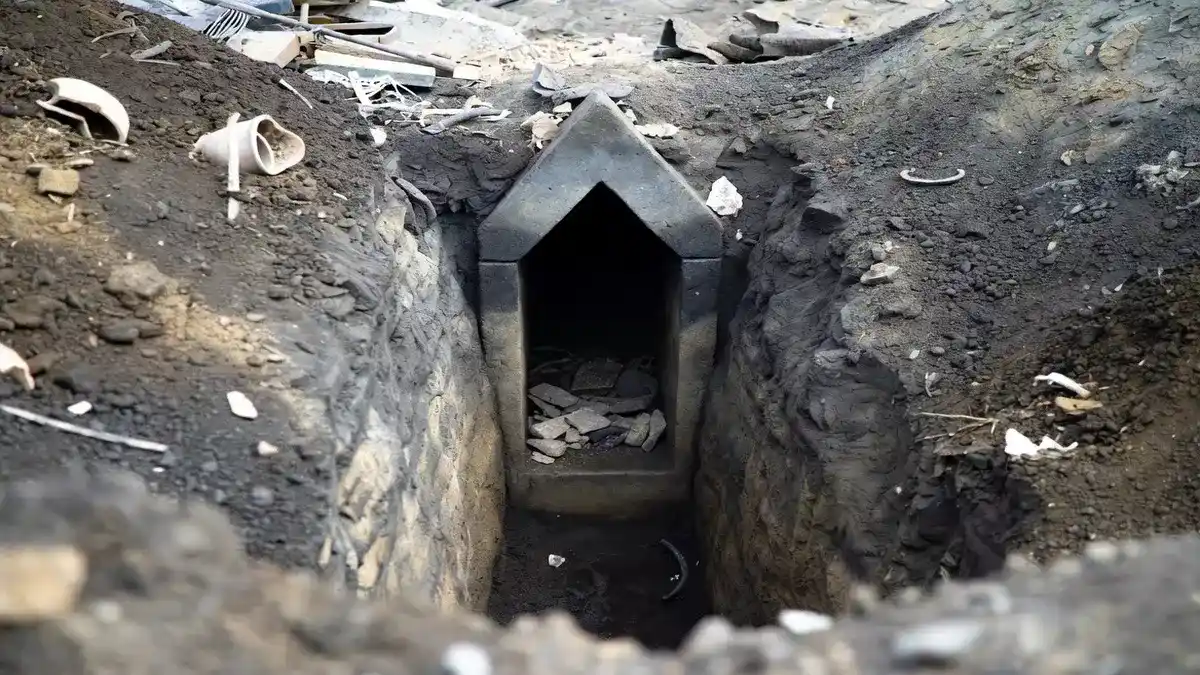
While exploring the southern section of the Baalberge ditch, excavators spotted an elongated oval pit roughly two meters long and up to 75 centimeters wide. A heavy stone slab nearby initially suggested another burial feature. But as work progressed, the pit’s fill revealed a surprising slope downward into the compact loess soil.
Late medieval pottery shards mixed with stones appeared in the upper layers, alongside small surviving cavities. These signs pointed to a man-made underground structure—an Erdstall—rather than a prehistoric grave. Erdstalls, or “earth stables,” are enigmatic narrow tunnels found across central Europe, particularly in Bavaria, Austria, and surrounding regions, with estimates of around 2,000 known examples.
### Inside the Erdstall: Design and Artifacts
Careful excavation in the northern part exposed a tight, curving passage heading northwest. The corridor stands only about one meter to 1.25 meters high and 50 to 70 centimeters wide—cramped even for crawling. Sections of the roof featured a distinctive pointed, gabled shape carved directly from the surrounding loess. A carved step marked the entrance area, and a small niche adorned one wall.
Artifacts recovered inside included an iron horseshoe, a fox skeleton, bones from various small mammals, and fragments of late medieval spherical pots. At the base, a thin charcoal layer suggested a brief, low-intensity fire, as surrounding soil showed hardening without full reddening typical of prolonged hearths. Large stones stacked near the narrowest entrance point indicated the tunnel had been deliberately blocked at some stage.
These details provide valuable clues. The pointed gable roof and niche are common in documented Erdstalls, while the finds help date activity to the late medieval period.
### Understanding Erdstalls: Europe’s Enigmatic Underground Network
Erdstalls remain one of archaeology’s enduring puzzles. Dating primarily to the Middle Ages (roughly 900–1200 CE or later), they feature extremely narrow passages, often too tight for comfortable adult movement, with concealed entrances and occasional “slip” passages that narrow further.
Scholars have proposed various theories for their purpose:
– **Temporary Refuge**: Narrow design could allow quick hiding during raids or unrest, with small entrances easy to conceal or block.
– **Storage**: Cool, stable underground conditions might suit preserving food or valuables.
– **Ritual or Symbolic**: Some link them to folklore, spiritual practices, or liminal spaces between worlds, especially near ancient sites.
– **Practical Workshops**: Limited evidence suggests possible use for small-scale crafting or animal-related activities.
Few contain substantial artifacts, making precise dating and functional analysis challenging. The Reinstedt example stands out due to its direct integration into a well-dated prehistoric monument, offering rare stratigraphic context.
Medieval builders likely chose the visible Neolithic earthwork as a landmark. The site’s association with ancient burials may have carried superstitious weight—places tied to pre-Christian graves were sometimes viewed with caution or reverence, providing privacy for secretive activities away from daily village life.
### Why This Find Is Significant for Archaeology
This discovery represents a stratified connection between medieval tunnel construction and a Neolithic enclosure, shedding light on reuse patterns. Medieval communities across Europe frequently engaged with older monuments, incorporating them into new cultural narratives or practical needs.
In Saxony-Anhalt, a region dense with Neolithic heritage, such interactions reveal continuity and adaptation. The Erdstall’s placement suggests its creators recognized the ditch as a prominent landscape feature, turning ancient ritual space into a hidden medieval utility or refuge.
Ongoing analysis of pottery, bones, charcoal, and soil samples will help refine the tunnel’s construction, use, and abandonment phases. This work contributes to broader studies of medieval rural life, construction techniques in loess soils, and how communities navigated sacred or taboo landscapes.
### Broader Implications for Heritage Preservation
Preventive archaeology ahead of infrastructure projects like wind farms continues to yield surprises. The Reinstedt excavations demonstrate the value of thorough surveys in balancing renewable energy development with cultural resource protection.
Erdstall research benefits from modern techniques, including detailed documentation, 3D modeling, and interdisciplinary analysis. As more examples emerge, patterns may clarify their mysterious role in medieval society.
For enthusiasts of history and the unexplained, sites like this fuel imagination. They remind us that the ground beneath our feet holds stories spanning thousands of years, from Neolithic farmers shaping the first monumental landscapes to medieval people carving secret passages through them.
### Conclusion: Layers of Time Beneath the Surface
The mysterious medieval tunnel inside the 6,000-year-old Neolithic ditch at Reinstedt bridges distant eras in a single location. It showcases human creativity across time—whether building communal monuments in the Neolithic or crafting hidden spaces in the Middle Ages. As researchers continue their work, this find promises deeper understanding of our ancestors’ relationship with the land, the past, and the unknown.
Such discoveries enrich our appreciation of Germany’s archaeological wealth and the enduring allure of underground mysteries. They invite us to look closer at familiar landscapes, where history waits just below the surface.
### FAQ: Key Questions About the Reinstedt Erdstall Discovery
**What is an Erdstall?**
An Erdstall is a narrow, man-made underground tunnel or chamber system from the medieval period. These passages are typically too small for standing and feature concealed entrances, found mainly in central Europe.
**How old is the Neolithic ditch?**
The trapezoidal ditch belongs to the Baalberge culture and dates to around the fourth millennium BCE, making it approximately 6,000 years old. It formed part of a prehistoric burial landscape.
**Why was the tunnel built inside an ancient monument?**
The visible Neolithic earthwork likely served as a convenient landmark. Its association with ancient graves may have offered seclusion due to medieval superstitions, making it ideal for a hidden tunnel.
**What were Erdstalls used for?**
Their exact purpose remains unknown. Leading theories include emergency refuges, storage, ritual spaces, or workshops. The lack of artifacts in most examples complicates definitive answers.
**What artifacts were found in the Reinstedt tunnel?**
Discoveries included late medieval pottery, an iron horseshoe, a fox skeleton, small mammal bones, and evidence of a small fire. Stones blocked the entrance at one point.
**Will the site be preserved?**
As part of preventive archaeology for wind turbine construction, findings are thoroughly documented. Significant elements may inform future heritage decisions in the region.
**Are there other similar discoveries?**
Hundreds of Erdstalls exist across Europe, especially in Bavaria. However, direct links to prehistoric monuments like this one are rare, making the Reinstedt example particularly valuable for research.