
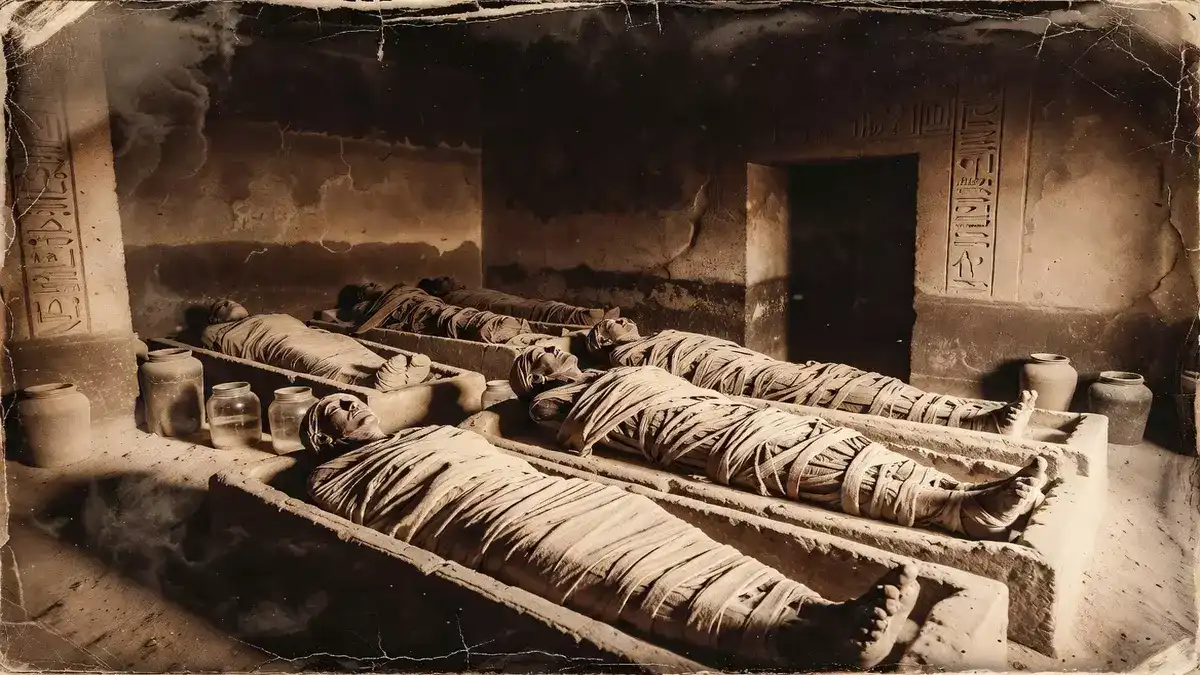
**Ancient Egyptian Mummies Reveal Secrets in Their Scents**
The distinctive musty aroma surrounding ancient Egyptian mummies has long fascinated visitors and scientists alike. What many once dismissed as simple decay now tells a far richer story. Groundbreaking chemical research reveals that these signature scents stem from complex blends of volatile organic compounds released by ancient embalming materials and preserved tissues. This innovative approach is transforming our understanding of mummification practices across more than 2,000 years of Egyptian history.
By analyzing the air around these remarkable artifacts, researchers are decoding long-lost embalming recipes without damaging fragile remains. The results offer fresh insights into material choices, evolving techniques, and the sophisticated funerary traditions of one of history’s most iconic civilizations.
Ancient Egyptian Mummies Reveal Secrets in Their Scents

### Non-Destructive Science Unlocks Embalming Mysteries
A research team from the University of Bristol pioneered a gentle yet powerful method to study Egyptian mummies. Instead of cutting into bandages or dissolving samples—a process that risks harming priceless artifacts—they captured and analyzed the gases hovering above mummified bodies and their storage containers.
This technique, known as headspace solid phase microextraction combined with gas chromatography and high-resolution mass spectrometry, allows scientists to identify individual molecules in the air without physical contact. It marks a significant leap forward in archaeological chemistry, preserving mummies for future generations while revealing their hidden chemical histories.

The study examined 35 samples of balms and bandages from 19 different mummies spanning Egypt’s rich timeline. In total, scientists identified 81 distinct volatile organic compounds. These molecules clustered into four primary categories directly tied to classic embalming ingredients used by ancient embalmers.
### Decoding the Chemical Signatures of Mummification
Fats and oils formed the foundation of many balms, producing aromatic compounds and short-chain fatty acids that contribute to the characteristic musty profile. Beeswax added mono-carboxylic fatty acids and cinnamic compounds, enhancing preservation and creating distinct scent markers. Plant resins contributed aromatic compounds along with sesquiterpenoids, while even tiny traces of bitumen released unique naphthenic compounds detectable through this sensitive analysis.
 Ancient shipwreck with 300 amphorae found off Italy could reshape views of Mediterranean wine trade
Chemical patterns shifted noticeably across different historical periods. Earlier mummies typically showed simpler profiles dominated by basic fats and oils. Later examples, particularly from the Ptolemaic period and beyond, displayed far more elaborate mixtures. These included imported resins and bitumen—materials that were expensive and signaled specialized, high-status preparation.
Interestingly, volatile profiles also varied by body region. Samples taken near heads often differed from those around torsos, suggesting embalmers used tailored recipes for different parts of the body. This regional variation points to a sophisticated, almost medical-level understanding of preservation techniques.
### How Embalming Practices Evolved Over Millennia
Ancient Egyptian mummification represented one of the most advanced funerary technologies of the ancient world. What began as relatively simple efforts to preserve bodies for the afterlife developed into elaborate rituals involving dozens of ingredients sourced from across the Mediterranean and beyond.
The new volatile analysis confirms and refines what scholars previously understood from written texts and solid residue studies. Early periods relied heavily on locally available fats and oils. Over time, embalmers incorporated exotic resins from trees in East Africa and the Middle East, along with bitumen from the Dead Sea region. These additions not only improved preservation but also carried symbolic and religious significance.
The presence of complex mixtures in later mummies reflects Egypt’s expanding trade networks and increasing wealth among elites. Bitumen, in particular, proved remarkably detectable even in minute quantities, highlighting the method’s exceptional sensitivity compared to traditional approaches.
### Advantages of Air Analysis for Mummy Research
Traditional chemical studies of mummies often required destructive sampling that limited research opportunities and raised ethical concerns. The Bristol team’s volatile compound approach changes this equation dramatically. It provides a rapid, non-invasive screening tool perfect for museum collections and fragile specimens.
Curators can now gather valuable chemical data while keeping mummies intact for public display and future study. This method complements rather than replaces physical sampling, serving as an efficient first step that guides more targeted investigations when needed.
Beyond research, the findings add a sensory dimension to our understanding of ancient Egyptian funerary practices. The same compounds that create the unmistakable mummy scent today once helped ensure eternal preservation and carried profound spiritual meaning for Egyptians who believed in life after death.
### Broader Impact on Egyptology and Museum Collections
This research, published in the *Journal of Archaeological Science*, demonstrates how modern analytical chemistry can reveal details invisible to the naked eye. By linking volatile profiles to known balm compositions, scientists gain a more complete picture of material choices, preservation strategies, and cultural priorities.
Museums worldwide stand to benefit enormously. Many institutions house extensive mummy collections but hesitate to subject them to invasive testing. Air sampling offers a safe way to study these artifacts while enhancing visitor experiences—perhaps even explaining that distinctive scent guests notice during tours.
The technique also opens doors for comparative studies across different collections and time periods. Researchers can now track subtle changes in embalming practices with greater precision, potentially identifying workshop traditions or regional variations within Egypt itself.
### Connecting Scents to Ancient Egyptian Beliefs
For ancient Egyptians, proper mummification was essential for the soul’s journey to the afterlife. The process involved not just physical preservation but also ritual purity and divine protection. Ingredients like resins and oils carried sacred associations with gods such as Osiris and Anubis.
The volatile compounds detected today represent the lingering traces of these beliefs made material. Each scent molecule tells part of a story about resource procurement, technical expertise, and spiritual worldview that sustained Egyptian civilization for thousands of years.
This sensory link makes the science more accessible and engaging. Visitors who have experienced that musty odor in museums can now connect it directly to the sophisticated chemistry of the past.
### Environmental and Preservation Insights
The study also sheds light on how mummification materials interacted with tissues over centuries. Different combinations of fats, waxes, resins, and bitumen created unique chemical environments that influenced long-term preservation success. Understanding these interactions helps conservators develop better strategies for protecting mummies in modern storage and display conditions.
Climate control, humidity management, and careful handling all benefit from this deeper chemical knowledge. As museums work to preserve these irreplaceable artifacts for future generations, data from volatile analysis provides practical guidance.
### Why This Research Matters Today
In an era when non-destructive and minimally invasive techniques are increasingly valued, this University of Bristol study sets a new standard. It combines cutting-edge analytical science with respect for cultural heritage, producing results that advance knowledge while honoring the past.
The findings contribute to a growing body of research that uses modern technology to illuminate ancient lives. From DNA analysis to isotopic studies, each new method adds another layer to our understanding of Egyptian civilization and its enduring fascination.
As more mummies undergo similar analysis, researchers expect to refine timelines, identify previously unknown ingredients, and perhaps even trace individual embalmers or workshops through their chemical signatures.
### Conclusion: Breathing New Life into Ancient Egyptian History
The scents emanating from ancient Egyptian mummies are far more than curiosities—they are chemical archives preserving details of embalming recipes and funerary practices that defined a civilization. By analyzing these volatile compounds, scientists have opened a non-destructive window into the past that enriches both academic research and public appreciation.
This innovative approach demonstrates how thoughtful application of modern science can reveal secrets hidden for millennia while protecting fragile treasures. As we continue to study these remarkable remains, we gain not only technical knowledge but also deeper insight into human beliefs about life, death, and eternity.
The musty aroma that greets museum visitors now carries new meaning—a direct connection to the skilled hands of ancient embalmers who worked to defeat death itself. Through their lingering scents, Egypt’s mummies continue to speak across time, sharing recipes for immortality written in chemistry rather than hieroglyphs.
### FAQ: Ancient Egyptian Mummies and Embalming Scents
**What causes the distinctive smell of Egyptian mummies?**
The characteristic musty odor comes from volatile organic compounds released by ancient embalming materials like fats, oils, beeswax, plant resins, and bitumen, along with preserved tissues.
**How did researchers analyze mummies without damaging them?**
Scientists from the University of Bristol used headspace analysis to capture and identify gases above the mummies, employing solid phase microextraction and advanced mass spectrometry techniques.
**How many different compounds were identified in the study?**
Researchers detected 81 distinct volatile organic compounds across samples from 19 mummies, grouped into four main categories linked to specific embalming ingredients.
**Did embalming recipes change over time in ancient Egypt?**
Yes. Earlier mummies showed simpler profiles dominated by fats and oils, while later periods featured more complex mixtures with imported resins and bitumen, reflecting evolving practices and trade networks.
**Why is this air analysis method important for museums?**
It provides a non-destructive way to gather chemical information from fragile mummies, helping curators study collections while preserving them for display and future research.
**Can this technique detect tiny traces of specific materials?**
Absolutely. The method proved sensitive enough to identify bitumen markers even when present in extremely small amounts, surpassing many traditional analytical approaches.