
**1,000-Year-Old Elite Gold Tomb Discovered in Panama**
Archaeologists working in Panama have made a dazzling discovery that shines new light on the sophisticated societies that thrived in Central America long before European contact. At El Caño Archaeological Park, a 1,000-year-old elite tomb packed with exquisite gold ornaments and finely crafted ceramics has been unearthed, offering a rare glimpse into the power, artistry, and beliefs of ancient leaders in the region.
Dating to between 800 and 1000 CE, this remarkable burial in the Natá district—about 124 miles southwest of Panama City—highlights the wealth and social complexity of pre-Columbian cultures along the Central American isthmus. The find underscores how gold served not just as decoration but as a powerful symbol of status, spirituality, and authority that carried into the afterlife.
1,000-Year-Old Elite Gold Tomb Discovered in Panama
### A Spectacular Elite Burial at El Caño
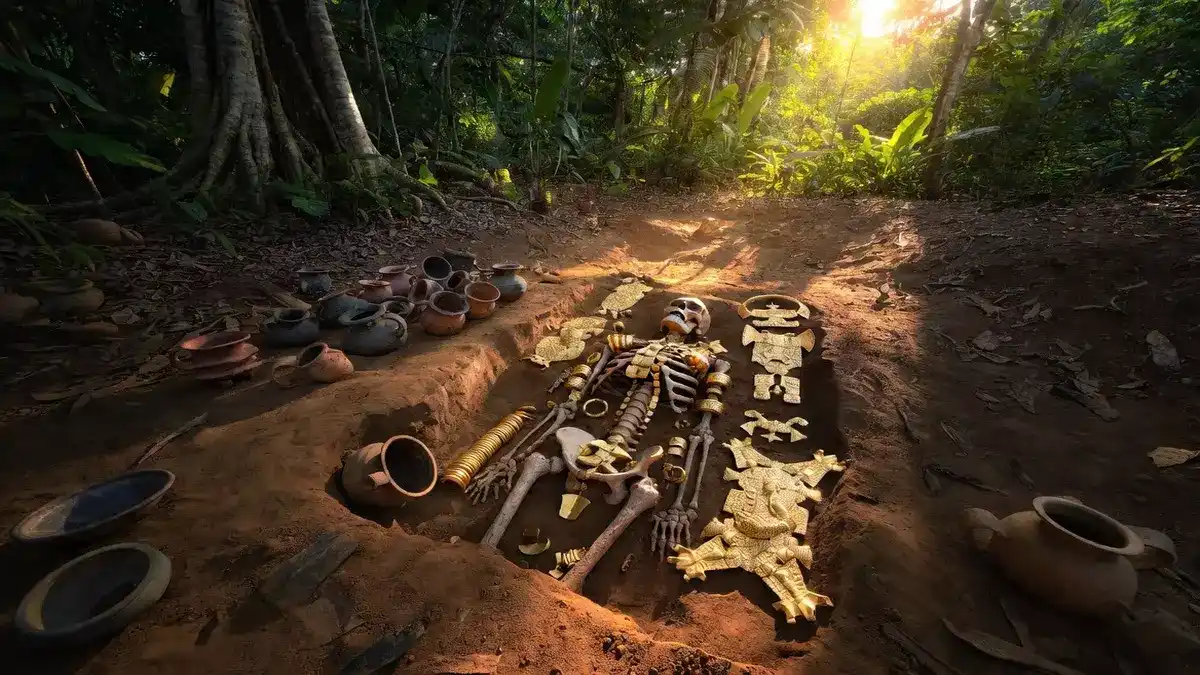
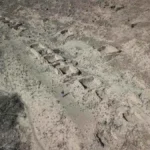
The tomb contained the skeletal remains of a high-ranking individual placed prominently at the center, surrounded by a rich array of grave goods. Among the treasures were two gold bracelets, two earrings, and impressive pectoral plates featuring intricate designs of bats and crocodiles—animals deeply significant in the symbolic world of ancient Panamanian societies.
These motifs, often representing strength, transformation, and connections to the natural and supernatural realms, reflect a rich visual language developed by communities in central Panama. The gold artifacts demonstrate advanced metallurgical skills, including expert hammering, alloying, and decorative techniques that showcase centuries of specialized knowledge.
Nearby ceramic vessels featured traditional designs characteristic of the period between the eighth and eleventh centuries. Their presence alongside the gold items suggests careful curation of objects meant to honor the deceased and equip them for the journey beyond death.
### Twenty Years of Excavations at a Sacred Site
This latest discovery builds on nearly two decades of systematic work at El Caño Archaeological Park. The tomb represents the tenth elite burial with similar characteristics uncovered at the site, strengthening the interpretation that it functioned as a dedicated cemetery for community leaders over roughly 200 years.
Generations of people returned to this location to inter their most prominent figures, indicating strong continuity in social and ritual practices. The consistent layout of these graves points to established traditions where certain individuals received elaborate funerary treatment that set them apart from the rest of society.
The strategic placement of gold ornaments directly on and around the body further emphasizes hierarchy. Archaeologists see these items as deliberate expressions of the deceased’s rank, identity, and spiritual role—symbols that continued to matter even after death. Such practices reveal a worldview in which leadership and prestige extended into the afterlife.
### Advanced Metallurgy and Artistic Traditions
The gold objects from El Caño stand out for their quality and cultural significance. Pre-Hispanic goldworking in Panama and neighboring regions was highly developed, involving sophisticated techniques passed down through guilds of skilled artisans. Gold was not only a marker of wealth but also held sacred meaning, often linked to the sun, divine power, and elite authority.
Bats and crocodiles featured prominently in the iconography, likely tied to shamanic beliefs, cosmology, and the natural environment of the isthmus. These animals inhabited both physical and spiritual domains, making them potent emblems for leaders who may have served as intermediaries between worlds.
The ceramics complement the gold finds, providing additional clues about daily life, trade, and artistic styles. Together, the artifacts help reconstruct a vibrant cultural landscape where craft specialists created objects for both practical and ceremonial purposes.
### Connections Across the Central American Isthmus
El Caño’s location along the narrow land bridge connecting North and South America positioned it within dynamic networks of exchange. Goods, ideas, and people moved across this corridor for thousands of years, influencing local societies and fostering cultural diversity.
The repeated discovery of refined gold items across multiple tombs at the site indicates long-established metallurgical traditions that predated European arrival by centuries. This challenges older narratives that downplayed the complexity of pre-Columbian societies in the Americas and highlights Panama’s important role in regional prehistory.
Panama’s Ministry of Culture has emphasized the national and international importance of the find. Each new tomb adds crucial evidence about social organization, religious beliefs, and artistic achievements, helping to build a more complete picture of life in the region over a millennium ago.
### Life and Society in Pre-Columbian Panama
To fully appreciate this discovery, it helps to understand the broader context of ancient Panama. Between 800 and 1000 CE, communities in the central regions developed chiefdom-level societies with clear distinctions between elites and commoners. Agriculture, including maize, tubers, and other crops, supported growing populations, while trade in luxury materials like gold fueled status competition.
Leaders likely controlled access to rare resources and organized communal activities, including large-scale ceremonies and construction projects. Burial practices at sites like El Caño reflect these structures, with elite tombs serving as powerful statements of continuity and legitimacy for ruling lineages.
Environmental factors also shaped these societies. The tropical climate, rivers, and forests provided resources but presented challenges that required adaptive strategies. Gold artifacts may have symbolized control over both human and natural forces.
### The Significance for Understanding Pre-Hispanic History
Discoveries such as this elite tomb are transforming our knowledge of the Americas before Columbus. They demonstrate advanced technological capabilities, complex social hierarchies, and rich symbolic systems that rival those in other parts of the ancient world.
In Central America, where written records are absent, archaeology and bioarchaeology provide the primary windows into the past. Careful excavation, documentation, and analysis of contexts like El Caño allow researchers to move beyond speculation toward evidence-based interpretations of daily life, power dynamics, and cultural values.
This particular burial adds depth to ongoing studies of how status was displayed and maintained. The investment in gold and ceramics for a single individual reflects not only personal wealth but also communal resources mobilized to honor important figures.
### Preservation and Future Research at El Caño
El Caño Archaeological Park serves as both an active research site and a public educational resource. Ongoing work there balances scientific investigation with heritage protection and tourism, allowing visitors to connect with Panama’s deep history.
Future analyses of the newly discovered remains and artifacts may include advanced techniques such as ancient DNA testing, isotopic studies for diet and mobility, and detailed metallurgical examinations. These methods promise even more insights into the individual’s life, health, and possible connections to other regions.
Conservation efforts ensure that these fragile materials survive for future generations to study and appreciate. Public engagement with such finds strengthens cultural identity and supports continued archaeological investment.
### Broader Lessons from Ancient Panama
The gold-filled tomb at El Caño speaks to universal human themes: the desire to honor leaders, the importance of ritual in processing death, and the role of material culture in expressing identity. It also reminds us of the sophistication of Indigenous American societies, whose achievements are still being fully recognized.
In an era when global interest in pre-Columbian history continues to grow, sites like El Caño provide tangible links to the past. They encourage reflection on cultural continuity, resilience, and the diverse ways human communities have organized themselves across time and space.
**Conclusion**
The unearthing of a 1,000-year-old elite tomb brimming with gold at Panama’s El Caño Archaeological Park represents a major contribution to our understanding of pre-Hispanic Central America. This carefully arranged burial, with its exquisite ornaments and symbolic artifacts, reveals the power structures, artistic mastery, and spiritual beliefs of ancient societies along the isthmus.
As researchers continue to study the site, each new detail adds richness to the story of Panama’s indigenous heritage. The discovery not only celebrates the skill and complexity of these early cultures but also invites us to appreciate the deep historical roots that continue to shape the region today. In highlighting the lives and legacies of past leaders, El Caño offers a powerful reminder of the enduring human impulse to create meaning, beauty, and memory that transcends time.
**FAQ**
**Q: How old is the newly discovered tomb at El Caño?**
A: The elite burial dates to between 800 and 1000 CE, making it more than 1,000 years old and associated with pre-Columbian societies in central Panama.
**Q: What treasures were found inside the tomb?**
A: Archaeologists recovered two gold bracelets, two earrings, pectoral plates decorated with bats and crocodiles, and several ceramic vessels with traditional designs.
**Q: Why is gold significant in these ancient burials?**
A: Gold symbolized status, power, and spiritual connections. Its presence in elite tombs indicates advanced metallurgy and the importance of rank that extended into the afterlife.
**Q: What does the El Caño site reveal about ancient Panamanian society?**
A: The repeated elite burials suggest a cemetery used over generations for high-ranking individuals, pointing to stable social hierarchies and long-term ritual traditions.
**Q: How does this discovery connect to broader Central American history?**
A: It highlights trade networks, metallurgical expertise, and cultural practices across the isthmus, enriching our knowledge of pre-Hispanic societies before European contact.
**Q: Can visitors see the artifacts from this tomb?**
A: Many objects from El Caño are preserved and displayed at the archaeological park. Ongoing excavations and conservation work continue to enhance public access and education.
**Q: Why are animal motifs like bats and crocodiles important?**
A: These creatures held symbolic meaning related to power, transformation, and cosmology in ancient Panamanian belief systems, often linked to leadership and shamanic roles.
This exciting find continues to captivate researchers and history enthusiasts alike, deepening appreciation for the rich archaeological heritage of Panama and the ancient Americas.