
**Neolithic Graves Reveal Flexible Gender Roles in Ancient Europe**
A groundbreaking Neolithic study from eastern Hungary is reshaping our understanding of gender roles in prehistoric Europe. By examining 125 adult skeletons from two nearby settlements, researchers have uncovered evidence that while gender influenced daily work and burial practices, these roles were often more flexible than previously assumed. The findings highlight both shared patterns across the continent and surprising local variations during a transformative period in human history.
Neolithic Graves Reveal Flexible Gender Roles in Ancient Europe
### Two Neolithic Communities, Two Different Social Worlds
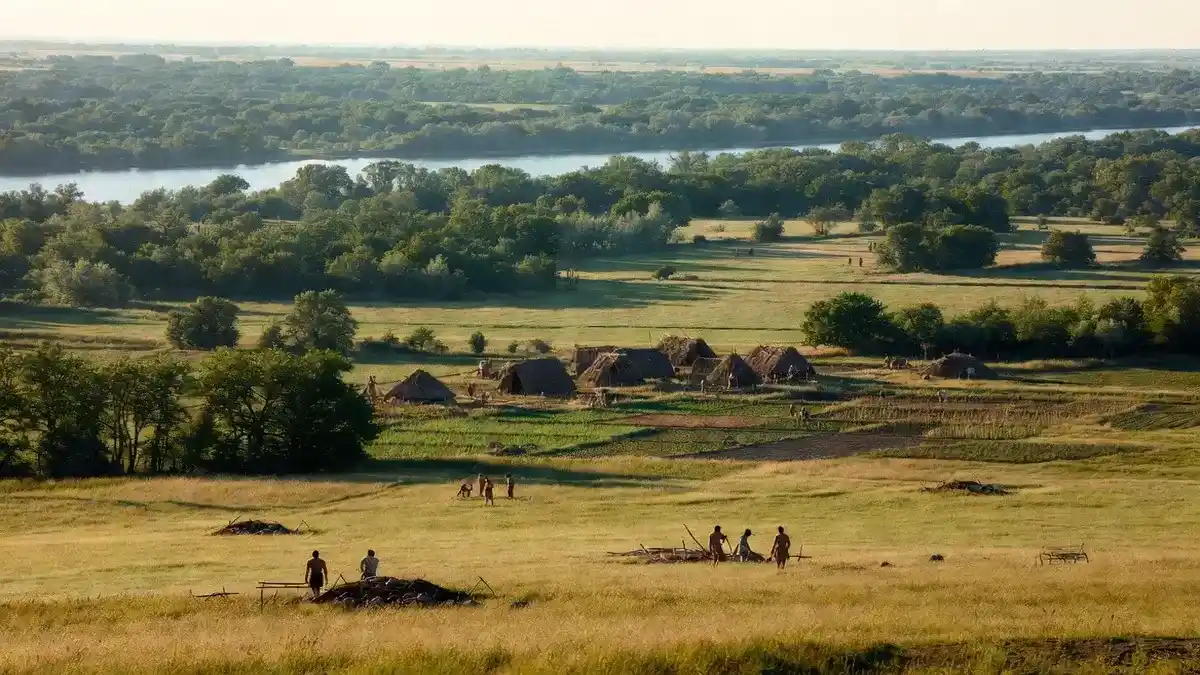
The research focused on two sites in the same microregion: Polgár-Ferenci-hát, occupied roughly 5300 to 5070 BCE, and Polgár-Csőszhalom, dating to about 4800 to 4650 BCE. Although geographically close, these communities displayed distinct approaches to labor organization and funerary customs, offering a rare window into how early farming societies structured identity and daily life.
Published on February 16, 2026, in the *American Journal of Biological Anthropology*, the study combined detailed skeletal analysis with burial context. This integrated approach provides deeper insights than either method alone, revealing how physical activities left lasting marks on bones while burial rituals reflected cultural values around gender.
### Decoding Daily Life Through Bone Evidence
Researchers looked for activity-related changes in the skeletons, including:
– **Spondylolysis**: Stress fractures in the spine that indicate heavy overall workload.
– **Humeral enthesopathies**: Markers of repeated strain on the upper arm, often from throwing, tool use, or intensive manual labor.
– **Metatarsal facets**: Changes in foot bones linked to habitual kneeling or strong toe extension.
These biological clues were paired with burial details such as body position and grave goods, particularly polished stone tools often associated with male roles in Neolithic Europe.
At Polgár-Ferenci-hát, life appears relatively egalitarian in terms of visible gender distinctions. Burial treatments showed no consistent patterns based on sex—neither body positioning nor accompanying objects followed strict rules. Skeletal markers of physical stress were present in both women and men, suggesting demanding lives for everyone, though individual variation was high within each group.
In contrast, Polgár-Csőszhalom revealed clearer divisions. Overall physical strain was higher, and burial customs followed a more rigid pattern: women were typically placed on their left side, while men lay on their right. Polished stone tools appeared far more frequently in male graves, pointing to symbolic associations between certain objects and masculinity.
### Shared Patterns and Surprising Exceptions
Across both sites—and consistent with broader trends in prehistoric Europe—male skeletons frequently showed overuse of the right upper limb. This suggests repeated unilateral activities, such as spear throwing, woodworking, or stone tool production, that were likely part of male cultural roles.
At Csőszhalom, nine males buried with polished stone tools also displayed metatarsal facets on their foot bones, indicating repeated postures involving powerful toe extension—possibly from activities requiring balance, kneeling, or specialized labor.
One particularly illuminating case involved a female burial that combined these “male-associated” grave goods with the same foot bone markers. This exception demonstrates that lived experiences and symbolic burial practices did not always align perfectly with biological sex, highlighting the fluid nature of gender roles within these communities.
### Understanding Gender in Neolithic Society
The comparison between the two sites illustrates how gender roles in Neolithic Europe were both distinct and adaptable. At Csőszhalom, clearer social structures tied gender to specific burial symbolism and certain physical activities. At Ferenci-hát, such distinctions were subtler, with more overlap in daily workloads.
These findings challenge older assumptions of rigid gender divisions in early agricultural societies. Instead, they suggest that while biological sex influenced some aspects of life and death, individual capabilities, community needs, and local traditions allowed for meaningful variation. Women and men both performed physically taxing work, but the specific tasks and cultural expressions of identity differed between settlements.
The Neolithic period marked a pivotal shift in human history, with the spread of farming, settled villages, and new social complexities. In this context, understanding gender dynamics helps explain how communities organized labor for agriculture, animal husbandry, crafting, and defense. The Hungarian sites provide valuable local data that complements broader European patterns, showing how regional differences persisted even within short distances.
### Limitations and Strengths of the Research
The study’s sample size of 125 adults, while substantial for bioarchaeological research, still limits sweeping generalizations. Activity markers on bones indicate repetitive stress but cannot pinpoint exact tasks with complete certainty. Factors like age, health conditions, and post-mortem changes also influence interpretations.
Despite these constraints, the strength lies in the multidisciplinary integration of skeletal biology, burial archaeology, and contextual analysis. By examining two closely related yet distinct communities, the researchers could highlight both common trends—such as right-arm dominance in males—and local flexibility in how gender shaped identity.
Lead contributors include researchers from CNRS and other institutions, with the full paper authored by Villotte, S., Szeniczey, T., Kacki, S., & Anders, A. (2026). “Fixed and fluid: The two faces of gender roles—A combined study of activity patterns and burial practices in the European Neolithic.” *American Journal of Biological Anthropology*, 189(2), e70217.
### Broader Implications for Prehistoric Studies
This research adds to a growing body of evidence that prehistoric gender roles were more nuanced than traditional narratives suggested. Similar studies across Europe have found overlapping labor patterns between sexes in early farming communities, where survival required everyone’s contribution to food production, tool-making, and childcare.
The presence of exceptions—like the female individual with male-associated traits—suggests that personal skill, status, or circumstance could override generalized gender expectations. Such flexibility may have been key to the resilience and success of Neolithic societies as they adapted to new economic realities.
Future work could expand this approach by incorporating isotopic analysis for diet, ancient DNA for kinship and mobility, and larger regional datasets. Together, these methods continue to humanize our ancestors, revealing not just broad cultural patterns but individual lives marked by both tradition and personal agency.
### Why These Discoveries Matter Today
Understanding gender in the distant past offers valuable perspective on modern discussions about roles, equality, and social structure. The Neolithic evidence shows that differentiation based on gender coexisted with practical flexibility—a balance that likely supported community thriving for generations.
As archaeological science advances with better techniques for reading bones and burials, we gain richer stories about how humanity organized itself across millennia. The Polgár sites remind us that even in ancient times, social norms were living, evolving practices rather than inflexible rules.
**Conclusion**
The Neolithic study from eastern Hungary demonstrates that gender roles in early European farming communities were both structured and remarkably adaptable. Through careful analysis of skeletal stress markers and burial customs at Polgár-Ferenci-hát and Polgár-Csőszhalom, researchers have shown how daily life and ritual reflected local social realities. These insights deepen our appreciation for the complexity of prehistoric societies and the enduring human capacity for both tradition and innovation.
**FAQ**
**Q: What time period do these Hungarian Neolithic sites represent?**
A: Polgár-Ferenci-hát dates to approximately 5300–5070 BCE, while Polgár-Csőszhalom dates to 4800–4650 BCE, placing them in the Middle Neolithic when farming lifestyles were well established in Central Europe.
**Q: How can scientists determine past physical activities from skeletons?**
A: By identifying specific bone changes like stress fractures, muscle attachment sites (enthesopathies), and joint facets that develop from repeated movements or heavy loads over a lifetime.
**Q: Were gender roles completely equal in Neolithic Europe?**
A: No. The study shows clear distinctions in some burial practices and certain activities, but also significant overlap in workload and notable exceptions that indicate flexibility rather than strict division.
**Q: What do polished stone tools in graves suggest about gender?**
A: They were more commonly associated with male burials at Csőszhalom, likely symbolizing specific roles or status, though at least one female burial included them alongside matching physical markers.
**Q: Why is studying two nearby sites important?**
A: It allows researchers to compare communities in similar environments, revealing how social practices could vary locally even within the same broader culture.
**Q: How does this research affect our view of prehistoric gender?**
A: It supports a more nuanced picture where gender influenced identity and labor but allowed room for individual variation, challenging overly rigid interpretations of ancient societies.
This discovery enriches our knowledge of Neolithic life and underscores the value of combining multiple lines of archaeological evidence to reconstruct the human past.