
Table of Contents
- 1. Uncovering the Hidden Wealth of the Sava River
- 2. From a Chance Sighting to a Cross-Border Rescue Mission
- 3. Industrial Blacksmithing and the Mystery of the Sunken Cargo
- 3.1. How Did the Shipment Sink?
- 4. Redefining Prehistoric European Logistics
- 5. Conclusion
- 6. Frequently Asked Questions
- 6.1. 1. What exactly was discovered in the Sava River?
- 6.2. 2. What were bipyramidal ingots used for in antiquity?
- 6.3. 3. Why is this specific Bosnian discovery so historically significant?
- 6.4. 4. How did the archaeological team safely recover the iron from the river?
- 6.5. 5. What are the leading theories on how this iron hoard ended up underwater?
Prehistoric Metal Shipment Found in Bosnia Rewrites European History
For generations, historical narratives concerning the late prehistoric economy of Southern and Central Europe have focused heavily on localized trade. It was widely assumed that the production and distribution of raw iron during the Late Iron Age occurred on a relatively modest scale, managed by independent tribal smiths working within localized borders. However, an extraordinary underwater archaeological discovery in northeastern Bosnia and Herzegovina is turning these long-standing historical assumptions completely upside down.
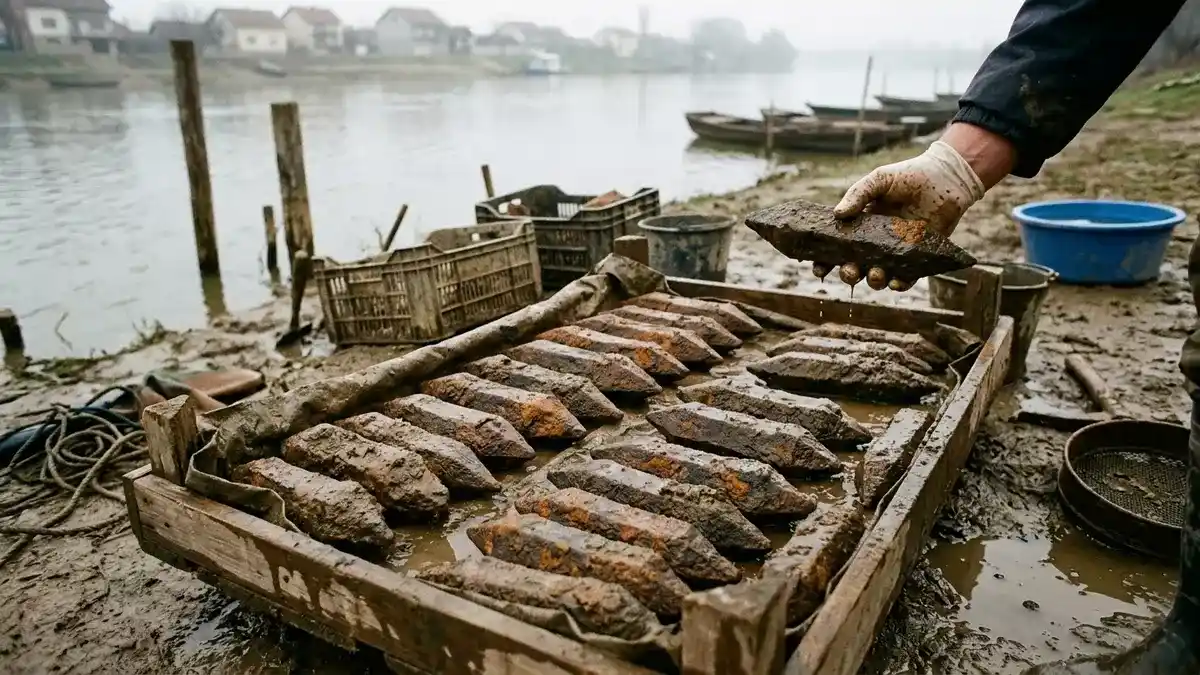
While exploring the murky waters of the Sava River, an international research team uncovered what is believed to be the largest single collection of prehistoric bipyramidal iron ingots ever found on the European continent. This massive underwater cache points to the existence of highly organized, large-scale industrial shipping and vast metallurgical commercial networks that operated long before the Roman Empire consolidated its grip on the Balkan region.
Prehistoric Metal Shipment Found in Bosnia Rewrites European History
Uncovering the Hidden Wealth of the Sava River
The focus of this landmark archaeological breakthrough is a quiet stretch of the Sava River running past the town of Tolisa in northeastern Bosnia and Herzegovina. This region has historically served as a geographical crossroads, bridging the mountainous interior of the Balkans with the vast plains of Central Europe.
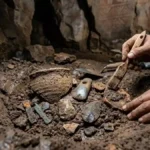
During a recent low-water season, an intensive salvage and excavation operation brought to light hundreds of perfectly preserved bipyramidal iron ingots. To understand the sheer magnitude of this discovery, one must look at the rarity of these specific artifacts across the continent. Prior to this single excavation, the historical record for bipyramidal ingots—double-pyramid-shaped raw iron bars—was incredibly sparse:
Bosnia and Herzegovina: Only 1 single ingot had ever been recorded nationwide.
Croatia: A single isolated specimen existed in the national database.
Also Read Inca Empire (Quiz)
Slovenia: Just 3 examples had been pulled from the ground.
Rest of Europe: Small, scattered handfuls had been mapped across France, Germany, Hungary, and Romania.

The volume of raw metal pulled from this single Bosnian riverbed exceeds the total number of bipyramidal ingots ever discovered across all of Europe combined. The cache dates precisely to a critical transition period in European history: the first or second century BCE. This was a turbulent era marked by the overlapping influences of the Late Iron Age La Tène culture and the expanding military and economic reach of the Roman Republic.
From a Chance Sighting to a Cross-Border Rescue Mission
The discovery of Europe’s largest prehistoric iron hoard did not begin with a well-funded university expedition, but with the keen eye of a local history enthusiast. While walking along the riverbank last year, Pero Matkić noticed unusual, heavily corroded metallic fragments drifting and resting within the murky depths of the Sava River. Recognizing that the riverbed might be hiding something substantial, he photographed the visible anomalies and forwarded the images to Hrvoje Vulić, the director of the Vinkovci City Museum in neighboring Croatia.
Vulić recognized the unique shape and immense historical value of the objects immediately. Because the Sava River forms a natural political border, the discovery triggered the rapid formation of a specialized, cross-border scientific alliance. The rescue team brought together a diverse group of experts, including:
The Croatian Conservation Institute, providing advanced preservation logistics.
Renowned underwater archaeologist Krunoslav Zubčić, directing the sub-surface recovery.
Nikica Spudić of the Croatian Mountain Rescue Service, ensuring team safety in hazardous currents.
Mihovila Matkić (son of the initial discoverer) and the director of the local Franciscan Monastery Museum “Vrata Bosne” in Tolisa.
[Local Discovery by Enthusiast] ➔ [Cross-Border Museum Evaluation] ➔ [Joint Underwater Excavation Team Launched]
The recovery team had to wait patiently for months for the seasonal river levels to recede before they could safely enter the water. Once conditions allowed, they implemented a highly precise, modern scientific excavation protocol.
Archaeologists established fixed terrestrial reference points to anchor their grid and utilized advanced photogrammetry technology to construct a comprehensive 3D digital model of the underwater site. Every single iron bar was meticulously documented, assigned a unique tracking number, and carefully lifted from the riverbed mud. To prevent immediate, catastrophic oxidation and corrosion upon exposure to the open air, the recovered ingots were instantly submerged in specialized stabilization tubs filled with distilled water.
Industrial Blacksmithing and the Mystery of the Sunken Cargo
These bipyramidal ingots were the literal building blocks of the ancient world. Rather than serving as a form of stamped currency, these heavy, double-pyramid-shaped iron bars were manufactured by centralized smelting centers as a standardized method for transporting bulk raw metal.
Once an ingot arrived at its final destination, local blacksmiths would heat the iron in a forge, hacking off chunks to manufacture high-grade tools, offensive weaponry, and essential household items. The uniformity of the bipyramidal shape made the cargo easy to stack, count, and balance inside the holds of early wooden transport vessels.
How Did the Shipment Sink?
The presence of hundreds of these industrial bars concentrated in a single, localized cluster on the riverbed points to a sudden, catastrophic event. While the exact historical cause remains unknown, researchers have outlined three highly probable theories:
A Sudden River Storm: A heavily overloaded cargo barge taking on water during a severe seasonal storm.
A Navigation Misadventure: The vessel striking a hidden sandbar, submerged log, or river obstruction, causing it to capsize.
An Act of War: A supply boat being targeted, intercepted, and intentionally sunk during a military skirmish between local La Tène tribal forces and advancing Roman legions.
Redefining Prehistoric European Logistics
The scale of this find has forced historians to completely re-evaluate the logistical and economic complexity of first-millennium BCE Europe. The next critical phase of the project will focus heavily on advanced laboratory chemical and isotopic testing to trace the exact geographical origin of the iron ore. This testing will reveal whether the metal was mined and smelted locally in the Balkans or carried down from massive production centers in Central or Western Europe.
Given the immense international importance of the cache, the Franciscan Monastery Museum “Vrata Bosne” is actively collaborating with elite archaeological institutions in Slovenia, Germany, France, and Austria. European specialists estimate that the comprehensive preservation, analysis, and mapping of this hoard will take years to fully complete, ultimately rewriting our understanding of the prehistoric European economy.
Conclusion
The waters of the Sava River have provided the global scientific community with a monumental piece of our shared past. By preserving an entire commercial cargo shipment from the brink of the Roman conquest, this discovery demonstrates that prehistoric Europe possessed highly sophisticated, high-volume industrial trade channels capable of moving tons of raw material across immense distances. As researchers continue to clean and analyze these centuries-old iron bars, the true scope of Europe’s ancient industrial network will finally come to light.
Frequently Asked Questions
1. What exactly was discovered in the Sava River?
Archaeologists recovered a massive cache consisting of hundreds of prehistoric bipyramidal iron ingots. Dating back to the first or second century BCE, this underwater find represents the largest single collection of these specialized prehistoric raw metal bars ever discovered on the European continent.
2. What were bipyramidal ingots used for in antiquity?
Bipyramidal ingots were standardized, double-pyramid-shaped bars of raw, unrefined iron. Smelting operations produced them in this specific shape to make bulk transport efficient. Local blacksmiths would purchase these bars and melt them down to forge essential tools, weapons, and daily household items.
3. Why is this specific Bosnian discovery so historically significant?
Prior to this discovery, bipyramidal ingots were considered incredibly rare artifacts, with fewer than a dozen total examples documented across all of Central and Western Europe. Finding hundreds of these items in a single location proves that the prehistoric European iron trade operated on a massive, highly organized industrial scale rather than through small, isolated transactions.
4. How did the archaeological team safely recover the iron from the river?
The cross-border team utilized underwater archaeology methods, establishing fixed reference points and creating a 3D digital site layout using photogrammetry. Once pulled from the riverbed mud, each ingot was numbered and immediately placed into tubs of distilled water to stop exposure to oxygen from causing rapid rust and structural deterioration.
5. What are the leading theories on how this iron hoard ended up underwater?
Because the entire collection of iron was found concentrated in one specific area of the riverbed, scientists believe it was a large commercial cargo shipment that sank simultaneously. The primary theories suggest the transport barge caved in during a violent storm, capsized due to a navigation error, or was intentionally destroyed during a wartime conflict.