
Table of Contents
- 1. Moving Beyond Bones: Sampling the Stone Canvas
- 2. The Genetic Handful: Where DNA Manages to Survive
- 2.1. Tracing the Source: Saliva vs. Environmental Flow
- 3. Decoding the Prehistoric Cave Visitors
- 3.1. 1. The Sex Profile
- 3.2. 2. Ancestry Links
- 4. The Challenge of Modern Contamination
- 5. A New Mapping Tool for Human Prehistory
- 6. Frequently Asked Questions
- 6.1. How can human DNA survive on a bare cave wall for thousands of years?
- 6.2. Does this DNA belong to the ancient cave artists?
- 6.3. What kind of bodily fluids left these DNA traces?
- 6.4. Who were the people identified in the cave wall DNA?
- 6.5. Why couldn’t scientists find ancient DNA on the Altamira airbrush tool?
Breakthrough Study Recovers Ancient Human DNA Directly From Cave Walls
In a groundbreaking scientific first, researchers have successfully extracted ancient human DNA preserved directly on cave walls. The historic discovery reveals that human genetic material can bind to and survive on bare rock surfaces for thousands of years, offering archaeologists an entirely new way to study the behaviors, identity, and movements of prehistoric populations without relying solely on fossilized bones or teeth.
Published in the journal Nature Communications, the international study was conducted as part of the First Art project—an initiative dedicated to investigating Europe’s oldest cave paintings and the specific materials used to create them. By proving that stone walls can act as natural genetic archives, the research opens a new frontier in anthropological science.
Breakthrough Study Recovers Ancient Human DNA Directly From Cave Walls
Moving Beyond Bones: Sampling the Stone Canvas
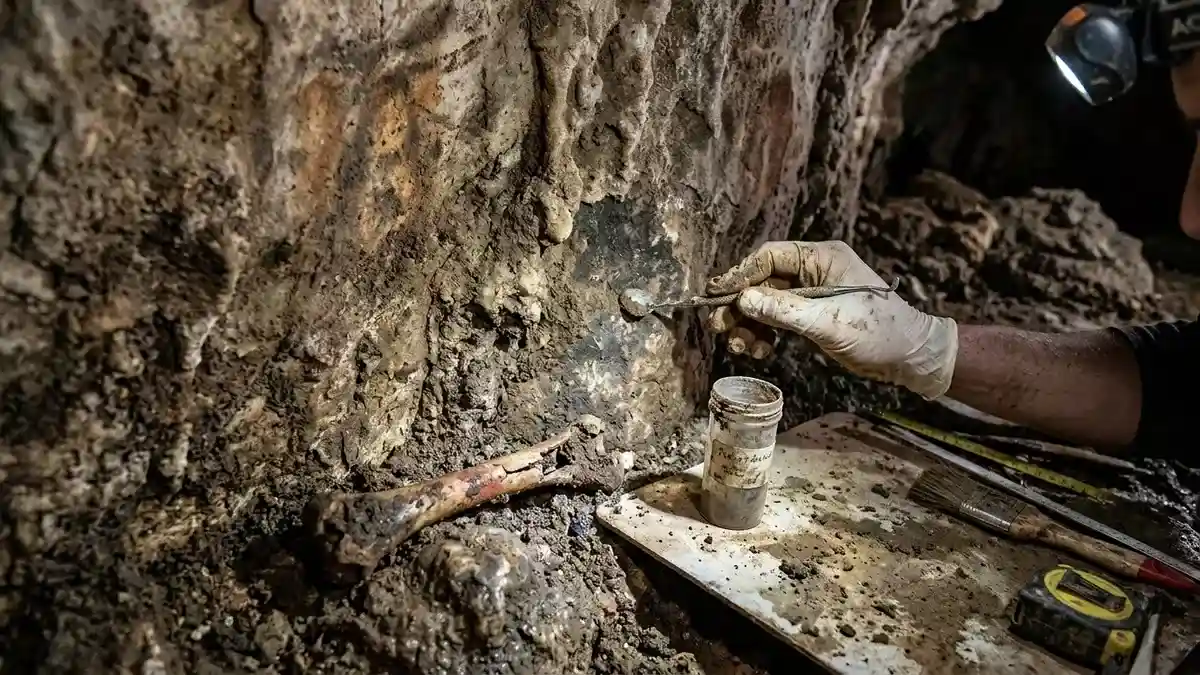
Traditionally, ancient DNA (aDNA) research is limited to biological remains, such as skeletal fragments, or organic artifacts found embedded within thick layers of cave sediment. The research team—comprising experts from Spain, Portugal, the United Kingdom, China, and Germany—wanted to test a radical hypothesis: could the very walls of the caves, touched and painted by prehistoric humans, still hold the microscopic genetic traces of those visitors?
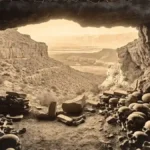
To answer this, scientists systematically gathered 54 micro-samples from 24 rock art panels across 11 different caves scattered throughout Spain and Portugal. The sites selected represented a broad spectrum of Paleolithic history, ranging from basic painted markings and hand stencils to the world-renowned, sophisticated animal depictions found on the ceiling of Altamira Cave.
To ensure scientific accuracy, the team gathered samples from:
Vibrant, painted art surfaces
Bare, unpainted cave walls (acting as experimental controls)
Surrounding cave sediments and animal bones
A prehistoric bird-bone airbrush tool used to spray pigment
The Genetic Handful: Where DNA Manages to Survive
The extraction process confirmed that recovering ancient DNA from exposed rock faces is incredibly difficult. Of the 54 samples tested, only five yielded authentic, verifiable ancient human DNA. However, the locations of these successful extractions completely surprised the research team.
While the scientists expected the painted surfaces to offer the highest probability of DNA preservation—hypothesizing that organic binders in the paint might trap cells—the successful samples primarily came from unpainted surfaces originally intended to be clean controls:
Escoural Cave (Portugal): One positive sample was scraped from a natural calcite crust that had formed directly over an ancient painted surface. Two additional successful samples were extracted from completely unpainted stone walls deep within the same cave.
Covarón Cave (Spain): The final two successful samples were recovered from completely bare, unpainted rock sections located near panels of prehistoric art.
Tracing the Source: Saliva vs. Environmental Flow
By examining the composition of the recovered DNA, the team identified two distinct ways the genetic material ended up on the stone. Two of the samples contained pure human DNA completely free of animal genetic signatures. This highly concentrated pattern suggests direct human contact, likely deposited via saliva, sweat, or respiratory droplets when an individual stood close to or touched the wall.
Conversely, the remaining three samples contained a mixture of both human and animal DNA. In these instances, scientists believe that natural geological processes—such as groundwater seeping down the cave walls or microscopic sediment transfers—gradually washed a blend of environmental DNA onto the rock faces over millennia.
Decoding the Prehistoric Cave Visitors
While the study cannot definitively prove whether the recovered DNA belonged specifically to the Paleolithic artists or to later individuals who explored the deep chambers, the genetic material still provided vital demographic data about these ancient travelers.
1. The Sex Profile
Out of the five successful profiles, three samples contained genetic markers that linked them directly to female individuals. One sample was successfully identified as originating from a male, while the final sample was too degraded to determine sex accurately.
2. Ancestry Links
Scientists managed to extract enough high-quality nuclear DNA from the two Covarón Cave samples to run an advanced ancestry analysis. The results officially placed both individuals within the “Western Hunter-Gatherer” genetic cluster. This finding aligns perfectly with previous skeletal discoveries across the Iberian Peninsula, confirming that the people moving through these caves shared deep ancestral roots with the region’s broader Ice Age population.
The Challenge of Modern Contamination
The study also highlighted the intense fragility of ancient surface DNA, particularly when exposed to modern human contact. The international team carefully examined a unique bird-bone airbrush artifact recovered from Altamira Cave—a hollow bone tool that prehistoric painters filled with red ocher pigment and blew through to spray paint around their hands.
Researchers hoped that ancient saliva might be locked deep inside the hollow bone chamber. Unfortunately, the test failed to yield any authentic ancient DNA. Because the artifact had been uncovered decades ago and repeatedly handled by modern archaeologists and curators before modern anti-contamination protocols existed, recent human DNA completely overwhelmed and erased any lingering prehistoric traces.
A New Mapping Tool for Human Prehistory
The successful extraction of DNA from bare cave walls proves that mineral crusts and the uniquely shielded, stable climates of deep cavern systems can act as effective preservation capsules.
As extraction and sequencing technologies continue to improve, this methodology will allow future archaeologists to map out the exact footprints of prehistoric cave usage. Scientists will eventually be able to determine exactly who entered these sacred dark spaces, how far families traveled into subterranean systems, and the demographic makeup of the ancient communities who left their marks on the walls of human history.
Frequently Asked Questions
How can human DNA survive on a bare cave wall for thousands of years?
DNA survives on cave walls primarily due to highly protected environmental conditions. Deep caves feature stable temperatures, minimal sunlight, and consistent humidity. Over time, natural mineral formations, like calcite crusts, can form over the rock surface, effectively sealing and protecting the microscopic genetic drops from eroding away.
Does this DNA belong to the ancient cave artists?
Not necessarily. While the DNA was found directly on and adjacent to ancient rock art panels, it simply proves that prehistoric humans were present in that exact space. The genetic material could have been left by the artists themselves, or by later individuals who visited the cave thousands of years ago to view the art.
What kind of bodily fluids left these DNA traces?
In samples where pure human DNA was found without any animal contamination, scientists suspect the material was deposited directly through organic human fluids. This most likely occurred via saliva—potentially from blowing pigment onto the walls—or from sweat and skin oils left behind if individuals leaned against or touched the stone.
Who were the people identified in the cave wall DNA?
Genomic sequencing traced the individuals back to the “Western Hunter-Gatherer” lineage, an ancestral group known to have occupied the Iberian Peninsula during the Paleolithic era. Out of the samples detailed enough to analyze for sex, three belonged to females and one belonged to a male.
Why couldn’t scientists find ancient DNA on the Altamira airbrush tool?
Although the bird-bone airbrush was used directly by prehistoric artists, decades of handling by modern researchers after its initial discovery introduced heavy modern DNA contamination. This recent genetic material completely masked and degraded any ancient saliva traces that might have originally existed inside the tool.