
Table of Contents
- 1. Shaking Up the History Books: The Diversity of Late Neanderthals
- 2. The Meuse Basin Discoveries: Interconnected Communities
- 2.1. Climate Shifts and Population Splits
- 3. The Asymmetry Matrix: Why Didn’t They Mate with Humans?
- 3.1. Why Did the Interbreeding Only Go One Way?
- 3.2. 1. Biological Incompatibility
- 3.3. 2. Social Acceptance and Cultural Biases
- 4. RETHINKING THE END: WHAT REALLY HAPPENED TO THE NEANDERTHALS?
- 5. Frequently Asked Questions
- 5.1. Did inbreeding cause the extinction of all Neanderthals?
- 5.2. How many new Neanderthal genomes were analyzed in this study?
- 5.3. Why do modern humans have Neanderthal DNA but Neanderthals lack human DNA?
- 5.4. Where did these genetically diverse Neanderthals live?
- 5.5. When did Neanderthals officially go extinct?
New Ancient DNA Study Upsets Long-Held Neanderthal Extinction Theory
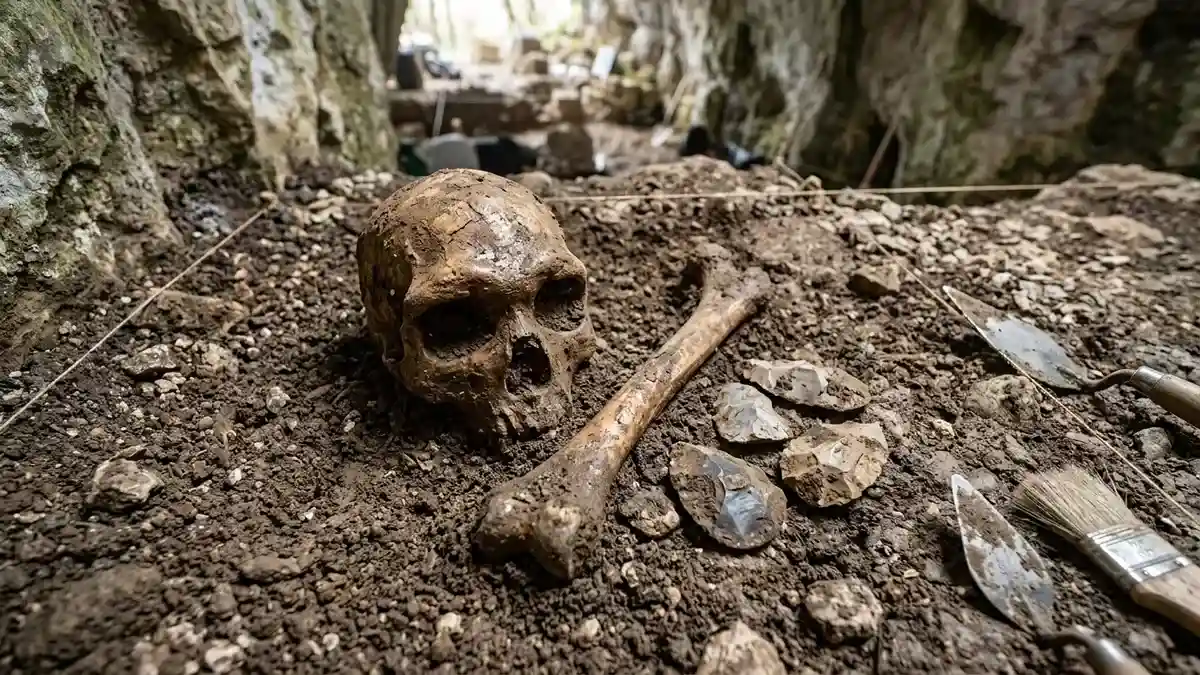
For decades, the standard narrative surrounding the disappearance of our closest ancient relatives was a tragic story of genetic decline. The prevailing theory suggested that as Neanderthals dwindled in number, they became trapped in isolated communities, forced into frequent inbreeding that eventually doomed their lineage.
However, a groundbreaking study analyzing ancient DNA has flipped this script. By examining a treasure trove of newly recovered genetic material from northwestern Europe, scientists have discovered that the last surviving Neanderthals were far more genetically diverse and interconnected than previously assumed, proving that inbreeding did not dictate their final days.
New Ancient DNA Study Upsets Long-Held Neanderthal Extinction Theory
Shaking Up the History Books: The Diversity of Late Neanderthals
Neanderthals and modern humans (Homo sapiens) shared a common ancestor before parting ways on the evolutionary tree roughly 500,000 years ago. While Neanderthals successfully navigated the harsh climates of Eurasia for hundreds of millennia, they vanished from the fossil record approximately 40,000 years ago.
To understand why they disappeared, geneticists previously relied on a very limited dataset. High-quality ancient genomes are incredibly rare. Until recently, scientists had only decoded four high-quality Neanderthal genomes, three of which originated from Siberia—the absolute geographic edge of their territory. Those Siberian samples revealed highly isolated, deeply inbred communities, leading researchers to generalize that the entire species suffered from genetic deterioration.
The new study, published in the journal Nature, radically expands our viewpoint. An international team of researchers successfully recovered genetic data from 27 additional Neanderthal individuals, including a brand-new, ultra-high-quality genome. Instead of looking at geographic outliers, this data centers on late Neanderthals—those living after 70,000 years ago—in northwestern Europe, primarily across present-day Belgium and France.
The Meuse Basin Discoveries: Interconnected Communities
The bulk of the new genetic material comes from 10 distinct archaeological sites, with a heavy concentration in Belgium’s Meuse Basin. Among these locations is the famous Goyet cave system, a site known to anthropologists for yielding complex archaeological contexts, including potential evidence of Neanderthal cannibalism.
When scientists analyzed the DNA of these northwestern European Neanderthals, they discovered a completely different social and genetic structure compared to their Siberian counterparts:
A Shared Lineage: The late Neanderthals of this region diverged from a common ancestor with other known Neanderthal lineages around 54,000 years ago.
Strong Regional Ties: These individuals were more closely related to one another than to groups living in distant parts of Europe.
Lack of Inbreeding: Crucially, the genetic analysis showed little to no evidence of close-relative mating. The new high-quality genome retained a robust level of genetic health, completely matching the diversity of earlier, thriving generations.

Instead of dying out in lonely, fragmented clans, these late Neanderthals belonged to a vast, interconnected network of groups that actively interacted and exchanged genetic material.
Climate Shifts and Population Splits
The researchers determined that this northwestern European population was diverse enough to split into at least four distinct genetic subgroups. Interestingly, these evolutionary fractures occurred during relatively warm intervals of the last ice age. Favorable environmental and climate conditions likely sparked population expansions, allowing groups to spread out, diversify, and establish specialized territories without losing their overarching genetic health.
The Asymmetry Matrix: Why Didn’t They Mate with Humans?
The study also highlights a fascinating mystery regarding how Neanderthals interacted with early modern humans. These diverse European Neanderthals lived alongside Homo sapiens in Europe for an estimated 500 generations.
We know for a fact that the two species mingled and reproduced because nearly all modern humans of non-African descent carry a small percentage of Neanderthal DNA today. Yet, when scientists analyzed these newly recovered European Neanderthal genomes, they found absolutely no evidence of recent Homo sapiens DNA in their family trees.
This creates a striking genetic asymmetry:
| Genetic Direction | Scientific Evidence |
| Neanderthal DNA in Modern Humans | Highly prevalent; multiple early Homo sapiens fossils show a recent Neanderthal ancestor. |
| Modern Human DNA in Neanderthals | Non-existent in the European sample; no confirmed late Neanderthal has a recent human ancestor. |
Why Did the Interbreeding Only Go One Way?
Anthropologists have proposed two primary theories to explain this one-sided genetic flow.
1. Biological Incompatibility
Some scientists suspect that genetic barriers prevented modern human DNA from successfully taking root in the Neanderthal gene pool. For instance, recent research highlighted specific gene variants related to red blood cell function. When an early human male mated with a Neanderthal female, these incompatible variants may have caused the resulting hybrid pregnancies to spontaneously miscarry, blocking the introduction of human genes into Neanderthal communities.
2. Social Acceptance and Cultural Biases
Another compelling theory points to prehistoric social structures. It is entirely possible that early modern human tribes willingly accepted and raised hybrid children born from these encounters, whereas Neanderthal clans did not. If hybrid individuals were exclusively integrated into Homo sapiens communities, the human gene pool would absorb Neanderthal traits while the Neanderthal gene pool remained closed.
RETHINKING THE END: WHAT REALLY HAPPENED TO THE NEANDERTHALS?
If genetic decay and severe inbreeding didn’t wipe out the Neanderthals of northwestern Europe, science must look elsewhere to explain their ultimate disappearance.
The reality is likely a combination of shifting environmental pressures and intense competition. As climate volatility altered the landscapes and available game, Neanderthals had to compete directly with arriving waves of modern humans. Homo sapiens possessed different social structures, specialized tool kits, and potentially higher reproductive rates. Over time, Neanderthals may have simply been outcompeted or gradually absorbed into the vastly larger, expanding human population.
Moving forward, researchers hope to extract similar high-quality DNA from late Neanderthals in warmer climates, such as the Iberian or Italian peninsulas. While ancient DNA preserves far better in the cold caves of Belgium and France, unlocking southern European genomes will determine if this vibrant genetic diversity was a universal trait among the last of the Neanderthals.
Frequently Asked Questions
Did inbreeding cause the extinction of all Neanderthals?
No. While previous studies of Siberian Neanderthals showed heavy inbreeding, this new research proves that late Neanderthals in northwestern Europe maintained high genetic diversity and lived in large, interconnected networks with little evidence of close-relative mating.
How many new Neanderthal genomes were analyzed in this study?
Scientists successfully recovered and analyzed genetic data from 27 additional Neanderthal individuals, which included a vital new high-quality genome that allowed for deeply accurate testing.
Why do modern humans have Neanderthal DNA but Neanderthals lack human DNA?
This asymmetry suggests that interbreeding primarily resulted in hybrid children who were raised within modern human societies rather than Neanderthal communities, or that biological incompatibilities made hybrid pregnancies unsustainable for Neanderthal mothers.
Where did these genetically diverse Neanderthals live?
The remains were excavated from 10 different archaeological sites across northwestern Europe, with a heavy concentration in the Meuse Basin region of present-day Belgium and France.
When did Neanderthals officially go extinct?
Most scientists agree that Neanderthals disappeared from the fossil record around 40,000 years ago, meaning the diverse populations in this study lived just a few thousand years before their final extinction.