
Table of Contents
- 1. The Dark Academia Craze: Aestheticizing the Dead
- 2. Legal Loopholes and Jurisdictional Gray Areas
- 3. The Dark Colonial History of the Bone Market
- 4. Provenance vs. Plunder: Spotting the Signs of Illicit Exhumation
- 4.1. Medical & Anatomical Specimens
- 4.2. Illicitly Exhumed Remains
- 5. Restoring Dignity: Moving Past Possession
- 6. Frequently Asked Questions
- 6.1. Is it legal to buy and sell human bones online?
- 6.2. Where do most of the human skulls sold online originally come from?
- 6.3. What is “Dark Academia” and how does it drive the bone trade?
- 6.4. How can experts tell the difference between a medical skull and a looted skull?
- 6.5. Why are scientists and archaeologists against the private bone trade?
Stop Buying Skulls: The Dark Reality of the Online Bone Trade
In recent years, an unsettling commerce has migrated from back-alley antiquarian stalls to mainstream digital storefronts. Human skulls, articulated ribs, and complex skeletal remains are appearing with alarming regularity on prominent e-commerce sites and digital marketplaces. What was once a highly niche, tightly restricted area of interest for institutional researchers and specialty medical collectors has exploded into a multi-million-dollar global trade.
This digital explosion is driven by an incredibly diverse and highly active community of buyers. Among the clientele are traditional curiosity collectors, occult spiritual practitioners, and avant-garde contemporary designers who purchase real human remains to incorporate directly into physical sculptures or living-space installations.
Furthermore, medical and dental students routinely scour the web for genuine human skulls to enhance their home study, completely oblivious to the legal and ethical minefields surrounding these purchases. However, the most unexpected development fueling this sudden marketplace boom is a wave of casual consumers who view the dead not as former human beings or scientific specimens, but as lifestyle decor.
Stop Buying Skulls The Dark Reality of the Online Bone Trade
The Dark Academia Craze: Aestheticizing the Dead
The sudden surge in commercial demand for real human bone is heavily linked to the rapid spread of specific social media trends. On platforms like TikTok and Instagram, hashtags like #OdditiesTok and #SkullDecor accumulate millions of views, transforming human skeletal remains into highly sought-after props for fashion, interior design, and lifestyle photography.
A primary catalyst for this commercial expansion is the subculture known as Dark Academia. This online aesthetic combines elements of:
Classic Gothic literature and architectural themes
Candlelit vintage aesthetics and moody libraries
Scholarly mystique and structured tweed tailoring
Within this aesthetic community, human skulls are treated with the exact same casual reverence as a stack of leather-bound antique books, vintage inkwells, or melted wax candles. Influencers and casual users pose alongside real human skeletons to curate a specific intellectual vibe.

This trend has sparked immense alarm among biological anthropologists, field archaeologists, and medical anatomists. By turning the physical remains of real human beings into trendy living room accessories, these social media trends actively normalize the private ownership of the dead. It completely blurs the critical ethical boundary between a scientific object of study and a unique human individual, steadily eroding the societal safeguards built to protect the deceased from commercial exploitation.
Legal Loopholes and Jurisdictional Gray Areas
The global trade in human bones thrives largely because current legal frameworks are highly fragmented, inconsistent, and filled with deep historic loopholes that online vendors easily exploit.
In the United Kingdom, for example, the sale of human tissue is theoretically governed by the comprehensive Human Tissue Act 2004. This law establishes strict regulatory standards for how human bodies are collected, stored, and utilized for research, medical education, and public display. However, the legislation features a massive chronological loophole: it only applies to human remains that are less than 100 years old. Any skeletal material that exceeds this one-century cutoff falls entirely outside the scope of the act.
       [Human Skeleton Inventory]
                   │
         Is it over 100 years old?
                   │
         ┌─────────┴─────────┐
         ▼                   ▼
     YES: [Loophole]     NO: [Regulated]
   No License Required   Human Tissue Act 2004
   Can Be Sold Online    Strict Consent Rules
This structural gap creates an unregulated playground for internet merchants. A seller can list a human skull on a digital marketplace simply by labeling it as a “Victorian anatomical specimen.” Even if the true provenance (historical origin) of the bone is highly doubtful or completely unverified, the item can be legally bought and sold across the UK with zero administrative oversight.
On the other side of the Atlantic, the United States presents a similarly chaotic legal landscape. While the federal government enforces powerful legislation like the Native American Graves Protection and Repatriation Act (NAGPR) to protect Indigenous burial sites, general state-level laws regarding the sale of non-Indigenous human remains vary wildly. Some states ban the trade entirely, while neighboring states allow it with minimal restrictions. Because e-commerce bypasses physical borders, online sales routinely slip through these legal nets, allowing a skull listed by a vendor in London to be packed, shipped, and delivered to a private buyer in Texas with minimal border intervention.
The Dark Colonial History of the Bone Market
To understand why the modern commodification of human remains is so ethically bankrupt, one must look back at the dark, deeply exploitative history of how these bones were originally acquired.
During the early 19th century, the British medical establishment faced a massive crisis. The passage of the Anatomy Act of 1832 was designed to permanently end the illegal practice of local grave robbing by body snatchers (historically known as resurrectionists). The act established a legal framework for medical schools to claim the bodies of citizens who died in public hospitals, prisons, or poorhouses without family members to claim them, while also formalizing voluntary body donation.
However, as Western medical and dental education exploded in scale during the late 1800s, the domestic supply of unclaimed bodies could no longer keep pace with the massive demands of teaching hospitals. To fill this gap, Western institutions turned their eyes toward the global colonies.
India rapidly emerged as the absolute epicenter of the global bone trade. By the mid-20th century, a highly organized industrial network had formed across the region to supply Western universities, doctors, and oddity collectors with real human skeletons. At its peak in 1984, India was exporting an estimated 60,000 human skeletons overseas in a single year.
The vast majority of these bones were stripped from the poorest, most vulnerable segments of society. Impoverished families who could not afford the high financial costs of traditional funeral pyres or proper burials often saw the bodies of their loved ones quietly funneled into the commercial supply chain.
Grave robbing became an organized industry, with criminal rings actively looting cemeteries to feed the insatiable Western demand for anatomical specimens. This massive pipeline finally collapsed in 1985, when a major public scandal revealed that an export ring had processed and shipped over 1,500 child skeletons, sparking widespread international fears of kidnapping and murder. The Indian government instantly banned the export of human remains. China stepped in to fill the market vacuum until it enacted a similar total export ban in 2008.
The legacy of this colonial pipeline remains highly active today. A huge percentage of the “antique medical skulls” currently circulating across online auction sites, social media platforms, and private oddity cabinets were originally harvested through these deeply exploitative, non-consensual networks.
Provenance vs. Plunder: Spotting the Signs of Illicit Exhumation
As online prices for human bones continue to skyrocket, ethical researchers warn that old grave robbing practices are experiencing a dangerous modern revival. Because institutional collections and reputable museums maintain highly detailed, unbroken acquisition records, any human bone offered for sale on the internet without clear documentation raises an immediate red flag.
Anatomists and forensic anthropologists can often distinguish between a legitimate historical medical specimen and a freshly plundered grave item by analyzing specific physical characteristics:
Medical & Anatomical Specimens
Bones prepared historically for legitimate scientific study almost always exhibit clear signs of laboratory processing. They frequently feature precisely drilled alignment holes, clear protective coats of vintage varnish, attached brass hinges, or complex structural wire fittings designed to hold the skeleton upright for classroom instruction.
Illicitly Exhumed Remains
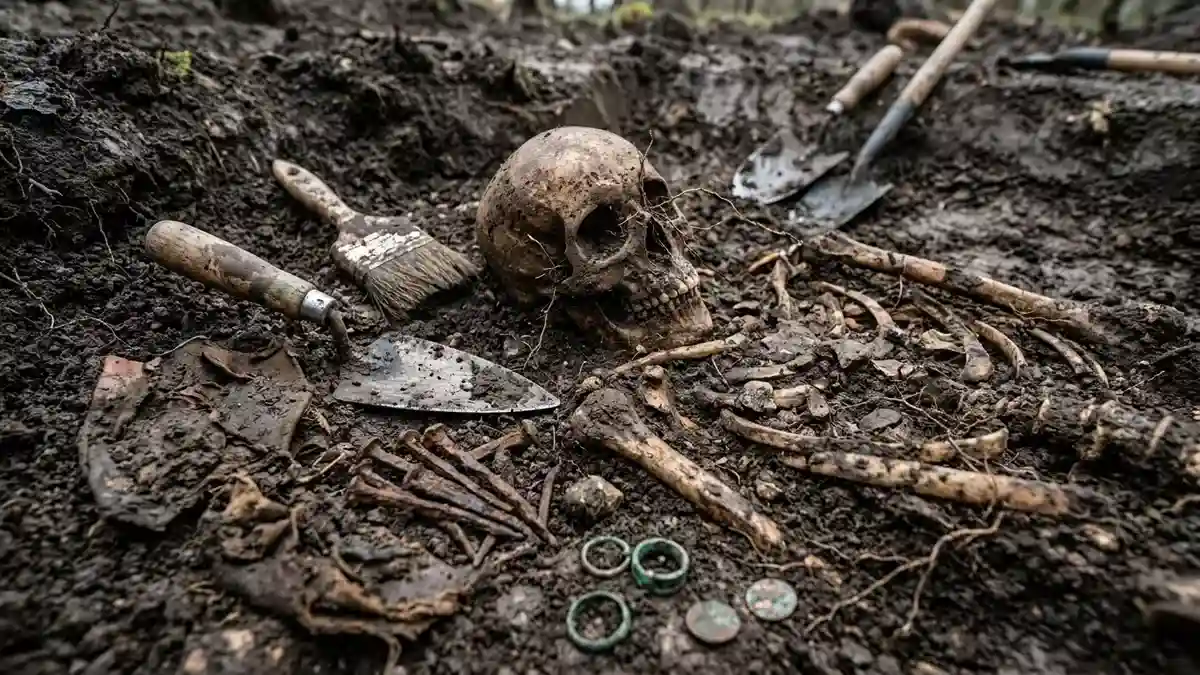
In sharp contrast, skeletons pulled illicitly from graves by modern looters carry distinct taphonomic (environmental decomposition) markers. These include deep, permanent soil staining across the bone surface, microscopic root etching caused by plant life growing through the burial site, and brittle microfractures triggered by long-term environmental pressure underground. Furthermore, traces of oxidized coffin nails, decayed wood fibers, or degraded burial textiles are frequently found adhering to the bone fragments.
Restoring Dignity: Moving Past Possession
Ultimately, the burgeoning trade in human remains highlights a profound failure of basic human empathy. Human bones are not decorative paperweights, edgy bedroom ornaments, or lifestyle status symbols—they are the permanent physical traces of unique human lives.
Every skull sitting on a candlelit shelf or displayed underneath a glass cloche belonged to a living person who experienced a full life of relationships, community, identity, and mortality. Treating these remains as simple marketplace commodities diminishes both the individuals they once were and the ethical integrity of our modern society.
As international scientific groups like the British Association for Biological Anthropology and Osteoarchaeology continue to push for sweeping legislative reforms to permanently close old legal loopholes, the ultimate challenge rests with the consumer. True progress requires shifting our cultural attitudes away from a desire for private possession and aesthetic display. Instead, we must foster a collective cultural return to the universal values of respect, historical understanding, and the fundamental dignity owed to the dead.
Frequently Asked Questions
Is it legal to buy and sell human bones online?
The legality depends heavily on your geographic location and the age of the remains. In the UK, a loophole in the Human Tissue Act allows the sale of bones that are over 100 years old. In the US, state laws vary drastically, creating an inconsistent legal landscape where internet transactions frequently slip through regulatory nets.
Where do most of the human skulls sold online originally come from?
The vast majority of skulls circulating on the open market today are remnants of a massive colonial-era medical supply chain. Throughout the 19th and 20th centuries, millions of skeletons were exported from vulnerable communities in India and China to supply Western medical students and private collections.
What is “Dark Academia” and how does it drive the bone trade?
Dark Academia is a popular social media lifestyle aesthetic that romanticizes gothic literature, historical academic styles, and moody aesthetics. This subculture has popularized the use of real human skulls and skeletons as trendy home decor props, creating a massive wave of casual buyers.
How can experts tell the difference between a medical skull and a looted skull?
Medical specimens usually show distinct manufacturing marks like metal wires, drilled holes, or clear coats of protective varnish. Skeletons taken illegally from graves lack these features and instead display distinct soil staining, root damage, or clinging fragments of coffin wood and nails.
Why are scientists and archaeologists against the private bone trade?
Experts argue that the commercial bone trade exploits vulnerable populations, encourages modern grave robbing, and reduces unique human beings to mere commodities. They advocate for human remains to be treated with dignity, study, or proper burial rather than being sold as lifestyle accessories.