
Table of Contents
- 1. A Massive Window into Central Europe’s Past
- 2. Tracking the Civilizations Layered Beneath the Earth
- 2.1. The Dawn of Settlement: The Neolithic Era (c. 5200–1900 BCE)
- 2.2. The Metal Revolutions: The Bronze and Iron Ages (c. 2300–700 BCE)
- 3. From Roman Influence to the Medieval Era
- 4. The Ubiquitous Relics of Ancient Households
- 5. A Symphony of Science: Advanced Laboratory Analysis
- 6. Balancing Heritage Protection and Modern Progress
- 6.1. Protecting Regional Wildlife
- 6.2. Strict Legal Oversight
- 7. Frequently Asked Questions
- 7.1. What is the CPK project, and why is archaeology happening there?
- 7.2. How far back does human history go at this specific site?
- 7.3. Who were the Lusatian and Przeworsk cultures?
- 7.4. Why do archaeologists stop digging for three months every spring?
- 7.5. What will happen to the artifacts after the airport is built?
Poland Mega-Airport Dig Unearths 7,000 Years of Continuous History
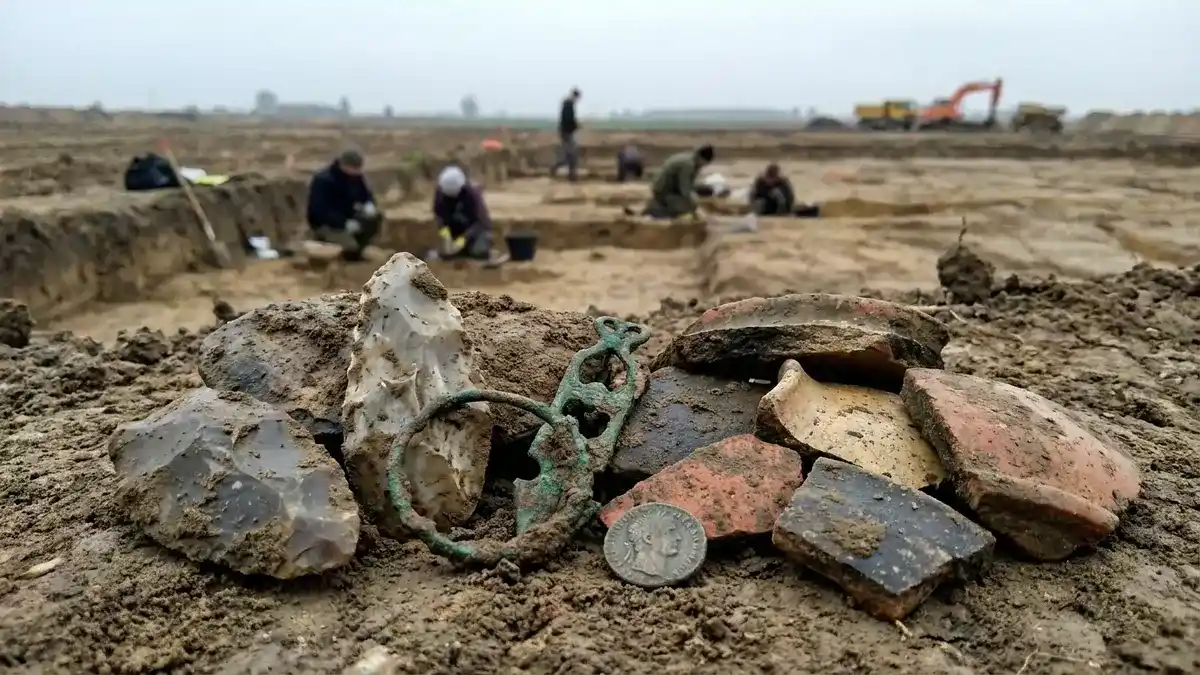
Before a single runway is poured for Poland’s upcoming mega-airport, teams of scientists are uncovering a massive subterranean puzzle that fundamentally changes our understanding of Central European settlement. Extensive archaeological rescue operations within the investment zone for the Centralny Port Komunikacyjny (CPK) have revealed an unbroken chain of human activity stretching across an astonishing 7,000 years.
The mega-project has inadvertently provided researchers with a dream scenario: an unprecedented, sprawling geographic canvas to study how dynamic ancient cultures occupied, transformed, and thrived in the very heart of Poland from the Stone Age all the way through to the dawn of the modern era.
Poland Mega-Airport Dig Unearths 7,000 Years of Continuous History
A Massive Window into Central Europe’s Past
The sheer scale of the CPK airport investment zone represents a rare luxury in modern field archaeology. Typically, researchers must limit their work to narrow, isolated trenches dictated by small real estate developments. In contrast, the sweeping footprint of the future transportation hub allows scientific teams to track artifact concentrations fluidly as they expand outward.
Because investigators can dynamically expand their zones whenever they encounter new clusters of historical items, this operation offers a highly unique opportunity to study dozens of interconnected archaeological sites simultaneously. The resulting massive, unified material collection provides a high-fidelity look at long-term regional habitation patterns that smaller, fractured digs could never reproduce.
Tracking the Civilizations Layered Beneath the Earth
The archaeological data extracted from the site maps out a deeply complex chronological sequence of shifting populations, technological revolutions, and cultural adaptations.
The Dawn of Settlement: The Neolithic Era (c. 5200–1900 BCE)
The deepest identifiable layers of human activity date back to the Neolithic period, a pivotal epoch when nomadic bands first transitioned into settled farming communities. Excavators have mapped out primitive flint and polished stone tools alongside structural markers that indicate these pioneering agriculturists recognized the immense strategic and ecological value of this central Polish plain early on.
The Metal Revolutions: The Bronze and Iron Ages (c. 2300–700 BCE)
As technical proficiency advanced, the landscape evolved into a prominent hub for trade and advanced metallurgy. The excavation has uncovered dense structural and domestic remains directly associated with two highly significant prehistoric groups:
The Lusatian Culture: Renowned for their highly advanced bronze-working capabilities, extensive urnfield cemeteries, and complex social networks.
The Przeworsk Culture: An Iron Age society that later engaged in intense, sophisticated trade relations with the expanding Roman Empire.
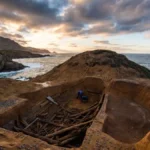
Within these specific layers, scientists have exposed the clear blueprints of ancient daily life. Discoveries include traditional semi-sunken dwellings (grubenhäuser), deep subterranean storage silos, specialized industrial furnaces, and sprawling refuse networks that highlight highly organized, permanent community management.
From Roman Influence to the Medieval Era
The human presence on the site did not falter as Europe transitioned into recorded history. The team has thoroughly documented extensive artifacts stemming from the Roman Influence Period, featuring unique metal personal adornments, advanced weaponry components, and imported international coins that highlight how deeply integrated early Polish societies were within continental trade paths.
Moving upward through the soil layers, researchers encountered significant domestic evidence from both the Early and Late Middle Ages, stretching seamlessly into the 16th through 18th centuries. These later historical zones are rich with deeply preserved infrastructure, including stone-lined hearths, communal cooking zones, and well-engineered wood-lined water wells that supported flourishing local villages right up to the early modern period.
| Archaeological Era | Time Period | Characteristic On-Site Finds |
| Neolithic Era | c. 5200–1900 BCE | Sharp flint implements, polished stone hand axes, early domestic pottery fragments. |
| Bronze & Iron Ages | c. 2300–700 BCE | Lusatian and Przeworsk semi-sunken homes, metal melting furnaces, heavy storage pits. |
| Roman Influence Period | c. 1st–4th Century CE | Fine metal jewelry, advanced weapons parts, classic household goods, imperial currency. |
| Middle Ages to Modern Era | c. 5th–18th Century CE | Stone-lined community hearths, engineering-grade wood wells, historical glassware, varied coins. |
The Ubiquitous Relics of Ancient Households
While exceptional metallic pieces and weapons catch the public eye, the single most common find across nearly every square meter of the CPK site is pottery. Millions of fragmented ceramic vessels have been pulled from the soil, providing researchers with an invaluable baseline for chronological dating.
Alongside this massive sea of ceramics, teams are systematically cataloging delicate pieces of historical glassware, highly detailed coins from multiple centuries, and basic household tools. Collectively, these simple everyday objects paint an incredibly vibrant picture of ordinary human existence, demonstrating that this geographic corridor has served as a safe, prosperous home for families across millennia.
A Symphony of Science: Advanced Laboratory Analysis
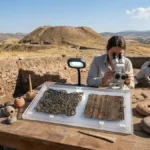
The field work is only the initial step in this historical rescue operation. As excavations wrap up across individual grid sectors, all recovered artifacts and human remains are carefully packaged and transferred to regional laboratory facilities for a comprehensive battery of interdisciplinary analyses.
To establish ironclad historical timelines and unlock deep bio-archaeological data, research groups are employing:
High-Precision Radiocarbon (C-14) Dating: To pin down the exact organic lifespans of ancient materials.
Dendrochronology: Utilizing the unique annual growth ring patterns preserved inside ancient structural timber and well walls to date construction phases right down to the specific calendar year.
Advanced X-Ray Imaging: To peering through thick layers of corrosion on ancient swords, tools, and jewelry without risking damage to the delicate metal beneath.
Comprehensive Anthropological Studies: Analyzing recovered bone structures to determine the health profiles, common diets, and migratory backgrounds of the region’s ancient residents.
Once these intensive preservation treatments and data collection phases are fully finalized, every individual item will find a permanent home in regional museums selected specifically by the Mazovian Provincial Heritage Conservator.
Balancing Heritage Protection and Modern Progress
The sprawling field campaign commenced in October 2023 and is meticulously scheduled to continue running through the end of 2026. This timeline ensures that all historical data is completely safely extracted before major land-leveling and infrastructure machinery arrives to break ground on the primary CPK Airport terminal facilities.
Protecting Regional Wildlife
The excavation process is unique in its deep commitment to local ecology. Every year, all archaeological activity halts completely from April 1 to June 30. This strict three-month pause is mandated by environmental protection laws designed to ensure that the heavy foot traffic and clearing work do not disrupt vulnerable local bird populations during their critical spring nesting season.
Strict Legal Oversight
To guarantee that the rapid pace of a multi-billion-euro infrastructure project never compromises Poland’s cultural legacy, the entire operation is run in lockstep with the Mazovian Provincial Heritage Conservator. Official state representatives conduct regular, highly detailed site inspections, verifying that every single trench is dug, logged, and preserved in strict compliance with national heritage preservation statutes.
By thoroughly integrating historical research directly into the master planning phase, Poland is demonstrating that the race toward a highly integrated, modern Central European air, rail, and road network does not have to come at the cost of erasing the ancient footpaths that paved the way.
Frequently Asked Questions
What is the CPK project, and why is archaeology happening there?
The Centralny Port Komunikacyjny (CPK) is a massive, strategic Polish infrastructure investment aimed at creating a highly integrated transit hub combining air, rail, and road networks for Central Europe. Because the project requires leveling vast amounts of land, emergency rescue archaeology must be conducted first to safely salvage any historical relics buried beneath the surface.
How far back does human history go at this specific site?
The oldest human traces uncovered at the future airport site date back to the early Neolithic period, roughly 5200 BCE. This means the location has hosted continuous, vibrant human activity for over 7,000 years.
Who were the Lusatian and Przeworsk cultures?
The Lusatians were a major Bronze and Iron Age culture in Central Europe known for advanced bronze crafting and extensive community networks. The Przeworsk culture was a later Iron Age society that occupied central and southern Poland, developing distinct styles of pottery, iron weaponry, and strong trade relations with the Roman Empire.
Why do archaeologists stop digging for three months every spring?
To protect local ecosystems, all fieldwork pauses annually from April 1 to June 30. This strict environmental window ensures that excavation teams do not disturb the region’s native birds during their highly sensitive nesting season.
What will happen to the artifacts after the airport is built?
Every object pulled from the ground undergoes extensive stabilization, cleaning, and scientific analysis in specialized laboratories. Once documented, all artifacts are transferred to regional public museums designated by the Mazovian Provincial Heritage Conservator to be preserved and displayed for educational purposes.