
Table of Contents
- 1. The Prehistoric Lakeside of Marathousa 1
- 1.1. The Science of Preservation
- 2. Microscopic Detective Work: Separating Nature from Human Craft
- 3. A Tale of Two Tools: From Heavy Labor to Delicate Tasks
- 3.1. 1. The Alder Digging Stick
- 3.2. 2. The Finger-Held Willow/Poplar Tool
- 4. Facing Predators: The Bear-Grawed Fragment
- 5. Rewriting the Global Timeline of Innovation
- 6. Middle Pleistocene Ingenuity
- 7. Frequently Asked Questions
- 7.1. What makes the wooden tools found at Marathousa 1 unique?
- 7.2. How did the wood survive for 430,000 years without rotting?
- 7.3. What types of wooden tools did researchers identify?
- 7.4. What does the claw-marked wood fragment tell us?
- 7.5. Who made these ancient wooden tools?
430,000-Year-Old Wooden Tools Discovered in Greece Redefine Prehistoric Tech
A spectacular archaeological discovery in southern Greece has unearthed the oldest handheld wooden tools ever recorded in human history. Dated to approximately 430,000 years ago, these incredibly well-preserved artifacts provide an unprecedented glimpse into the daily lives, intelligence, and survival strategies of early humans during the Middle Pleistocene epoch.
Because wood decays rapidly when exposed to air and bacteria, finding prehistoric wooden implements is exceptionally rare. The discovery shatters previous chronological records, pushing back the known timeline for shaped handheld wooden technology by at least 40,000 years and offering the very first evidence of its kind from southeastern Europe.
430,000-Year-Old Wooden Tools Discovered in Greece Redefine Prehistoric Tech

The Prehistoric Lakeside of Marathousa 1
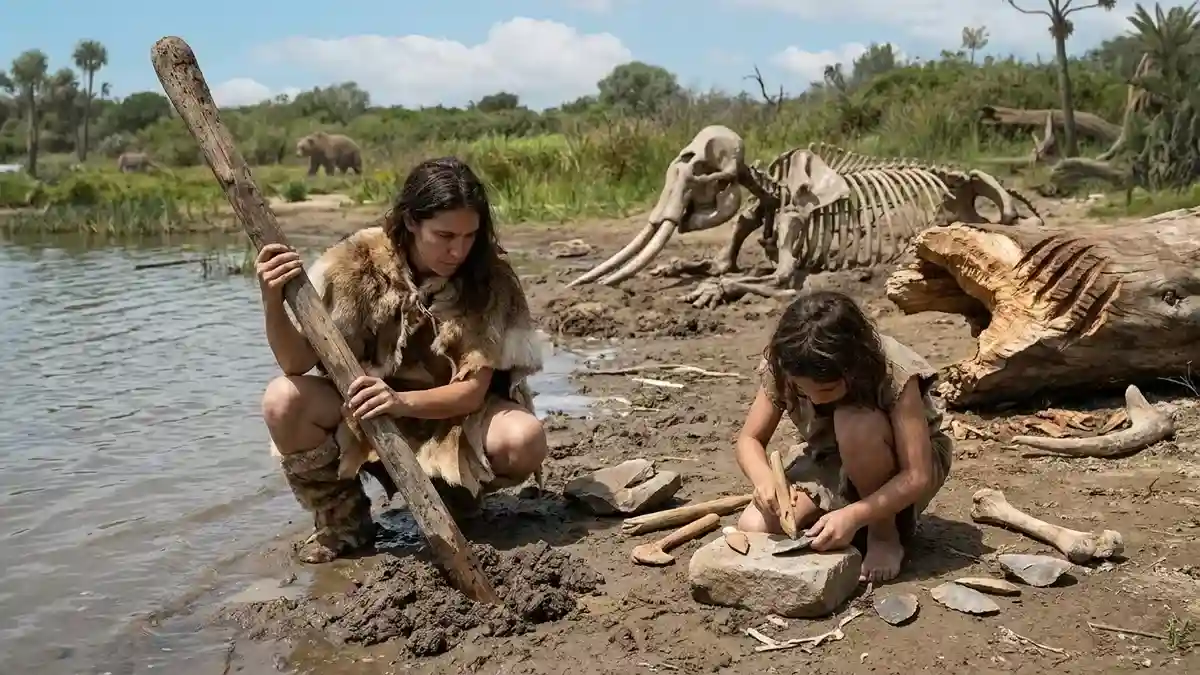
The groundbreaking artifacts were recovered from Marathousa 1, an archaeological site nestled within the Megalopolis Basin in the central Peloponnese region of Greece. Hundreds of thousands of years ago, this basin was a lush, thriving lakeshore that attracted a diverse array of ancient wildlife and early hominins.
Previous excavations at Marathousa 1 have established the site as a critical butchery and resource zone. Archaeologists have repeatedly uncovered:
Sharp Stone Flakes: Primitive butchery tools knapped from local stone.
Fossilized Animal Bones: Remains featuring distinct, deliberate cut marks.
Straight-Tusked Elephant Skeletal Remains: Massive prehistoric elephants that were systematically processed by early human hunting parties.

The Science of Preservation
How did these delicate wooden tools manage to survive for nearly half a million years? The secret lies in the ancient lakeshore’s environment. When the tools were lost or discarded, they quickly became buried in dense, waterlogged sediments. This water saturation created an anoxic (low-oxygen) environment that effectively halted the growth of wood-rotting bacteria and fungi, perfectly sealing the organic materials in a deep-time time capsule.

Microscopic Detective Work: Separating Nature from Human Craft
To verify that the wood fragments were genuine tools rather than random debris, an international research team conducted meticulous microscopic analyses on dozens of fragments recovered from the sediment.
Scientists carefully scrutinized internal cellular structures, grain directions, and surface markings to distinguish deliberate human modification from natural damage caused by gnawing animals, tumbling river stones, or shifting sediment pressure. Through this rigorous vetting process, two fragments emerged as clear, undeniable examples of ancient human engineering.
A Tale of Two Tools: From Heavy Labor to Delicate Tasks
The two identified tools demonstrate that Middle Pleistocene hominins did not just pick up random sticks; they carefully selected specific wood species based on their mechanical properties and intentionally carved them for highly specialized tasks.
1. The Alder Digging Stick
The first significant artifact was carved from alder wood, a tree known to grow abundantly in damp, riparian zones. Under the microscope, the surface of this stick revealed deep cut marks left behind by sharp stone tools used to trim and shape it.
More importantly, the working end of the stick featured heavily rounded, polished edges. This specific wear pattern forms through repeated, forceful contact with abrasive earth. Archaeologists concluded that this implement served as a digging stick—a vital tool used along the muddy lakeshore to loosen hardened soil, extract nutritious roots and tubers, or burrow for hidden water sources.
2. The Finger-Held Willow/Poplar Tool
The second artifact presents a starkly different engineering philosophy. It is a very small fragment meticulously shaped from either willow or poplar wood.
Instead of showing signs of heavy impact, this diminutive piece features finely carved edges and distinct smoothing across its body caused by extensive skin handling. Its tiny proportions indicate it was a specialized finger-held tool. Researchers hypothesize that this micro-tool was utilized for delicate, high-precision tasks, such as pressure-flaking and adjusting the edges of stone tools during their production.
Facing Predators: The Bear-Grawed Fragment
While sorting through the remaining wood collection, a third alder fragment told a more perilous story. This piece did not feature the smooth carves of a human craftsman. Instead, it was scored by deep, parallel structural grooves accompanied by severely crushed plant fibers along its borders.
Microscopic comparisons matched these brutal markings to the claw and tooth damage of a massive carnivore, most likely a prehistoric bear.
[Marathousa 1 Lakeshore] ──► Attracted Elephants (Resource)
       │
       ├─► Hunted/Butchered by Early Humans (Stone & Wood Tools)
       │
       └─► Scavenged/Contested by Large Bears (Claw-Marked Wood)
This footprint of animal activity provides thrilling behavioral context. It proves that early humans were not alone at the water’s edge; they shared the immediate landscape with apex predators. The overlapping presence of butchered elephants, human tools, and carnivore-damaged wood indicates that humans and giant bears frequently crossed paths, likely competing fiercely for access to rich meat carcasses.
Rewriting the Global Timeline of Innovation
Before the publication of the Marathousa 1 findings, the title of the oldest shaped handheld wooden tools belonged to significantly younger sites scattered across Europe, Africa, and Asia.
While an older wooden structure exists at Kalambo Falls in Zambia (dating to roughly 476,000 years ago), those massive logs are interpreted by scientists as heavy, stationary building foundations for a walkway or shelter rather than portable, handheld implements. The Marathousa 1 discoveries represent an entirely separate category of cognitive evolution: the creation of personal, adaptable technology that could be carried, modified, and used on the go.
Middle Pleistocene Ingenuity
The sophisticated nature of the Marathousa 1 collection forces a major reassessment of ancient human capability. Living 430,000 years ago, these early hominins possessed a profound, intimate understanding of the natural materials around them.
By masterfully combining stone knapping, bone processing, and custom woodwork, they proved that their technical skills were diverse, highly adaptable, and far more advanced than traditional “Stone Age” labels suggest.
Frequently Asked Questions
What makes the wooden tools found at Marathousa 1 unique?
Dating back 430,000 years, these are the oldest handheld wooden tools ever discovered. They push back the known timeline for shaped human woodwork by 40,000 years and provide the earliest evidence of this technology in southeastern Europe.
How did the wood survive for 430,000 years without rotting?
The tools were discarded along an ancient lakeshore and quickly buried in waterlogged sediments. This created a low-oxygen (anoxic) environment that prevented bacteria and fungi from breaking down the organic wood fibers, preserving them across millennia.
What types of wooden tools did researchers identify?
Scientists identified two distinct handheld tools: a large alder digging stick used for loosening soil and harvesting root vegetables, and a very small finger-held tool made of willow or poplar that was likely used for delicate tasks like fine-tuning stone tools.
What does the claw-marked wood fragment tell us?
One of the recovered alder fragments featured deep parallel grooves made by a large carnivore, likely a bear. This proves that early humans shared the lakeside with dangerous apex predators and likely competed directly with them for access to animal carcasses.
Who made these ancient wooden tools?
The tools date to the Middle Pleistocene epoch, a period inhabited by archaic human ancestors such as Homo heidelbergensis. The complexity of the tools shows that these ancient hominins possessed an advanced understanding of tree species, material traits, and multi-step engineering.zZ