
Table of Contents
- 1. Redrawing the Mortuary Map: The Bonneville vs. Lahontan Basins
- 2. Two Paths to the Underworld: Living Spaces vs. Natural Traps
- 2.1. 1. Integrated Domestic Spaces
- 2.2. 2. Dedicated Crypts and Natural Traps
- 3. Environmental Engines: Why Nevada Has More Burials
- 4. Ghostly Taboos and Ancient Migrations
- 5. Frequently Asked Questions
- 5.1. Were cave burials rare in the ancient Great Basin?
- 5.2. What is a “natural trap cave,” and how was it used?
- 5.3. Why are there more cave burials in Nevada than in Utah?
- 5.4. Why did modern Indigenous groups like the Northern Paiute avoid these caves?
- 5.5. How old are the oldest documented burials in this region?
Hidden Landscapes of the Dead: Great Basin Cave Burials More Common Than Believed
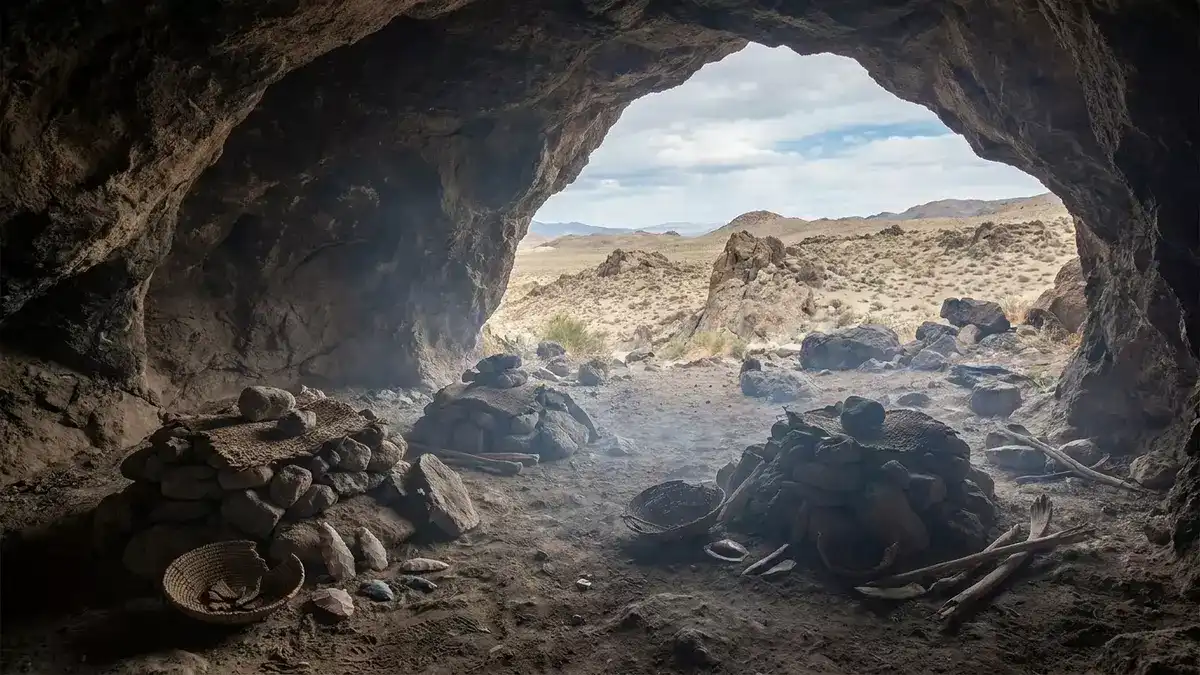
For generations, a foundational rule of North American archaeology maintained that the pre-Hispanic Indigenous groups of the Great Basin rarely used caves or rocky overhangs as cemeteries. It was long assumed that placing the dead inside subterranean chambers was a rare, localized quirk confined almost exclusively to the unique wetlands of western Nevada’s Lahontan Basin.
However, a major comparative study published in the journal American Antiquity has thoroughly overturned this narrative. By combining decades of legacy excavation data with recent field discoveries, researchers have revealed a massive, region-wide tradition of cave burials stretching across Utah and Nevada, proving that these underground spaces played a regular, widespread role in ancient Great Basin spiritual life.
Hidden Landscapes of the Dead Great Basin Cave Burials More Common Than Believed
Redrawing the Mortuary Map: The Bonneville vs. Lahontan Basins
The research project, led by a collaborative team of Great Basin archaeologists, executed a sweeping comparative analysis of two massive, neighboring geographic regions: the lower Lahontan drainage basin of western Nevada and the Bonneville Basin of western Utah.
 Roman villa and advanced drainage systems unearthed in Aquileia during cycling path construction
When the team synthesized the records of excavated caves, rockshelters, and open-air sites, the sheer numbers shattered the old “rarity” myth. In the Bonneville Basin alone, scientists documented 18 distinct cave or rockshelter sites containing the remains of at least 91 separate individuals.
                       [ THE GREAT BASIN ]
                               │
       ┌───────────────────────┴───────────────────────┐
       ▼                                               ▼
[ LAHONTAN BASIN (NV) ]                         [ BONNEVILLE BASIN (UT) ]
• High concentration of burials                 • 18 confirmed burial caves
• Supported by massive wetlands                 • 91+ unique individuals
• Environmental & storage hub                   • Regular, widespread practice
While these totals are lower than the massive numbers found in the lower Lahontan region, they conclusively prove that burying the dead in caves was not an isolated cultural anomaly. Instead, it was a standardized, regular option chosen by families across the entire 14,000-year history of human occupation in the Great Basin.
Two Paths to the Underworld: Living Spaces vs. Natural Traps
The study exposed a fascinating cultural division in how these ancient communities selected and interacted with burial caves. The data shows that caves generally fell into two distinct functional categories:
 Historic Haul: Over 1,700 Artifacts Unearthed at Ancient Islamic Pilgrimage Site in Saudi Arabia
1. Integrated Domestic Spaces
The vast majority of cave burials in the Bonneville Basin were uncovered inside shelters where people also lived, worked, and cooked. Archaeologists found human graves intimately mixed into the everyday floors of the caves, surrounded by ancient hearths, butchered animal bones, discarded baskets, and stone tool-making debris. To these families, the dead remained a natural, integrated part of the domestic household environment.
2. Dedicated Crypts and Natural Traps
Two notable locations in western Utah—Lehman Cave and Snake Creek Cave—poured cold water on the domestic model. These geological formations functioned as deep, natural vertical “trap caves.”
The excavations inside these dark complexes revealed the remains of more than three dozen individuals, but crucially, the chambers showed virtually zero signs of routine domestic use, campfire soot, or daily tool production. These caves were treated strictly as sacred, specialized repositories for the dead, designed to isolate the deceased from the world of the living.
+-------------------------------------------------------------------------+
|                  GREAT BASIN SUBTERRANEAN SITE TYPOLOGIES               |
+------------------------------------+------------------------------------+
| Cave Designation                   | Primary Archaeological Footprint   |
+------------------------------------+------------------------------------+
| Domestic Shelters (Majority)       | Human graves mixed with hearths,   |
|                                    | tools, and kitchen middens         |
| Lehman & Snake Creek Caves         | Purely mortuary context; 36+ bodies|
|                                    | with zero signs of daily living    |
+------------------------------------+------------------------------------+
Environmental Engines: Why Nevada Has More Burials
If cave burial was a universal tradition, why did early archaeologists find so many more bodies in western Nevada’s Lahontan region than anywhere else? The authors of the American Antiquity study argue the explanation is rooted in environment and population density, not a separate religious belief system.
The lower Lahontan basin was historically home to massive, highly reliable marshes and prehistoric wetlands. These lush ecosystems provided an abundance of predictable plant foods, fish, and waterfowl, drawing large populations of hunter-gatherers back to the exact same spots year after year.
Furthermore, the surrounding limestone cliffs are naturally riddled with hundreds of dry, protective caves that were perfect for storing winter food supplies and gear. This unique combination of a high human population and an abundance of ideal, dry underground storage spaces naturally resulted in a much higher concentration of cave burials over thousands of years.
Ghostly Taboos and Ancient Migrations
The study also cleverly weaves together oral traditions, historical records, and cutting-edge genetics to untangle a complex puzzle of shifting tribal territories over the last 2,000 years.
When European explorers first entered the Great Basin, the local Northern Paiute communities expressed a deep cultural avoidance of caves containing ancient human remains, steering clear of these spaces out of intense respect and fear of ancestral spirits. This cultural taboo strongly suggests that many of the heavily populated burial caves actually predate the arrival of the modern Paiute in those specific valleys.
Instead, the material styles, artistic designs, and tribal stories point toward ancestral Washoe populations in portions of the Lahontan basin, alongside other ancient groups whose descendants now reside primarily across the mountains in California.
Recent ancient DNA (aDNA) tracking supports this view, revealing a highly dynamic prehistory marked by distinct episodes of human migration, territorial shifts, and changing social borders during the final two millennia leading up to European contact.
Ultimately, the discoveries prove that the ancient peoples of the Great Basin shared a flexible, profoundly adaptive approach to honoring their dead. Whether laying a loved one to rest beneath the floor of a busy seasonal camp or lowering them into the dark depths of a dedicated limestone crypt, cave burials were a vital, normal thread woven tightly into the broader tapestry of early North American history.
Frequently Asked Questions
Were cave burials rare in the ancient Great Basin?
No. While earlier reports suggested they were isolated anomalies, the recent study documented 18 burial caves containing at least 91 individuals in Utah’s Bonneville Basin alone, proving the practice was a regular, widespread regional tradition.
What is a “natural trap cave,” and how was it used?
Natural trap caves are deep, vertical subterranean chambers like Lehman Cave and Snake Creek Cave. Unlike regular residential caves, these sites show no signs of daily human living or tool making; they were used exclusively as specialized places to inter the dead.
Why are there more cave burials in Nevada than in Utah?
Nevada’s Lahontan basin featured massive, resource-rich wetlands that supported much larger, permanent human populations. The region also possessed an unusually high concentration of dry caves, naturally resulting in more burials over time.
Why did modern Indigenous groups like the Northern Paiute avoid these caves?
In recent centuries, Northern Paiute traditions dictated a strict avoidance of caves containing the dead out of deep spiritual respect and fear of ancestral spirits. This indicates that many of the oldest burial caves belong to earlier ancestral groups, such as the Washoe.
How old are the oldest documented burials in this region?
Human occupation and burial traditions in both the Lahontan and Bonneville basins have a deep history, stretching back roughly 13,000 to 14,000 years to the end of the last Ice Age.