
Table of Contents
- 1. Overturning the Torch Myth: The Discovery in the Hall of Mysteries
- 2. Reconstructing the Ice Age Environment
- 3. Science in the Dark: Re-Enacting the 14,400-Year-Old Walk
- 3.1. High Visibility, Low Glare
- 3.2. Tactical Single-File Formations
- 3.3. Fuel Efficiency Calculations
- 4. Replicating the Artifact Patterns
- 5. Whispers of Future Secrets
- 6. Frequently Asked Questions
- 6.1. How old are the footprints inside Bàsura Cave?
- 6.2. Why did early archaeologists think Neanderthals left the footprints?
- 6.3. What are the main benefits of using pine twigs for cave lighting over big torches?
- 6.4. How did the researchers calculate the journey’s time and fuel needs?
- 6.5. What kind of animal accompanied the humans into the cave?
14,400 Years Ago, Five People and a Canid Entered an Italian Cave Using Pine Twigs for Light
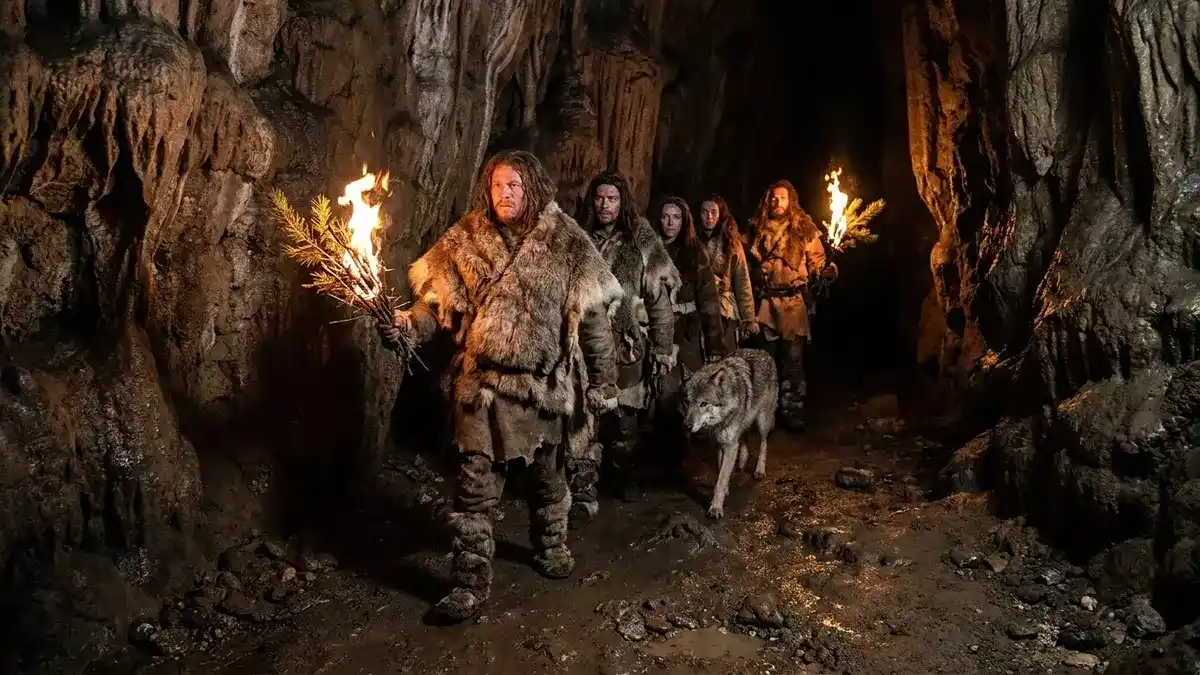
Deep within the dark, winding subterranean passages of northwestern Italy’s Bàsura Cave, a remarkable prehistoric crime scene of sorts has been preserved for millennia. Around 14,400 years ago, during the Late Upper Paleolithic era, a small, tight-knit group of five humans and a domesticated canid (an early ancestor of the dog) walked nearly 800 meters into the pitch-black underworld.
For decades, scientists debated how these Ice Age explorers managed to safely navigate dangerous, narrow cave formations without plunging into total darkness. Now, a multidisciplinary breakthrough project titled Bàsura Revisited has finally decoded their secret lighting technology, overturning long-held archaeological assumptions about prehistoric underground survival.
14,400 Years Ago, Five People and a Canid Entered an Italian Cave Using Pine Twigs for Light
Overturning the Torch Myth: The Discovery in the Hall of Mysteries
Bàsura Cave, located near the town of Toirano in Liguria, is celebrated worldwide for its exceptionally preserved fossilized human footprints, ancient animal tracks, and charcoal scrapings left on cave ceilings. When the site was first analyzed back in the 1950s, early scholars mistakenly assumed that Neanderthals were responsible for the footprints and that they navigated the cave using massive, heavy wooden torches made from thick tree limbs.
However, modern radiocarbon dating corrected the timeline, placing the journey much later during the Epigravettian period at the tail end of the last Ice Age.
In 2016, a fresh round of high-tech excavations targeted a deep chamber known as the Hall of Mysteries. By analyzing 56 distinct charcoal fragments recovered from the pristine, undisturbed floor sediments, researchers realized the old “heavy torch” theory was physically impossible.
The Wood Type: More than half of the recovered charcoal bits belonged specifically to Pinus sylvestris (Scots pine) or its closest evolutionary relatives.
The Size Factor: The vast majority of the charred remains didn’t come from massive tree trunks. Instead, they originated from tiny, young branches measuring less than two to three centimeters in diameter.
The physical evidence proved that these ancient explorers weren’t hauling cumbersome wooden clubs. Instead, they entered the underworld clutching bundles of slender, fresh pine twigs collected carefully from living trees outside.
Reconstructing the Ice Age Environment
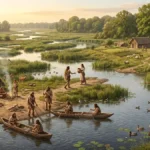
To verify why pine was the material of choice, paleobotanists extracted fossilized pollen samples from the cave’s stratigraphic layers. The resulting environmental profile painted a picture of a harsh, cold, and dry landscape outside the cave mouth.

+-------------------------------------------------------------------------+
|                  ICE AGE VEGETATION PROFILE (LIGURIA)                   |
+------------------------------------+------------------------------------+
| Plant Category                     | Abundance & Environmental Meaning  |
+------------------------------------+------------------------------------+
| Artemisia & Daisy Family           | Dominant; indicates open steppe    |
| Scots Pine (Pinus sylvestris)      | Present in scattered, cold forests |
| Broadleaf Deciduous Trees          | Rare to absent; highly restricted  |
+------------------------------------+------------------------------------+
The pollen record showed that the region was dominated by an open, wind-swept steppe environment heavily populated by hardy Artemisia and wild daisies. Trees were scarce, but small, scattered forests of Scots pine managed to thrive in the chilly microclimate.
Interestingly, scientists discovered that much of the ancient pollen inside the cave didn’t wash in through rain. Instead, it was carried inside by giant cave bears. Before humans stepped foot inside, generations of cave bears used Bàsura Cave for winter hibernation, inadvertently transferring pollen grains trapped deep in their thick fur directly onto the cave floor.
Science in the Dark: Re-Enacting the 14,400-Year-Old Walk
To understand how a handful of small twigs could illuminate an 800-meter cave system, the research team conducted a series of experiential archaeological trials inside the nearby Santa Lucia Inferiore Cave, which mirrors the damp atmospheric conditions of Bàsura.
Five human volunteers were selected to match the exact group size determined by the fossilized footprints. Armed with dried Scots pine twigs trimmed precisely to the archaeological dimensions, the team stepped into the absolute dark.
The real-world experiments yielded surprising insights into the mechanics of prehistoric exploration:
High Visibility, Low Glare
The trials proved that a single burning pine twig lost roughly four centimeters of length per minute. Once the human eye fully adapted to the underground darkness, just two burning twigs provided enough ambient light to illuminate up to ten meters ahead, allowing a line of five people to walk safely. Furthermore, small twigs produced far less blinding glare and suffocating smoke than a large, heavy torch would have.
Tactical Single-File Formations
The safest and most efficient way to navigate the dark was to place one light-bearer at the very front of the line and a second light-bearer at the rear. The remaining three group members walked in single file, maintaining physical orientation and balance by keeping a hand firmly placed on the shoulder of the person directly ahead of them.
Fuel Efficiency Calculations
Based on the burning rates recorded during the simulation, a round-trip journey from the cave entrance to the deep Hall of Mysteries would have taken roughly two hours. To survive this trek, the ancient group would have only needed to carry about twenty pine twigs, each cut to a length of roughly thirty centimeters—a remarkably lightweight and efficient fuel load.
Replicating the Artifact Patterns
The experimental trials didn’t just prove the physical viability of pine twigs; they also perfectly replicated the physical marks left behind by the original Epigravettian travelers.
When the modern volunteers accidentally brushed their burning twigs against the low ceilings and narrow cave walls, the resulting carbon streaks perfectly matched the shape and texture of the 14,400-year-old charcoal marks preserved inside Bàsura. Even the tiny fragments of charred wood that fell to the floor during the tests fell in the exact spatial patterns documented during the 2016 excavation grid mapping.
Whispers of Future Secrets
While the mystery of the famous footprint trail has been solved, Bàsura Cave continues to surprise researchers. During the latest phase of work, scientists discovered separate charcoal fragments trapped inside a growing speleothem (a cave formation like a stalagmite).
Radiocarbon testing revealed these trapped fragments belong to a completely different time period than the 14,400-year-old footprint trail. While their exact origin remains shrouded in mystery, they hint that other human groups entered this deep subterranean world long after the initial footprints were left behind—proving that this ancient sanctuary held a deep, multi-generational draw for early human societies.
Frequently Asked Questions
How old are the footprints inside Bàsura Cave?
The fossilized footprints left by the group of five humans and their canid companion date back approximately 14,400 years ago, placing the event in the late Epigravettian period of the Upper Paleolithic.
Why did early archaeologists think Neanderthals left the footprints?
When the cave was first explored in the 1950s, modern radiocarbon dating and advanced footprint analysis techniques did not yet exist. Because of the cave’s deep association with extinct Ice Age animals like cave bears, early scientists assumed the human traces belonged to a much older Neanderthal population.
What are the main benefits of using pine twigs for cave lighting over big torches?
Small pine twigs burn efficiently, are incredibly lightweight to transport in bundles, produce minimal suffocating smoke in enclosed underground chambers, and significantly reduce blinding glare, allowing the human eye to maintain its natural night vision.
How did the researchers calculate the journey’s time and fuel needs?
By conducting controlled burning experiments in a nearby cave with identical climate conditions, researchers measured that a pine twig shortens by about 4 centimeters per minute. Matching this to the physical distance of the cave path revealed the journey took roughly two hours and consumed around 20 twigs.
What kind of animal accompanied the humans into the cave?
The footprints indicate the group was accompanied by a canid, which represents an early domesticated dog or a closely integrated wolf companion traveling alongside the human pack.