
**Severe Droughts Forced Ancient Bison Hunters to Abandon Montana Site**
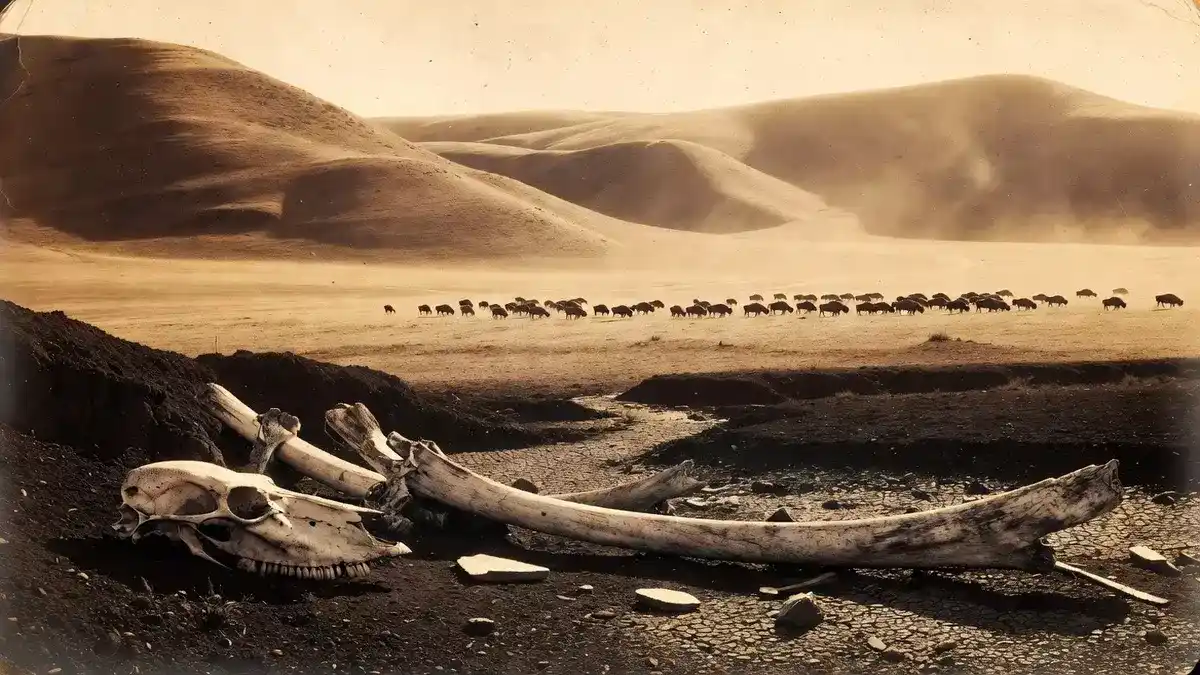
Around 1,100 years ago, Indigenous bison hunters in central Montana suddenly stopped using a reliable kill and processing site they had returned to for roughly 700 years. New archaeological and paleoecological research reveals that severe droughts played a major role in this abandonment, even though bison herds still roamed the region. The findings from the Bergstrom site offer a fascinating glimpse into how ancient communities on the North American Great Plains adapted to climate challenges long before European contact.
This story highlights the deep connection between environment, culture, and survival strategies among Plains peoples. Rather than a simple decline in game animals, the decision to leave Bergstrom reflects complex shifts in water availability, social organization, and hunting practices during a period of environmental stress.
Severe Droughts Forced Ancient Bison Hunters to Abandon Montana Site
 Manual of Egyptian Archaeology (PDF)
### The Enduring Importance of Bison to Plains Cultures
For thousands of years, American bison served as the cornerstone of life for Indigenous peoples across the Great Plains. These massive herbivores provided not only meat but also hides for clothing and shelter, bones for tools, and sinew for cordage. Hunting strategies evolved over time, ranging from small family groups to large communal drives that could harvest dozens or even hundreds of animals at once.
The Bergstrom site in what is now central Montana represents one such location where hunters repeatedly processed bison carcasses. Used intermittently across seven centuries, the site yielded stone tools, bone fragments, and charcoal that tell a story of sustained human activity. Excavations in 2019 involved opening nine one-by-one-meter units, allowing researchers to carefully document layers of use through radiocarbon dating.

### Uncovering Clues at the Bergstrom Bison Kill Site
Archaeologists worked alongside paleoecologists to build a comprehensive picture of the site’s history. In addition to digging, the team extracted two sediment cores from nearby areas. Analysis of pollen, microscopic charcoal, and other environmental indicators helped reconstruct past vegetation, fire regimes, and moisture conditions.
Large herbivore records and broader regional climate data added crucial context. Surprisingly, the evidence showed no significant drop in local bison populations at the time of abandonment. Plant communities remained relatively stable, and fire activity did not show dramatic changes that might indicate ecological collapse. This ruled out a simple scarcity of animals as the primary reason for leaving the site.

Instead, the research points to climate-driven changes in water resources. The region experienced multiple prolonged droughts both before and after the final period of use. Reduced stream flow near Bergstrom would have made it difficult to obtain the fresh water essential for butchering and processing large animals. Cleaning hides, preserving meat, and supporting camp life all required reliable water sources—something that became scarce during extended dry spells.
### How Droughts Disrupted Traditional Hunting Practices
Water was far more than a convenience for Plains hunters. Processing a single bison generated substantial amounts of blood, fat, and waste that needed rinsing. Without dependable creeks or streams, these tasks became impractical, especially for groups returning repeatedly to the same location.
The timing aligns with broader climate patterns in the late Holocene. Paleoclimate records indicate intervals of severe drought that affected much of the western Plains. These conditions stressed not only human activities but also the broader ecosystem, even if bison numbers held steady in the immediate area.
Students and researchers at the excavation documented scattered bison bones across the site, along with tools used for cutting and scraping. The intermittent nature of use suggests the location served as a flexible, seasonal camp rather than a massive permanent kill site. This adaptability worked well during wetter periods but became a liability when droughts intensified.
### Shifting Social and Economic Strategies on the Plains
Around the same time as Bergstrom’s abandonment, archaeological evidence from other sites indicates a broader cultural shift toward larger, more coordinated hunting groups. These bigger gatherings enabled mass kills using techniques like driving herds over cliffs or into natural traps. Such operations produced surplus meat that could be dried into pemmican for storage and trade.
Larger groups, however, demanded more reliable infrastructure: consistent water supplies, ample grazing land, and sufficient fuel for processing large quantities of meat. Smaller, more flexible sites like Bergstrom offered fewer of these advantages during times of scarcity. Hunters began favoring locations with multiple resources concentrated in one place, allowing them to sustain extended stays and larger parties.
Topography played a critical role in these decisions. Ideal hunting sites often featured cliffs, steep coulees, or other natural barriers that made it easier to control and harvest herds. Once communities invested time and traditional knowledge into mastering these “high-yield” locations, they tended to return to them, especially during challenging environmental periods.
The Bergstrom site, while useful for smaller-scale or opportunistic hunting, lacked some of these prime features. As social organization evolved and droughts persisted, its relative advantages diminished. The location saw little subsequent activity, though occasional brief visits may not have left detectable traces in the archaeological record.
### Broader Lessons from Human Adaptation to Climate Stress
The Bergstrom research, published in *Frontiers in Conservation Science*, contributes to a growing understanding of how Indigenous societies on the Great Plains responded to long-term environmental pressures. Rather than passively following bison herds, people actively reorganized their mobility patterns, group sizes, and site preferences.
This adaptive flexibility stands in contrast to more rigid interpretations of prehistoric life. It demonstrates sophisticated decision-making that balanced ecological conditions with social and economic needs. Similar patterns appear in other regions during periods of drought, where communities shifted settlement locations, intensified resource management, or developed new technologies.
For modern audiences, these findings resonate strongly amid contemporary discussions of climate change and sustainability. The ancient hunters of Montana faced challenges remarkably similar to today’s concerns about water scarcity and ecosystem resilience. Their responses—adjusting land use and social structures—offer historical precedents for building adaptable systems.
### The Archaeological Significance of the Bergstrom Site
Excavations at Bergstrom provide a detailed case study of one location within the vast cultural landscape of the Plains. The combination of artifact analysis, radiocarbon sequencing, and environmental coring creates a rich dataset rarely available at smaller sites.
Bison bones scattered across the excavation area, along with associated tools, paint a picture of repeated but not continuous occupation. This off-and-on pattern reflects seasonal rounds and opportunistic use that characterized much of Plains life before the adoption of horses in later centuries.
The study also underscores the value of interdisciplinary research. By integrating archaeology with paleoecology and climate science, researchers can move beyond simple descriptions of sites to understand the dynamic forces that shaped human choices.
### Implications for Understanding Indigenous Resilience
Indigenous peoples of the Great Plains demonstrated remarkable resilience over millennia. Their deep ecological knowledge allowed them to thrive in a variable environment where conditions could shift dramatically from year to year or decade to decade.
The abandonment of Bergstrom was not a sign of failure but of strategic adaptation. By reallocating efforts to more sustainable locations, communities could continue to rely on bison as a primary resource despite changing conditions. This flexibility helped sustain rich cultural traditions that persisted into historic times.
Ongoing research in Montana and across the Plains continues to reveal more about these ancient lifeways. Future work may incorporate additional dating methods, isotopic analysis of bones for diet reconstruction, or expanded climate modeling to refine our understanding of these transitions.
### Conclusion
The story of the Bergstrom bison kill site illustrates how severe droughts around 1,100 years ago prompted Indigenous hunters in Montana to abandon a long-used location. Despite stable bison populations and vegetation, water scarcity and evolving social strategies made the site less viable. This adaptation reflects the ingenuity and flexibility that defined Plains cultures for thousands of years.
As we face our own era of climate uncertainty, the experiences of these ancient communities remind us of the importance of resilience, strategic decision-making, and deep environmental knowledge. The traces left at Bergstrom continue to teach valuable lessons about human responses to a changing world.
**FAQ**
**1. Why did bison hunters abandon the Bergstrom site?**
Severe droughts reduced reliable water sources needed for processing bison carcasses. While bison remained in the area, the site became less practical compared to locations with better resources, especially as hunting groups grew larger.
**2. How long was the Bergstrom site used?**
The location saw repeated use for approximately 700 years before activity largely stopped around 1,100 years ago. Radiocarbon dating of charcoal and other materials helped establish this timeline.
**3. Did bison populations decline at the time of abandonment?**
No. Research showed no major drop in local bison numbers. Plant communities and fire patterns also remained relatively stable, pointing to water availability rather than game scarcity as the key issue.
**4. What role did social changes play in the abandonment?**
There was a broader shift toward larger, coordinated hunting groups that required more dependable water, fuel, and grazing resources. Smaller sites like Bergstrom were less suited to these operations.
**5. Where is the Bergstrom site located?**
The site is in central Montana on the North American Great Plains. It served as a bison kill and processing area used intermittently by Indigenous hunters.
**6. What methods did researchers use to study the site?**
Archaeologists excavated nine test units, analyzed artifacts and bones, conducted radiocarbon dating, and extracted sediment cores for pollen and charcoal studies. Regional climate and herbivore data provided additional context.
**7. What lessons does this research offer for today?**
It demonstrates how past societies adapted to climate stress through changes in mobility and group organization. These insights can inform modern conservation and sustainability efforts in drought-prone regions.