
**New CT Scans Reveal Hidden Secrets of 2,300-Year-Old Egyptian Mummies**
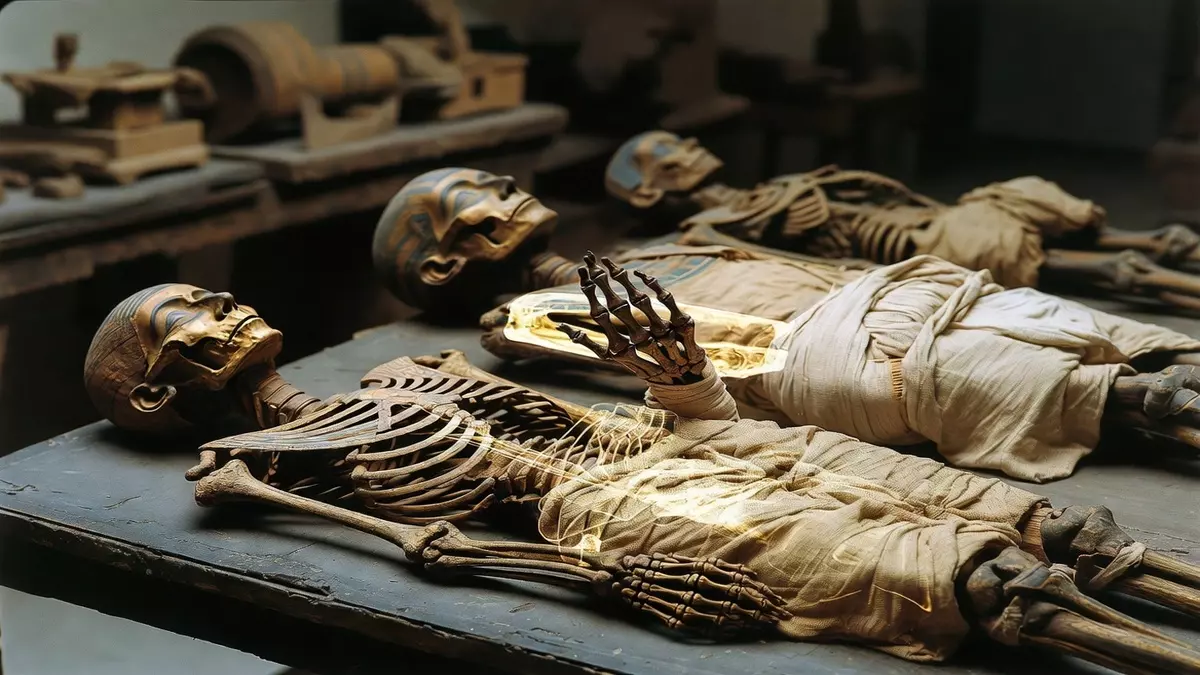
Advanced CT imaging is uncovering remarkable new details about ancient Egyptian mummies, giving scientists and history enthusiasts a clearer picture of life, health, and death practices from more than two millennia ago. Researchers in Hungary used cutting-edge photon-counting CT technology to re-examine mummified remains at the Semmelweis Museum of Medical History, revealing insights that earlier scans missed.
These 2,300-year-old specimens include mummified heads, limbs, a hand, and a mysterious wrapped bundle. The high-resolution scans are transforming how experts understand ancient embalming techniques, medical conditions, and daily life in Egypt during the Late Period.
New CT Scans Reveal Hidden Secrets of 2,300-Year-Old Egyptian Mummies
### Revolutionary Imaging Technology Brings Mummies Back to Life
The study, conducted at Semmelweis University’s Medical Imaging Center in Budapest, took advantage of a state-of-the-art CT scanner with a photon-counting detector. This advanced system captures X-ray data with exceptional precision, distinguishing subtle differences in materials like linen wrappings, bones, and preserved soft tissues far better than conventional scanners.
Scans were performed at night to avoid interfering with regular clinical operations. The results offer unprecedented clarity, allowing researchers to peer inside the mummies without disturbing the fragile remains. Earlier imaging of the same collection had provided useful information, but limitations in older equipment left many details blurred. Radiocarbon dating had already placed some of the remains between roughly 401 and 259 BCE, confirming their ancient origins.

This latest round of imaging is part of a growing trend in mummy research. Non-invasive technologies like CT scans have revolutionized the field, enabling scientists to study these preserved individuals respectfully while extracting maximum scientific value.
### Detailed Analysis of Mummified Heads and Skulls
The two mummified heads received special attention. High-resolution scans mapped internal structures with remarkable accuracy, particularly the teeth and cranial sutures. These features help experts estimate age at death more reliably. Dental wear patterns, for instance, can indicate diet and overall health, while skull sutures provide additional clues about maturity.
Researchers are now using this data to create detailed digital 3D models of the skulls. Such reconstructions open the door to future facial approximations, giving the public a more personal connection to these ancient individuals. The improved imaging also allows better assessment of embalming quality, showing how priests carefully removed brains and organs while preserving facial features.
**H3: Health Conditions Revealed in Ancient Limbs**
The lower limbs offered surprising medical insights. One specimen displays signs consistent with osteoporosis, a condition involving weakened bones. Experts are investigating whether this resulted from advanced age, nutritional deficiencies, or an underlying disease common in ancient populations. The second limb appears to belong to a younger person, though exact age determination continues.
These findings add to our understanding of health challenges in ancient Egypt. Conditions like osteoporosis suggest that even with advanced medical knowledge, Egyptians faced age-related diseases, injuries, and dietary limitations. The scans help differentiate between post-mortem changes caused by mummification and actual pre-death conditions.
### Solving the Mystery of the Wrapped Bundle
One of the most intriguing objects in the collection is a wrapped bundle previously misidentified multiple times. Early observations suggested a human head, while later views proposed a bird mummy. Previous CT imaging corrected this to a human foot, but the latest high-resolution scans reveal even more.
The bundle shows multiple distinct layers of bandaging with varying patterns and densities. These details provide valuable information about ancient Egyptian embalming rituals and how body parts were sometimes handled separately. The exact reason for the separation—possibly damage during mummification, later disturbance, or intentional ritual practice—remains a subject of ongoing study.
Such discoveries highlight the complexity of Egyptian funerary practices. Mummification was not a uniform process but varied by period, social status, and specific circumstances. The careful wrapping visible in the scans demonstrates the skill and spiritual significance invested in preserving the body for the afterlife.
**H3: Insights from the Mummified Hand**
The mummified hand is also yielding important data. Bone size, development, and structure are being analyzed to determine whether it belonged to a child or adult. These measurements may eventually help estimate biological sex and overall age, contributing to a more complete profile of the individual.
Hands often received special attention in mummification due to their symbolic importance in Egyptian beliefs. Studying them provides clues about craftsmanship, possible occupational wear, and variations in technique across different workshops or time periods.
### Ancient Egyptian Mummification: A Sophisticated Science
Mummification in ancient Egypt evolved over thousands of years, reaching high levels of sophistication by the Late Period. Embalmers removed internal organs, dried the body with natron salt, and wrapped it in hundreds of meters of linen, often incorporating resins, oils, and amulets for protection in the afterlife.
The Hungarian specimens date to a time of cultural richness and foreign influences, including Persian and early Greek interactions. The new CT data helps trace how these external contacts may have influenced burial practices and medical understanding.
**H3: Broader Impact on Mummy Research Worldwide**
Photon-counting CT represents a significant leap forward. Its ability to reduce noise and enhance material differentiation makes it ideal for studying layered, delicate archaeological remains. This technology is already being adopted at other institutions, promising more non-invasive discoveries in collections around the world.
The Semmelweis Museum’s collection, though modest in size, offers high research value. Many mummies in global museums were acquired in the 19th and early 20th centuries with limited documentation. Modern imaging helps fill those historical gaps without risking damage to the artifacts.
### What These Scans Tell Us About Ancient Lives
Beyond technical details, the scans humanize the mummies. They reveal individuals who lived through political changes, practiced complex religious rituals, and faced everyday health issues similar to those still affecting people today. Osteoporosis, dental problems, and possible injuries reflect universal human experiences across time.
The research also contributes to ethical discussions in archaeology. Non-destructive methods allow scientists to gather data while showing respect for the deceased and their cultural heritage. Egyptian authorities and international partners increasingly emphasize collaborative, responsible study of mummified remains.
### Ongoing Research and Future Discoveries
Evaluation of the full dataset is still underway. Researchers expect the high-resolution images to support more accurate diagnoses of diseases and a deeper understanding of mummification variations. Future work may include genetic analysis, chemical studies of resins, and comparisons with other collections.
Public interest in Egyptian mummies remains strong. Exhibitions, documentaries, and digital reconstructions bring these ancient people to wider audiences. The Hungarian project demonstrates how university museums and medical imaging centers can contribute meaningfully to cultural heritage research.
**H3: The Enduring Fascination with Ancient Egypt**
For over two centuries, mummies have captivated the public imagination. From Victorian-era unwrappings to modern scientific studies, they bridge the ancient and contemporary worlds. Advanced CT scanning adds a new chapter, allowing us to “see” inside without destruction and learn about health, diet, and beliefs in unprecedented detail.
These 2,300-year-old remains remind us of the sophistication of Egyptian civilization. Their preservation under desert sands and careful embalming has given scientists a unique opportunity to study human history at the molecular and structural levels.
### Why This Research Matters Today
In an era of rapid technological advancement, projects like this illustrate the powerful combination of medicine and archaeology. Medical imaging developed for living patients now unlocks secrets of the distant past. The collaboration at Semmelweis University exemplifies how interdisciplinary approaches drive discovery.
For American readers interested in history, science, and ancient cultures, these findings connect to broader questions about human resilience, medical knowledge, and cultural continuity. They also raise awareness about the importance of preserving museum collections and supporting ethical research.
As more institutions adopt similar technologies, our understanding of ancient Egypt will continue to evolve. Each new scan has the potential to rewrite small parts of history or confirm long-held theories with fresh evidence.
The mummies at the Semmelweis Museum, once silent artifacts, are now sharing their stories through the lens of modern science. Their preserved bodies and the advanced imaging revealing their secrets enrich our collective knowledge of one of humanity’s most remarkable civilizations.
## FAQ: CT Scans of Ancient Egyptian Mummies
**Q: What technology was used to scan the mummies?**
A: Researchers employed a photon-counting detector CT scanner at Semmelweis University, which provides superior detail compared to traditional systems.
**Q: How old are the mummified remains?**
A: Radiocarbon dating places some specimens between approximately 401 and 259 BCE, during Egypt’s Late Period.
**Q: What new health conditions were identified?**
A: One lower limb shows signs consistent with osteoporosis. Ongoing analysis is examining other possible diseases and age-related changes.
**Q: What was discovered about the mysterious wrapped bundle?**
A: High-resolution scans confirmed it as a human foot with multiple distinct layers of bandaging, shedding light on ancient embalming practices.
**Q: Why are CT scans important for mummy research?**
A: They allow non-invasive study of internal structures, helping determine age, sex, health conditions, and mummification techniques without damaging the remains.
**Q: What can these scans tell us about daily life in ancient Egypt?**
A: They reveal information about diet, occupational stress, diseases, and variations in funerary practices across social groups and time periods.
**Q: Where are these mummies housed?**
A: The remains are part of the collection at the Semmelweis Museum of Medical History in Budapest, Hungary.
This latest application of advanced CT scanning continues to breathe new life into the study of ancient Egyptian mummies. As technology improves and more collections receive detailed examination, we gain richer, more nuanced insights into one of history’s most enduring civilizations. The individuals preserved through mummification still have stories to tell, and modern science is helping us listen more clearly than ever before.