
**AI Recreates Face of Pompeii Victim from Vesuvius Eruption**
Archaeologists and digital experts have brought a tragic figure from ancient history back into view. Using artificial intelligence and detailed excavation data, researchers have created a striking facial reconstruction of a man who perished during the catastrophic eruption of Mount Vesuvius in 79 CE. This powerful project offers a deeply human perspective on one of Pompeii’s victims, illuminating the final desperate moments of people caught in one of the ancient world’s most famous disasters.
The reconstruction focuses on an individual discovered near the Porta Stabia necropolis, just outside the city walls. It combines rigorous archaeological evidence with modern technology to visualize not just his appearance but the chaos he faced while trying to flee. The result is a moving reminder of the real lives interrupted by the volcanic catastrophe that buried Pompeii and nearby towns under layers of ash and pumice.
AI Recreates Face of Pompeii Victim from Vesuvius Eruption
### The Dramatic Discovery Near Porta Stabia
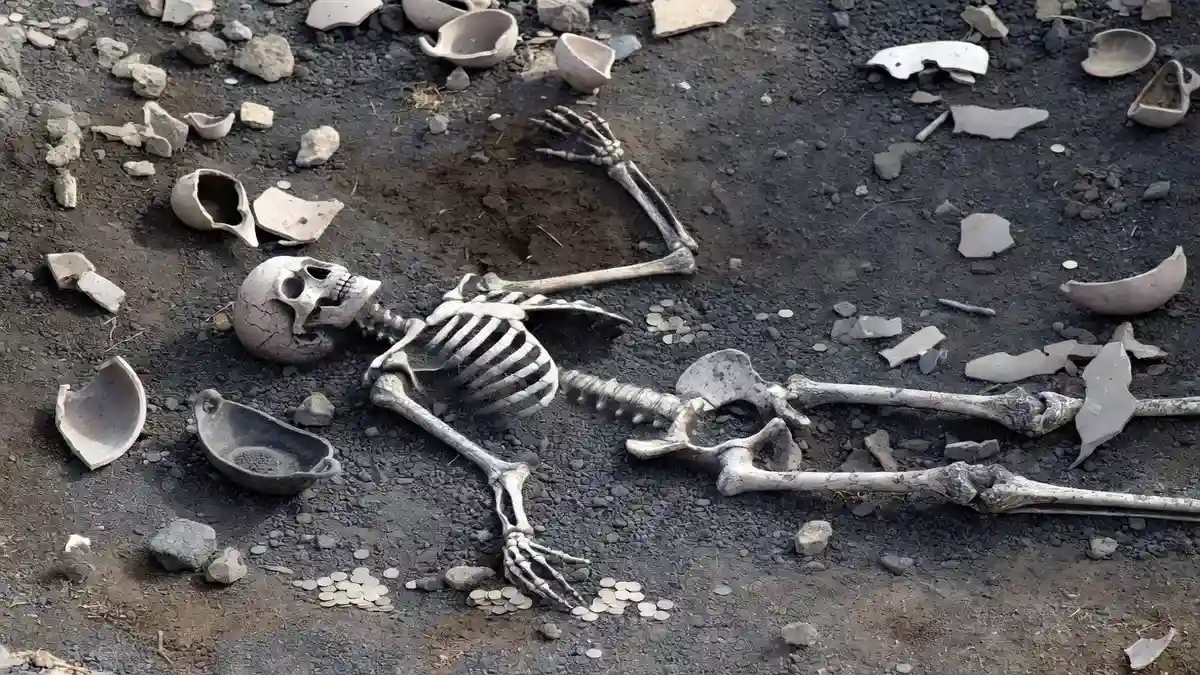
Excavations outside Pompeii’s ancient walls uncovered the remains of two men who attempted to escape toward the coast as the eruption unfolded. Their positions and the surrounding evidence reveal they died at different stages of the disaster. The older man, whose features have now been digitally reconstructed, appears to have been overtaken during the initial phases when volcanic debris rained down.
He was found lying beside a terracotta mortar that showed clear signs of impact damage. Researchers believe he held the heavy object above his head in a last-ditch effort to protect himself from falling lapilli—small, hot volcanic stones. This desperate action matches descriptions in Pliny the Younger’s famous eyewitness accounts, where people shielded themselves with whatever was at hand during the terrifying onslaught.
Other personal items paint a vivid picture of his final moments. He carried a ceramic oil lamp, likely to navigate through the thickening ash and darkness. A simple iron ring remained on his finger, and a small purse containing ten bronze coins lay nearby. These objects suggest he grabbed essential or valuable items while fleeing, hoping to survive the unfolding catastrophe.
### How AI and Archaeology Created the Reconstruction
The digital reconstruction process blended traditional archaeological measurements with cutting-edge artificial intelligence and photo editing tools. Specialists started with precise data from the skeleton, including age estimates, physical build, and contextual clues from the burial site. AI helped generate realistic facial features consistent with Roman-era populations in the region, while artists refined the image to show the man in motion—struggling along a rough path with the mortar raised overhead as debris fell around him.

Importantly, the team emphasizes that this is not a definitive portrait but an evidence-based visualization. Every detail grounds in excavation records rather than artistic invention. This approach represents a growing trend in archaeology where AI serves as a powerful support tool, helping interpret and present complex data without replacing human expertise.
The reconstruction appears as part of ongoing efforts to manage the enormous volume of information emerging from Pompeii. The site continues to yield extraordinary insights into daily Roman life, preserved in remarkable detail beneath the volcanic layers for nearly 2,000 years.
**H3: The Eruption’s Deadly Sequence**
The two men’s remains tell a story of escalating danger. The older individual likely died during the early rain of lapilli and ash. His companion, a younger man found nearby, was probably caught later by a fast-moving pyroclastic flow—a deadly surge of superheated gas and volcanic material that swept through the area. Their different fates highlight how the eruption unfolded in distinct phases, catching people at various stages of their escape attempts.
Mount Vesuvius’s 79 CE eruption remains one of the most studied volcanic events in history. It destroyed thriving Roman cities including Pompeii, Herculaneum, and Stabiae, killing thousands. The disaster preserved everyday scenes—houses with food still on tables, graffiti on walls, and people in their final poses—creating an unparalleled time capsule of Roman society.
### Life in Pompeii Before the Disaster
Before the eruption, Pompeii was a prosperous coastal town with a population of around 11,000. Residents enjoyed villas, public baths, amphitheaters, and bustling markets. Many were merchants, artisans, or farmers benefiting from the fertile volcanic soil. The reconstruction of this victim humanizes the statistics, showing an ordinary man—possibly a laborer or traveler—caught in extraordinary circumstances.
Items like the oil lamp and coins reflect practical decisions made under pressure. The lamp would have been vital as daylight vanished under ash clouds. The modest sum of money might represent his life savings or emergency funds. These details bring emotional depth to the archaeological record, reminding us that the victims were real people with hopes, routines, and families.
**H3: Advances in Digital Archaeology at Pompeii**
The Italian Ministry of Culture and the Archaeological Park of Pompeii continue pushing boundaries in heritage technology. From 3D scanning of entire neighborhoods to AI-assisted analysis, these tools help researchers document, protect, and share the site more effectively. The new facial reconstruction joins other recent projects that use virtual reality and digital modeling to let visitors “experience” ancient Pompeii.
Such methods also aid conservation. Pompeii faces ongoing threats from weathering, tourism, and environmental changes. Digital records ensure that even if physical remains degrade, the information and stories they contain endure.
### The Human Toll and Lessons from Vesuvius
The eruption killed an estimated 2,000 people in Pompeii alone, with many more across the region. Some died instantly from heat and toxic gases, while others succumbed to suffocation under ash. The reconstructed man’s story illustrates the panic and resilience of those trying to reach safety. Many headed toward the sea, hoping for rescue by boat, only to be overwhelmed by the volcano’s fury.
This project connects modern audiences to these ancient tragedies. For U.S. readers fascinated by history, it transforms abstract ruins into personal narratives. Schools, museums, and documentaries frequently feature Pompeii because its preservation offers unmatched insights into Roman daily life, social structure, and engineering.
**H3: Broader Impact on Understanding Roman Disasters**
Pompeii and its sister sites remain essential for studying how ancient societies responded to natural disasters. The careful positioning of bodies, associated artifacts, and now digital reconstructions allow researchers to reconstruct timelines with increasing accuracy. They reveal that while many tried to flee, others sheltered in place, hoping the danger would pass.
The integration of AI doesn’t diminish the human element—it enhances it. By visualizing the victim in action, the reconstruction evokes empathy and curiosity, encouraging deeper engagement with the past.
### Why This Reconstruction Matters Today
In an age of advanced technology, projects like this demonstrate how innovation can honor the past. They make history more accessible and emotionally resonant. Visitors to Pompeii can now see not just plaster casts of victims but contextualized digital portraits that bring their struggles to life.
The work also raises thoughtful questions about ethics in digital archaeology. Reconstructions must balance accuracy with respect for the deceased. The Pompeii team’s careful, evidence-based method sets a strong standard for similar efforts elsewhere.
Future phases of the project may include more reconstructions, virtual tours, and expanded public outreach. As excavation continues in previously unexplored areas, additional discoveries will likely enrich our understanding of the eruption’s impact.
### Connecting Past and Present Through Pompeii
The story of this Pompeii victim resonates across time. Natural disasters remain a constant human challenge, from ancient volcanoes to modern wildfires and earthquakes. Learning how Romans faced Vesuvius offers perspective on resilience, community response, and the fragility of life.
For many, Pompeii symbolizes the suddenness with which normal life can end. Yet it also represents survival through memory. The city’s ruins and its victims’ stories continue educating and inspiring millions worldwide.
This AI-assisted reconstruction stands as a testament to interdisciplinary collaboration. Archaeologists, historians, technologists, and artists working together create richer, more engaging interpretations of the past. It transforms cold skeletal data into a compelling visual narrative that honors the individual while contributing to broader historical knowledge.
As the Archaeological Park publishes more details in its E-journal, the public gains greater access to these breakthroughs. The project exemplifies how modern tools can unlock secrets from antiquity, making the distant past feel immediate and profoundly human.
The man with the mortar raised against the falling sky is no longer just a set of bones. Thanks to careful science and creative technology, he walks again in our imaginations—forever captured in his final, courageous struggle against the forces of nature.
## FAQ: AI Reconstruction of Pompeii Victim
**Q: How was the facial reconstruction of the Pompeii victim created?**
A: Researchers combined precise skeletal measurements, archaeological context, artificial intelligence, and photo editing to generate a realistic, evidence-based visualization.
**Q: What items were found with the man?**
A: A terracotta mortar used to shield his head, a ceramic oil lamp, an iron ring, and a purse containing ten bronze coins.
**Q: Where exactly was the victim discovered?**
A: Near the Porta Stabia necropolis, outside Pompeii’s ancient city walls, alongside another man who died during the eruption.
**Q: What does the reconstruction tell us about the eruption?**
A: It illustrates different phases of the disaster, showing how people faced falling lapilli and later pyroclastic flows while trying to escape.
**Q: Why is AI being used in Pompeii research?**
A: AI helps process large datasets, create visualizations, and enhance public understanding while supporting—not replacing—traditional archaeological methods.
**Q: How many people died in the 79 CE Vesuvius eruption?**
A: Estimates suggest around 2,000 in Pompeii alone, with thousands more across the region, though exact numbers remain uncertain.
**Q: Can visitors see the reconstruction?**
A: Details and images are shared through the Italian Ministry of Culture and the Pompeii Archaeological Park, with potential for future exhibits and digital displays.
This groundbreaking AI reconstruction revives the humanity of a Pompeii victim, bridging nearly two millennia to remind us of the power of both ancient disasters and modern technology. As research at the site continues, each new discovery and visualization deepens our connection to the people who lived—and died—during one of history’s most dramatic events