
Table of Contents
- 1. The Science Behind the Disappearing Carvings
- 1.1. The Seasonal Scouring Process
- 2. Decoding the 500-Year-Old Rock Art
- 2.1. Anatomical Features and Unprecedented Scales
- 3. A Sacred Legacy: Spiritual and Ancestral Meanings
- 4. The Geopolitical Battle for Preservation and Access
- 4.1. A History of Land Displacement
- 5. Embracing Ephemeral Preservation
- 6. Frequently Asked Questions
- 6.1. Where exactly on Oahu are these petroglyphs located?
- 6.2. How old is the petroglyph panel?
- 6.3. Why do these carvings keep disappearing and reappearing?
- 6.4. What makes this specific petroglyph site unique?
- 6.5. Can the public freely visit the petroglyphs?
Ancient Petroglyphs Reemerge on Oahu Shores, Stunning Locals
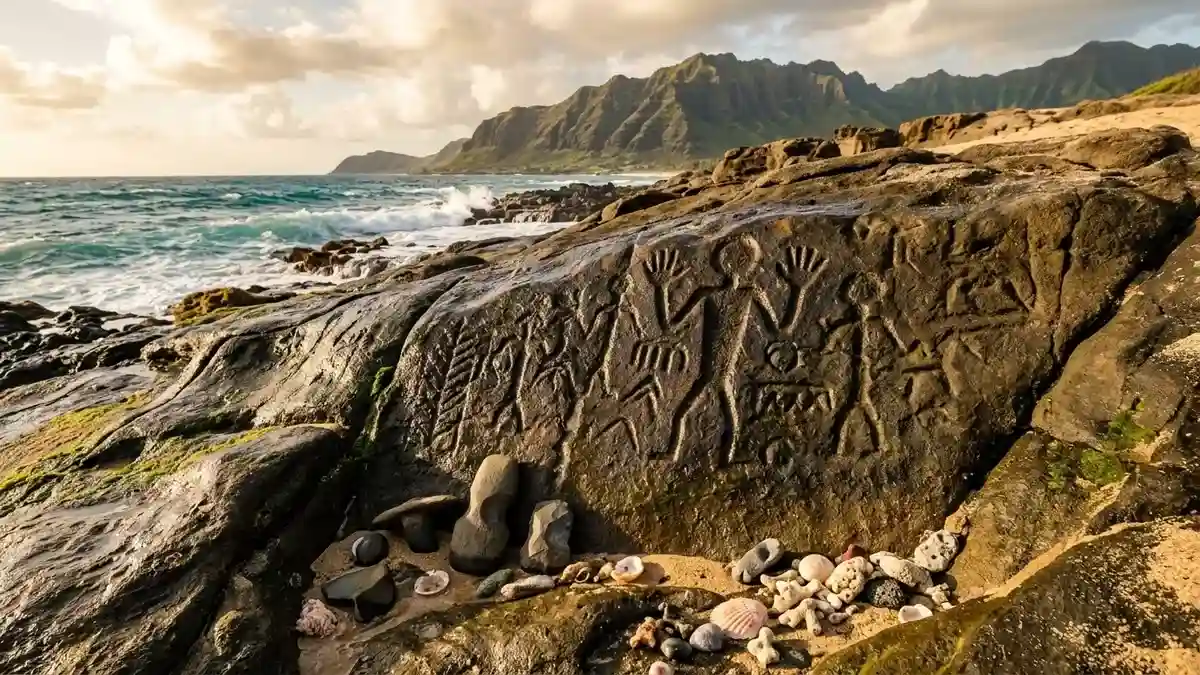
A remarkable window into Hawaii’s ancient past has briefly reopened on the coastline of Oahu. Shifting ocean currents and seasonal environmental changes have swept away heavy blankets of coastal sediment, exposing a spectacular hidden panel of prehistoric petroglyphs.
Etched deeply into the natural sandstone shelf along the island’s Waianae coast, this collection of 26 distinct carvings has broken through the surface for the first time since 2016. The rare figures offer modern spectators, historians, and Native descendants a fleeting, firsthand look at centuries-old cultural expressions before the relentless Pacific tides reclaim them once more.
Ancient Petroglyphs Reemerge on Oahu Shores, Stunning Locals
The Science Behind the Disappearing Carvings
The sudden visibility of these delicate antiquities is entirely dictated by the unique, cyclical weather patterns of the Pacific Ocean. Coastal dynamics on Oahu undergo dramatic transformations throughout the year, acting as a natural, repeating curation system for archaeological sites buried beneath the sand.
The Seasonal Scouring Process
Between the months of May and November, powerful ocean swells generated by distant storm systems regularly batter the Hawaiian shoreline. These high-energy waves generate intense undercurrents that systematically strip millions of tons of sand away from the rocky beaches.
This natural scrubbing process frequently exposes hidden geological layers. At low tide, as the rolling surf temporarily pulls away from the algae-covered rock shelves, the ancient artwork becomes clearly visible to the naked eye. However, this exposure is inherently temporary. As the storm seasons shift and coastal weather settles, the prevailing currents will reverse, slowly redepositing the sediment and sealing the petroglyphs away under a thick protective barrier until the next major natural cycle.
Decoding the 500-Year-Old Rock Art
While state and military archaeologists conservatively estimate the petroglyphs to be roughly 500 to 600 years old, local oral histories suggest a far deeper historical timeline. Native Hawaiian traditions maintain that ancestral communities have populated and actively utilized this specific coastal region for well over a millennium.
The physical scale and intricate design of the newly exposed rock panel set it completely apart from typical petroglyph fields found across the Hawaiian archipelago. Stretching continuously for approximately 115 feet along the breaking surf, the expansive sandstone canvas features a fascinating mix of abstract geometry and humanoid forms.
Anatomical Features and Unprecedented Scales
The majority of the depictions consist of classic stick-figure representations of human beings (kiʻi pōhaku). However, several key details have stunned regional anthropologists:
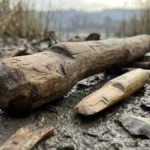
Distinct Finger Formations: Two of the largest human figures prominently display intricately carved fingers. Finding defined hands and fingers is an incredibly rare anomaly in traditional Hawaiian rock art, which typically relies on simplified linear limbs.
Towering Human Figures: The collection features several massive carvings that dwarf standard petroglyph discoveries. The largest and most imposing individual figure measures more than eight feet in height.
Celestial Interpretations: One exceptionally unique human form features one arm raised high toward the sky while the other points down toward the earth. Cultural researchers believe this specific posture represents the daily cycle of sunrise and sunset, directly linking the artwork to the celestial tracking methods fundamental to ancient Hawaiian spirituality and agricultural calendars.
A Sacred Legacy: Spiritual and Ancestral Meanings
For the modern Native Hawaiian community, these shifting sands do not merely reveal interesting historic artifacts or scientific curiosities. Instead, the reemergence of the carvings is viewed as a profoundly spiritual event, serving as a direct connection to their ancestors (kūpuna).
In traditional Hawaiian culture, these carvings function as enduring vessels of mana (spiritual power) and history. Rather than being random graffiti, they are understood to be deliberate historical records, genealogical charts, and sacred religious narratives. Experts hypothesize that the sandstone shelf may have served as the boundary for an outdoor temple or a sacred site dedicated to ceremonies marking seasonal changes, ocean navigation, or successful fishing expeditions.
The Geopolitical Battle for Preservation and Access
The unexpected reemergence of the Waianae petroglyphs has simultaneously reignited a long-standing socio-political controversy regarding land rights, military presence, and cultural heritage preservation on Oahu.
The physical petroglyph panel rests directly on the shoreline border of a secure U.S. Army recreation center. While the damp sand zone itself technically falls under public beach access laws, completely entering, viewing, or safeguarding the site from the dry land side requires active military identification.
A History of Land Displacement
This modern layout highlights a complex historical scar for many local families. The coastal properties currently managed by the federal government were once thriving settlements occupied by generations of Native Hawaiian families.
During the early decades of the 20th century, the United States government systematically seized vast tracts of these ancestral lands for defensive military installations. Historical records show that many native residents passionately resisted the forced relocations. Some families went as far as legally trading away fertile, inland agricultural plots just to secure small parcels of land near the ocean, allowing them to remain close to their ancestral fishing grounds and sacred coastal shrines.
Today, the line where the military seawall meets the eroding sandstone petroglyph shelf serves as a stark, literal boundary dividing Hawaii’s deeply rooted indigenous past from its highly militarized modern landscape.
Embracing Ephemeral Preservation
As federal cultural resource managers and state archaeologists collaborate with Native Hawaiian organizations to document the 26 figures using advanced digital scanning, they remain fully aware that long-term physical preservation is impossible.
Constructing artificial barriers or protective enclosures along a high-energy surf zone would cause catastrophic ecological damage and accelerate the erosion of the fragile sandstone platform. Ultimately, both scientists and cultural practitioners agree that the safest place for these ancient symbols is exactly where they have spent the last several centuries: safely blanketed beneath the heavy, shifting sands of Oahu, waiting for the natural rhythms of the ocean to wake them again.
Frequently Asked Questions
Where exactly on Oahu are these petroglyphs located?
The petroglyphs are carved into a sandstone rock shelf situated along the Waianae coast of western Oahu. The site is located directly on the shoreline adjacent to a secure U.S. Army recreation center, making land-based access highly restricted.
How old is the petroglyph panel?
Scientific experts date the physical carvings to be at least 500 to 600 years old. However, local Native Hawaiian oral traditions indicate that indigenous communities have lived in and spiritualized this specific coastal area for over 1,000 years.
Why do these carvings keep disappearing and reappearing?
Their visibility is entirely controlled by seasonal Pacific weather patterns. From May to November, strong storm swells wash heavy layers of sand away from the rocky shorelines, uncovering the carvings. Over the winter and spring, calmer currents redeposit the sand, burying them safely once again.
What makes this specific petroglyph site unique?
The panel contains several highly unusual features, including its massive size, stretching 115 feet across the shore. It includes a towering human figure over eight feet tall, and multiple figures featuring clearly defined fingers—an anatomical detail that is incredibly rare in traditional Hawaiian rock art.
Can the public freely visit the petroglyphs?
While the wet shoreline itself is legally open to the public during low tide, the land immediately bordering the site belongs to a restricted U.S. military facility. Complete, unrestricted access to the area requires valid military identification, which remains a topic of ongoing community discussion.