
Table of Contents
- 1. The Anatomy of a 450-Million-Year-Old Artifact
- 1.1. Evidence of Wear and Modification
- 2. Unearthing Roman Superstitions and Shrines
- 3. Earth’s Shards: The Hidden History of Fossil Worship
- 3.1. A Global Pattern of Fossil Reverence
- 4. The Segmented Aesthetic: Influencing Roman Fashion
- 5. Frequently Asked Questions
- 5.1. What is the significance of the trilobite fossil found in Spain?
- 5.2. How do researchers know the fossil was used as an amulet?
- 5.3. Where did the Armea trilobite originally come from?
- 5.4. Did ancient Romans regularly collect fossils?
- 5.5. What are “Trilobitenperlen” in Roman history?
Ancient Fossil Amulet Found at Roman Site Reveals Mystic Past
A groundbreaking archaeological discovery in northwestern Spain has revealed that ancient Romans looked to the deep geological past for spiritual protection.
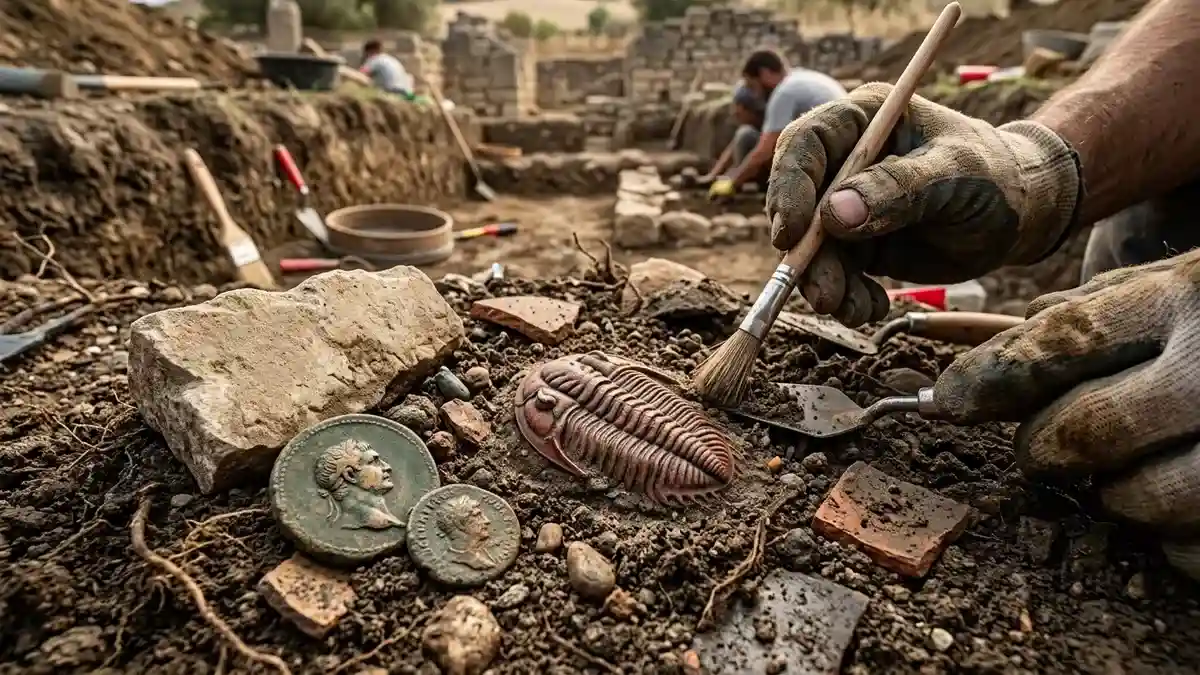
During excavations at the Roman settlement of A Cibdá de Armea in Galicia, researchers unearthed a 450-million-year-old fossilized trilobite. What makes this find extraordinary is that the ancient marine creature was deliberately modified by human hands and worn as a protective personal amulet during the 1st to 3rd centuries CE.
This artifact marks the first time in history that a trilobite fossil has been discovered within a Roman archaeological context, and it is only the eleventh such discovery recorded anywhere in the world. The find bridges the gap between ancient paleontology and Roman spiritual life, offering a rare glimpse into how prehistoric relics were repurposed as objects of magic, memory, and meaning.
 Vikings (Quiz)

Ancient Fossil Amulet Found at Roman Site Reveals Mystic Past
The Anatomy of a 450-Million-Year-Old Artifact
Trilobites were prehistoric marine arthropods that once dominated Earth’s oceans before going extinct roughly 250 million years ago—long before the age of the dinosaurs. The specimen recovered from the Armea site belongs to the genus Colpocoryphe and measures approximately 4 centimeters (about 1.6 inches) in length.
While its geological age is astounding, its archaeological context is what has captivated scientists. Rather than being a simple natural deposit, the fossil shows undeniable evidence of intentional human craftsmanship.

Evidence of Wear and Modification
Using advanced microscopic analysis, researchers identified seven distinct wear facets on the lower surface of the fossil. These markings indicate that the trilobite was systematically ground down and flattened. Archaeologists believe this shaping was done to prepare the fossil for mounting, allowing it to be securely fitted into a personal ornament such as a:
Leather bracelet or cuff, stitched through a central attachment point.
Banded metal pendant, likely fashioned from silver or bronze.
Also Read 20 Interesting Books About Archaeology
Ritual object kept in a protective pouch.

The fossil possesses a striking reddish coloration due to iron oxide mineralization. This distinct geological signature revealed that the trilobite did not originate in Galicia. Instead, it likely came from the south-central region of the Iberian Peninsula.
To reach Armea, the amulet had to travel more than 430 kilometers (267 miles). This suggests that the fossil was transported along the Vía de la Plata (the Silver Way), a prominent Roman trade highway connecting the ancient cities of Emerita Augusta (modern-day Mérida) and Asturica Augusta (Astorga). Its long-distance journey indicates that the fossil was treated as a highly valued commodity rather than a common stone.
Unearthing Roman Superstitions and Shrines
The modified trilobite was recovered from an ancient Roman refuse deposit, mixed among everyday items like animal bones, pottery fragments, and Roman coins. Archaeologists hypothesize that the amulet was discarded after its metallic or leather setting broke, or perhaps when its perceived magical properties were thought to have faded.
Intriguingly, the fossil was found in close proximity to an ancient stone inscription bearing the name “MAXSIMVS.”
This association suggests that the trilobite may have originally resided within a lararium—a sacred household shrine dedicated to the Lares (guardian spirits of the Roman home). In Roman households, families would place precious items, coins, and unique natural objects at these shrines as offerings to secure divine protection for the household.
Earth’s Shards: The Hidden History of Fossil Worship
The study, published in the peer-reviewed journal Archaeological and Anthropological Sciences, emphasizes that the Romans were part of a long global tradition of attributing mystical and supernatural powers to fossils.
In ancient times, nature’s anomalies were rarely viewed as mere scientific curiosities. Massive prehistoric bones were frequently interpreted as the remains of mythological giants, titans, or legendary beasts. Invertebrate fossils, though smaller and rarer, were viewed as protective talismans created by the Earth itself.
This fascination reached the highest levels of Roman society. The Roman historian Suetonius recorded that Emperor Augustus was an avid collector of natural wonders. Augustus reportedly filled his imperial villa on the island of Capri not with classical statues, but with sea monster bones and massive fossilized remains, effectively creating one of the earliest recorded paleontological exhibits in human history.
A Global Pattern of Fossil Reverence
The spiritual reverence for trilobites spans across multiple continents and millennia:
The Paleolithic Era: In France, archaeologists discovered a 14,000-year-old perforated trilobite fossil that was worn as a pendant by prehistoric humans.
Medieval Europe: In medieval Estonia, trilobites were intentionally placed in human burials to serve as protective amulets for the afterlife.
Native American Traditions: The Ute people of North America referred to trilobite fossils as “petrified water bugs” and carried them as sacred items to ward off bullets and sickness.
Traditional Chinese Medicine: As early as the 7th century, Chinese texts described trilobites as “stone worms,” grinding them into powders used to treat various physical ailments.
The Segmented Aesthetic: Influencing Roman Fashion
The distinct, ribbed anatomy of the trilobite may have left a lasting impression on the ancient Roman jewelry industry. Across the Roman Empire, archaeologists have frequently uncovered Trilobitenperlen—specialized segmented beads made from black glass or jet.
These beads, which strongly mimic the armored exoskeleton of a trilobite, were traditionally worn by women and children as protective charms against illness and the “evil eye.” While no glass Trilobitenperlen were found at the Armea site, the discovery of the actual fossil amulet suggests that the aesthetic of these protective beads may have been directly inspired by real prehistoric encounters like the one in Galicia.
The unprecedented find at A Cibdá de Armea demonstrates that to the Roman mind, fossils were far more than old stones. They were potent symbols of magic, ancestral memory, and supernatural defense against an uncertain world.
Frequently Asked Questions
What is the significance of the trilobite fossil found in Spain?
It is the first trilobite fossil ever discovered within an ancient Roman archaeological context. It shows clear evidence of human modification, indicating it was intentionally carried and worn as a personal amulet or ritual talisman during the 1st to 3rd centuries CE.
How do researchers know the fossil was used as an amulet?
The fossil features seven distinct wear facets on its lower surface, showing it was intentionally flattened and shaped. This craftsmanship allowed the 4-centimeter fossil to be securely set into a wearable item like a pendant or a leather bracelet.
Where did the Armea trilobite originally come from?
The fossil’s iron oxide composition and reddish color indicate it originated in the south-central Iberian Peninsula. It was transported over 430 kilometers to northwestern Spain, likely trading hands along the Vía de la Plata, a major Roman highway network.
Did ancient Romans regularly collect fossils?
Yes. Romans frequently viewed fossils as magical objects or mythological remains. Large bones were thought to belong to giants, while smaller fossils were used as protective charms. Even Emperor Augustus famously collected massive fossils and displayed them at his private villa in Capri.
What are “Trilobitenperlen” in Roman history?
Trilobitenperlen are segmented beads made from jet or black glass that closely resemble the ridged bodies of trilobites. They were commonly worn by Roman women and children as protective charms, and this new discovery suggests their design may have been directly inspired by real trilobite fossils.