
Table of Contents
- 1. The Fatal Night of the “Shining Moon”
- 2. Deploying Advanced Robotics in the Deep Ocean
- 3. Forensic Breakthroughs on the Ocean Floor
- 3.1. Rewriting the Historical Narrative
- 3.2. A Haunting Anti-Aircraft Time Capsule
- 4. Documenting the Graveyard of Iron Bottom Sound
- 5. Conclusion
- 6. Frequently Asked Questions
- 6.1. 1. Where exactly was the wreck of the Teruzuki discovered?
- 6.2. 2. How did the Teruzuki sink during World War II?
- 6.3. 3. What technology was used to locate the deep-sea shipwreck?
- 6.4. 4. What new historical information did this discovery reveal?
- 6.5. 5. Why is this specific shipwreck considered so historically rare?
Sunk in 1942, WWII Japanese Destroyer Found Off Guadalcanal
The deep ocean floor holds some of the most enduring secrets of the second World War. For more than eight decades, the final resting places of numerous combat vessels have remained shrouded in absolute darkness, hidden within the deep waters of the South Pacific. However, an extraordinary deep-sea maritime archaeology expedition has successfully brought one of these legendary ghosts back into the light.
Deep within the waters of the Solomon Islands, an international research team has officially located and explored the remarkably well-preserved wreckage of the Imperial Japanese Navy destroyer Teruzuki. Sunk during a chaotic nighttime surface engagement in late 1942, the discovery of this advanced warship provides historians with an invaluable, tangible link to the Guadalcanal campaign—one of the most fiercely contested and decisive turning points of the Pacific War.
Sunk in 1942, WWII Japanese Destroyer Found Off Guadalcanal
The Fatal Night of the “Shining Moon”
Commissioned in the summer of 1942, the Teruzuki—a name translating beautifully to “Shining Moon” in Japanese—was a state-of-the-art, 440-foot Akizuki-class destroyer. Designed specifically to provide elite, high-volume anti-aircraft protection for larger fleet units, she was a formidable asset. However, her operational career was cut tragically short just months after her launch.
The fate of the vessel was permanently sealed during the pitch-black morning hours of December 12, 1942. Under the command of Rear Admiral Raizo Tanaka—a highly capable and stubborn leader widely known among Allied forces as “Tenacious Tanaka”—the Teruzuki was patrolling off Cape Esperance along the northern coast of Guadalcanal, escorting a vital convoy of supply vessels.
[Convoy Escort Off Cape Esperance] ➔ [Surprise Night Attack by U.S. PT Boats] ➔ [Torpedo Impact & Magazine Explosion]
In the darkness, two small, agile U.S. Navy patrol torpedo boats, PT-37 and PT-40, intercepted the fleet. Spotting vague silhouettes against the water, the PT boats fired a spread of torpedoes. One of these weapons struck the Teruzuki squarely in the stern, disabling her steering mechanisms and igniting a massive, un-containable fire.
The initial blast was so severe it knocked Admiral Tanaka completely unconscious. As the crew scrambled to control the flames, the fire eventually breached the ship’s ammunition magazines, triggering a catastrophic internal explosion. At approximately 4:40 a.m., the burning destroyer slid beneath the waves. While nine crew members tragically went down with the ship, the vast majority of the sailors, including a recovered Tanaka, were rescued from the water.
Deploying Advanced Robotics in the Deep Ocean
Locating a warship submerged more than 2,600 feet (800 meters) beneath the surface requires an immense level of technological precision. The breakthrough was achieved during the high-tech Maritime Archaeology of Guadalcanal expedition, operating aboard the renowned Exploration Vessel Nautilus.
The discovery relied on a multi-tiered, collaborative alliance spearheaded by the Ocean Exploration Trust and supported by NOAA Ocean Exploration, the University of New Hampshire, and the Solomon Islands government. To map the complex underwater terrain, researchers first deployed the DriX—an advanced, uncrewed autonomous surface vessel developed by the University of New Hampshire. Armed with high-resolution seafloor sonar mapping systems, the autonomous craft scanned the area to isolate the most probable coordinates of the wreckage.
Once a high-probability target was identified, the expedition team deployed two heavy, deep-sea remotely operated vehicles (ROVs), Hercules and Atalanta. Equipped with high-definition cameras, powerful lighting rigs, and robotic sampling arms, these deep-sea explorers descended into the abyss to conduct a comprehensive visual audit of the historic site.
Forensic Breakthroughs on the Ocean Floor
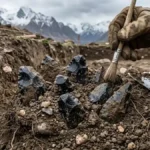
When the ROV cameras finally illuminated the seabed, they revealed that the Teruzuki had suffered severe structural trauma. The warship rests on the ocean floor in two distinct sections, separated by a substantial debris field.
Rewriting the Historical Narrative
The main hull lies upright, but the severed stern section was discovered resting roughly 656 feet away from the rest of the ship. Interestingly, a close forensic inspection of the stern revealed clear evidence of depth-charge damage. This specific physical detail effectively disproves a long-standing historical theory. For decades, naval historians believed that the ship’s final, fatal explosion was caused by the accidental internal detonation of her own depth charges. The new visual data proves these weapons were actually detonated externally or deployed during the struggle, rewriting the final moments of the ship’s loss.
A Haunting Anti-Aircraft Time Capsule
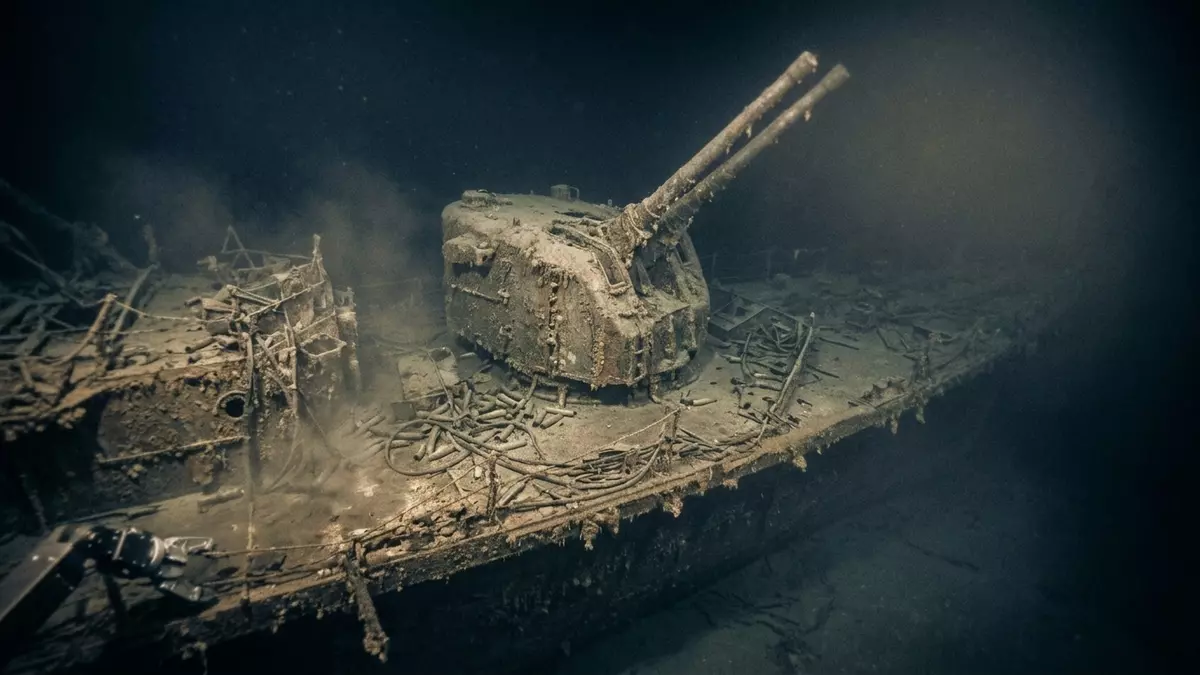
Despite spending 83 years submerged in highly corrosive saltwater, the Teruzuki remains an emotionally charged time capsule. Large amounts of live ammunition remain scattered across the site, and the ship’s primary weapon systems are remarkably intact.
[Deep Sea Abyss] ➔ [ROV Hercules Images Turrets] ➔ [Guns Fixed at Permanent Skyward Angles]
One of the most poignant and haunting sights captured by the submersibles was the positioning of the forward artillery turrets. The heavy dual-purpose guns remain firmly fixed in place, still trained upward toward the empty sky. It is a chilling physical reminder of the ship’s core design mission: she was engineered to look upward to defend her fleet against aerial threats, yet she met her end from a low-profile surface attack executed at sea level.
Documenting the Graveyard of Iron Bottom Sound
The recovery and mapping of the Teruzuki marks the 12th successfully documented wreck of this ongoing Pacific heritage project. Her location adds another vital data point to our understanding of Iron Bottom Sound—the infamous stretch of water separating Guadalcanal, Savo Island, and Florida Island.
During the intense naval campaigns of late 1942, this narrow body of water became a literal graveyard for global navies. The sound played host to five major, catastrophic fleet battles, resulting in over 20,000 casualties and the destruction of more than 100 capital warships and 1,450 aircraft. To date, less than 100 of those sunken vessels have been officially located, leaving the vast majority of the battlefield hidden in the deep.
The discovery of the Teruzuki carries immense historical value because it bridges a massive gap in military archives. Due to intense wartime secrecy, the burning of documentation, and the ship’s short operational lifespan, there were no known surviving photographs or blueprints of the destroyer in existence. The live-streamed video feeds provided by the ROVs have effectively allowed global researchers to study the architecture of this rare class of ship for the very first time.
Conclusion
The successful location of the Teruzuki is far more than a triumph of deep-sea robotic engineering; it is a profound act of historical preservation. By sending high-definition video feeds across the globe, the expedition has allowed modern audiences to confront the raw, silent realities of naval warfare. The upright hull, the shattered stern, and the skyward-facing turrets stand as an enduring monument to the thousands of young sailors who lost their lives in the Pacific, ensuring their sacrifices are never entirely forgotten by the modern world.
Frequently Asked Questions
1. Where exactly was the wreck of the Teruzuki discovered?
The wreckage of the Imperial Japanese Navy destroyer Teruzuki was discovered off the northern coast of Guadalcanal near Cape Esperance, resting within the infamous waters of Iron Bottom Sound in the Solomon Islands. It lies at a depth of over 2,600 feet (800 meters) beneath the surface.
2. How did the Teruzuki sink during World War II?
In the early hours of December 12, 1942, while escorting a critical supply convoy, the ship was ambushed by two U.S. Navy patrol torpedo boats, PT-37 and PT-40. A torpedo strike to the stern disabled the vessel and ignited a massive fire that eventually reached the ship’s ammunition magazines, causing a fatal explosion.
3. What technology was used to locate the deep-sea shipwreck?
The international research team utilized a combination of advanced systems. First, an uncrewed autonomous surface vessel named DriX used high-resolution sonar to map the seafloor. Then, two deep-sea remotely operated vehicles (ROVs), Hercules and Atalanta, were sent down to visually explore, photograph, and document the site.
4. What new historical information did this discovery reveal?
The discovery disproved a long-standing historical theory that the ship’s final explosion was triggered by the internal detonation of her own depth charges. Visual evidence showed the stern section resting 656 feet away with clear signs of external depth-charge damage, proving the weapons were deployed or damaged differently during the battle.
5. Why is this specific shipwreck considered so historically rare?
The Teruzuki is exceptionally valuable to military historians because there are no known surviving photographs, technical blueprints, or structural diagrams of the vessel due to strict wartime classification and the destruction of military records. The ROV footage provides the first physical look at the architecture of an Akizuki-class destroyer.