
Table of Contents
- 1. Unlocking the Secrets of Boeslunde’s Sacred Spring
- 2. The Earliest Iron in Denmark
- 2.1. Redefining the Timeline
- 3. Unparalleled Artistry and Global Connections
- 4. A Capital of Prehistoric Ritual
- 5. Frequently Asked Questions
- 5.1. Why is the discovery of these lances considered so important?
- 5.2. What is the connection between the lances and the natural spring?
- 5.3. How did archaeologists determine the age of the weapons?
- 5.4. Have similar gold-plated iron weapons been found elsewhere in Europe?
- 5.5. What will happen to the lances next?
Gold-Plated Lances Discovered at Sacred Danish Site Rewrite Bronze Age History
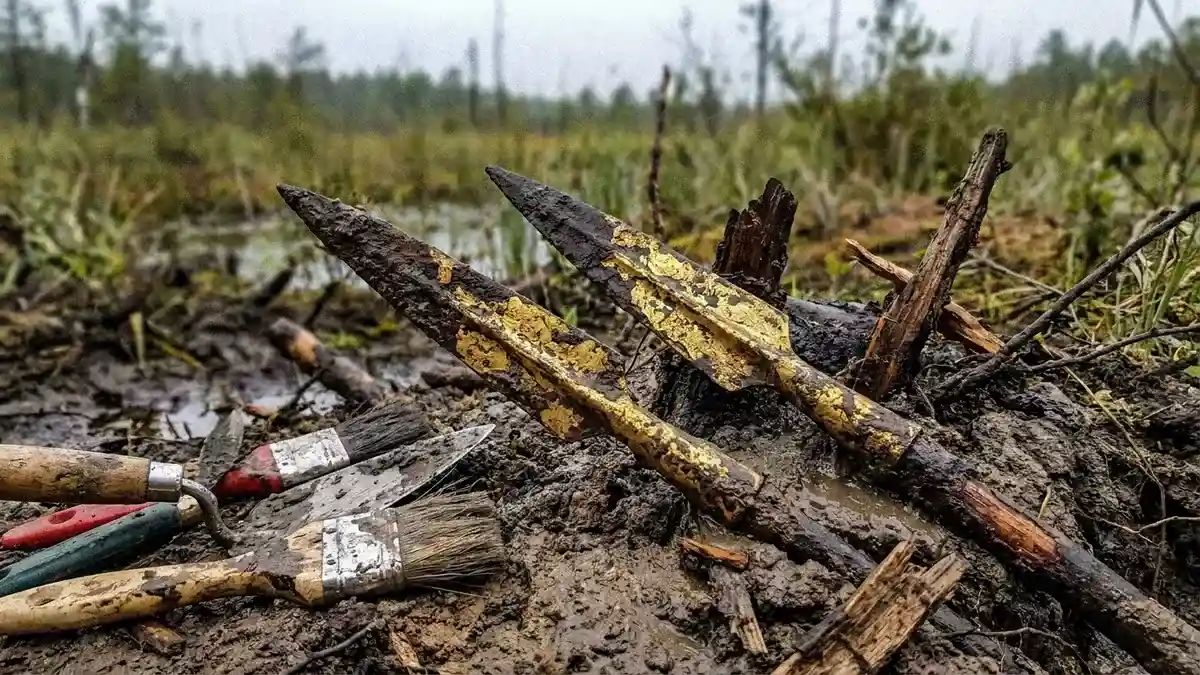
Archaeologists working near the village of Boeslunde on the Danish island of Zealand have unearthed a pair of spectacular gold-decorated iron lances. The discovery marks a monumental shift in our understanding of early European metallurgy: these weapons are now officially recognized as the earliest iron objects ever found in Denmark.
The excavation, conducted by a team from Museum Vestsjælland, initially set out not to find new treasures, but to better understand the landscape context of Boeslunde—an area already famous for its dense concentrations of prehistoric gold. Within days, however, the project completely surpassed expectations, revealing a sacred ancient site that rewrites the timeline of the Nordic Bronze Age.
Gold-Plated Lances Discovered at Sacred Danish Site Rewrite Bronze Age History
Unlocking the Secrets of Boeslunde’s Sacred Spring
For decades, Boeslunde has baffled historians with its extraordinary concentration of wealth. Previous discoveries in the area include 10 massive gold oath rings and a staggering hoard of over 2,000 delicate gold spirals. The mystery was never what was hidden here, but why this specific landscape held such monumental religious value.
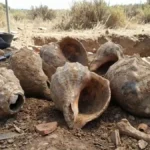
The breakthrough came when researchers exposed a natural spring situated directly alongside the spots where the previous gold hoards were found. This geological feature provides long-sought proof that the landscape was a highly revered, sacred water source where ancient people gathered to make ceremonial offerings to their gods.
The Earliest Iron in Denmark
During the documentation of the muddy spring area, the team noticed a heavily corroded metallic object shimmering with ultra-thin sheets of gold. As they meticulously cleared away the sediment, they realized they weren’t looking at bronze or gold ornaments, but rather a long, masterfully crafted iron lance head. Moments later, a second, nearly identical spearhead emerged from the same layer.
Redefining the Timeline
To establish exactly when these weapons were deposited, scientists performed radiocarbon dating on fragments of organic birch pitch preserved inside one of the lance tips.
The Verdict: The tests dated the lances to between 900 and 830 BCE, placing them squarely within Period V of the Nordic Bronze Age.
Before this discovery, iron technology was thought to have arrived in Scandinavia much later. These weapons effectively push back the dawn of iron use in Denmark by generations, proving that local elites had access to this innovative metal while the rest of the region was still firmly reliant on bronze.
Unparalleled Artistry and Global Connections
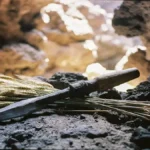
Measuring approximately 60 centimeters in length, the complete lances represent an extraordinary fusion of two contrasting metals: the strength of early iron paired with the elite status of gold ornamentation.
| Feature | Description | Historical Significance |
| Material Base | Hand-forged early ironwork. | Represents the absolute transition point of metallurgy in Northern Europe. |
| Ornamentation | Thin sheets of gold and complex circular geometric inlays. | Showcases an incredibly advanced, luxury standard of craftsmanship. |
| X-Ray Analysis | Reveals hidden internal patterns and precise gold wiring along the blades. | Indicates the weapons were likely ceremonial or reserved for elite warriors. |
What makes these lances genuinely exceptional is their extreme rarity. No similar gold-plated iron weapons from this era have ever been found anywhere else in Northern Europe. The only loose structural parallels exist thousands of miles away in Central Europe and Greece—and even in those Mediterranean hubs, gold-accented iron is virtually unheard of. This suggests that the rulers of Boeslunde were connected to incredibly prestigious, long-distance trade networks that spanned the entire European continent.
A Capital of Prehistoric Ritual
The discovery of the lances completely cements Boeslunde’s status as a preeminent religious and economic superpower during the Late Bronze Age. The newly mapped natural spring, when paired with the discovery of prehistoric cooking pits and nearby elite items like the six famous gold bowls from Borgbjerg Banke, reveals a landscape of continuous, repeated ritual activity.
For centuries, local communities participated in a deeply embedded European tradition of sacrificing their most precious items to wetlands, bogs, and springs. By placing these cutting-edge, gold-wrapped iron lances into the water, a powerful Bronze Age chieftain made the ultimate statement of wealth, devotion, and territorial dominance.
Frequently Asked Questions
Why is the discovery of these lances considered so important?
They are the oldest iron objects ever discovered in Denmark, dating back to 900–830 BCE. Their existence proves that iron technology reached Scandinavia significantly earlier than historians previously estimated.
What is the connection between the lances and the natural spring?
The lances were found directly inside a natural spring area. In the Bronze Age, water sources were viewed as sacred portals to the spiritual world. People intentionally threw valuable weapons, rings, and gold spirals into the water as offerings to the gods.
How did archaeologists determine the age of the weapons?
Scientists utilized radiocarbon dating on small traces of birch pitch—a natural adhesive used to secure the lance heads to their wooden shafts—which was incredibly well-preserved on one of the weapon tips.
Have similar gold-plated iron weapons been found elsewhere in Europe?
No. While standard bronze or plain iron weapons exist from this era, gold-plated iron lances are virtually non-existent in Northern Europe. The only distant stylistic equivalents come from elite sites in Central Europe and ancient Greece.
What will happen to the lances next?
The lances are undergoing intensive stabilization and conservation at Museum Vestsjælland to prevent the heavily corroded iron from degrading further. Given their historic nature, they will eventually be featured in a major public exhibition detailing Denmark’s prehistoric past.