
Table of Contents
- 1. The Biological Toll of the Roman Empire
- 2. Decoding the Skeletal Evidence
- 2.1. Markers of Nutritional Deprivation
- 2.2. Crippling Vitamin Deficiencies
- 2.3. Infectious Disease and Pollution
- 3. City Living vs. Rural Resilience
- 4. Rethinking the Roman Conquest
- 5. Frequently Asked Questions
- 5.1. How did Roman cities negatively impact public health?
- 5.2. Why did rural populations remain healthier than urban ones?
- 5.3. What is the DOHaD hypothesis, and how did it help this study?
- 5.4. What specific health issues did archaeologists find on the skeletons?
- 5.5. Why was it previously difficult to study the health of pre-Roman Britons?
Confirmation: How Roman Urbanization Ruined Public Health in Britain
When the Roman Empire marched into Britain in CE 43, it brought what ancient historians celebrated as the dawn of civilization. Paved roads, sprawling stone villas, advanced administration, and organized city centers transformed the landscape. However, a groundbreaking archaeological study reveals that this ancient “progress” carried a devastating hidden cost.
For the people forced into these newly constructed urban hubs, Roman civilization did not improve daily life—it ruined their health.
By analyzing ancient human remains, researchers have confirmed a stark health divide between the crowded inhabitants of Roman cities and the resilient populations who stayed in the countryside. While the empire promised luxury, the biological reality for city dwellers was a nightmare of malnutrition, chronic infections, and toxic environments.
Confirmation How Roman Urbanization Ruined Public Health in Britain
The Biological Toll of the Roman Empire
For centuries, understanding the true biological impact of the Roman invasion on everyday Britons was a massive puzzle for historians. The main obstacle lay in the burial traditions of the pre-Roman Iron Age. Ancient British communities frequently cremated or fragmented their dead, leaving modern archaeologists with almost no intact adult skeletons to examine from the period before the conquest.
To bypass this historical roadblock, a recent study published in Antiquity utilized an innovative methodology based on the Developmental Origins of Health and Disease (DOHaD) hypothesis. This scientific framework states that early childhood stresses leave permanent biological markers on bones and teeth, which persist into adulthood and can even impact future generations.
 20 Interesting Books About Archaeology
Researchers shifted their focus to the individuals whose skeletons were preserved intact: infants, young children under the age of 3.5, and adult females of childbearing age. By tracking the health of mothers and their babies, scientists successfully mapped out a multi-generational view of how Roman rule altered human biology.
Decoding the Skeletal Evidence
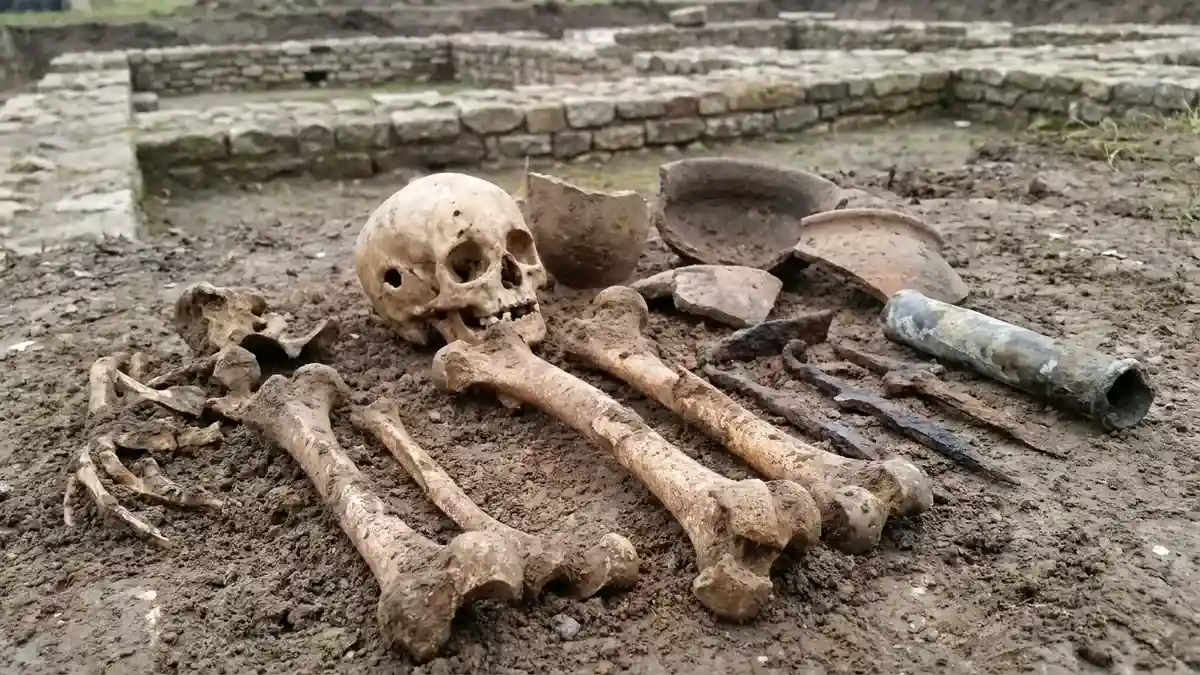
The research team conducted a comprehensive analysis of 646 skeletons, including 372 young children and 274 adult females. These remains were pulled from a variety of settings across southern and central Britain, including original Iron Age settlements, rural Roman farming communities, and major Roman urban centers.
The skeletal remains from Roman cities told a grim story. Archaeologists uncovered widespread physical evidence of severe physiological stress, identifying several key pathologies:

Markers of Nutritional Deprivation
Many adult and non-adult skeletons displayed cribra orbitalia—a porous bone growth inside the eye sockets that indicates severe anemia and nutritional deficiencies. Researchers also noted high rates of dental enamel hypoplasia, which are visible grooves in the teeth formed when a child’s development is repeatedly halted by starvation or severe illness.
Crippling Vitamin Deficiencies
The urban skeletons showed undeniable signs of metabolic bone diseases. Scientists discovered bowing of the leg bones (femora) and flattened shoulder joints (humeral heads), which point directly to rickets, a condition caused by a lack of vitamin D. Furthermore, abnormal bone growth on the skulls of infants indicated widespread vitamin C deficiency, commonly known as scurvy.
Infectious Disease and Pollution
Lytic lesions on the ribs and joints provided clear evidence that deadly, highly contagious pathogens like tuberculosis spread rapidly through urban populations. Additionally, the widespread presence of non-specific bone infections showed that the immune systems of city residents were constantly fighting off environmental hazards.
City Living vs. Rural Resilience
The data revealed an undeniable geographic divide in health. The steep rise in physical illness, stunted growth, and chronic infection was heavily concentrated inside the Roman towns.
Life in a Roman city center meant living in a hotspot for disease. Densely populated neighborhoods lacked proper sanitation by modern standards, causing waste to accumulate and clean water to become scarce. Paradoxically, the very infrastructure the Romans were famous for may have poisoned their citizens. The extensive use of lead in urban water systems, pipes, and everyday items introduced a heavy metal neurotoxin into the daily lives of residents, adding immense toxic stress to already weakened bodies.
Furthermore, the economic structure of Roman towns altered the local diet for the worse. Urban populations relied heavily on mass-produced cereal grains, losing the varied dietary options enjoyed by earlier generations. Coupled with steep social inequalities that restricted poor residents’ access to clean food and healthcare, city life became a health trap.
Conversely, the story in the countryside was completely different. Skeletons recovered from rural Roman settlements showed only minor increases in pathogen exposure, with no major decline in overall health.
Rethinking the Roman Conquest
These biological findings challenge the traditional historical narrative that the Roman Empire completely and rapidly transformed British society for the better.
Outside the major urban hubs, rural Britons largely ignored the new Roman way of life. They held onto their traditional farming practices, maintained stable access to diverse food sources, and lived in cleaner environments far away from the toxic, congested cities. The rural population successfully preserved their well-being by keeping their distance from the empire’s urban centers.
Ultimately, the transition to Roman urbanism proved to be a major turning point in British history, but not for the reasons long assumed. It demonstrated that massive societal shifts and rapid urbanization can disrupt public health unevenly, leaving deep biological scars on mothers and children that echo across generations.
Frequently Asked Questions
How did Roman cities negatively impact public health?
Roman cities suffered from severe overcrowding, poor sanitation, and high concentrations of pathogens, leading to the rapid spread of infectious diseases like tuberculosis. Urban residents also faced heavy environmental pollution, including toxic exposure to lead used in water pipes and building infrastructure.
Why did rural populations remain healthier than urban ones?
People living in rural areas maintained traditional Iron Age lifestyles, which gave them more consistent access to diverse food sources and cleaner, less crowded environments. They avoided the high pathogen exposure, air pollution, and social inequalities found in major Roman towns.
What is the DOHaD hypothesis, and how did it help this study?
The Developmental Origins of Health and Disease (DOHaD) hypothesis asserts that environmental and nutritional stress during early childhood leaves permanent biological marks on the body. By applying this concept, researchers could analyze the bones of infants and adult women to understand the long-term, multi-generational health impacts of the Roman occupation.
What specific health issues did archaeologists find on the skeletons?
Archaeologists discovered widespread signs of vitamin D deficiency (rickets) and vitamin C deficiency (scurvy), dental enamel defects from malnutrition, bone lesions caused by tuberculosis, and anemia. These markers were significantly more severe in urban skeletons than in rural ones.
Why was it previously difficult to study the health of pre-Roman Britons?
During the pre-Roman Iron Age, British communities traditionally cremated their dead or fragmented the remains. This practice left a major gap in the archaeological record, as there were virtually no intact adult skeletons available for comprehensive modern analysis until researchers focused on infants and intact Roman-era remains.