
Table of Contents
- 1. Unearthing Bassania: The Resurrection of a Lost City
- 2. Anatomy of the Temple: Greek Influence on Illyrian Soil
- 2.1. Sacred Boundaries and Orientation
- 3. Shifting Perspectives on Illyrian Culture
- 4. From Hellenistic Peak to Roman Outpost
- 5. Conclusion: A New Chapter in Balkan History
- 6. Frequently Asked Questions
- 6.1. Where is this newly discovered ancient temple located?
- 6.2. What ancient lost city is believed to be at the Bushat site?
- 6.3. How old is the temple structure?
- 6.4. What makes this specific architectural find so rare?
- 6.5. Did people ever return to the site after the city was abandoned?
Hellenistic Temple Found in Albania’s Long-Lost Ancient City
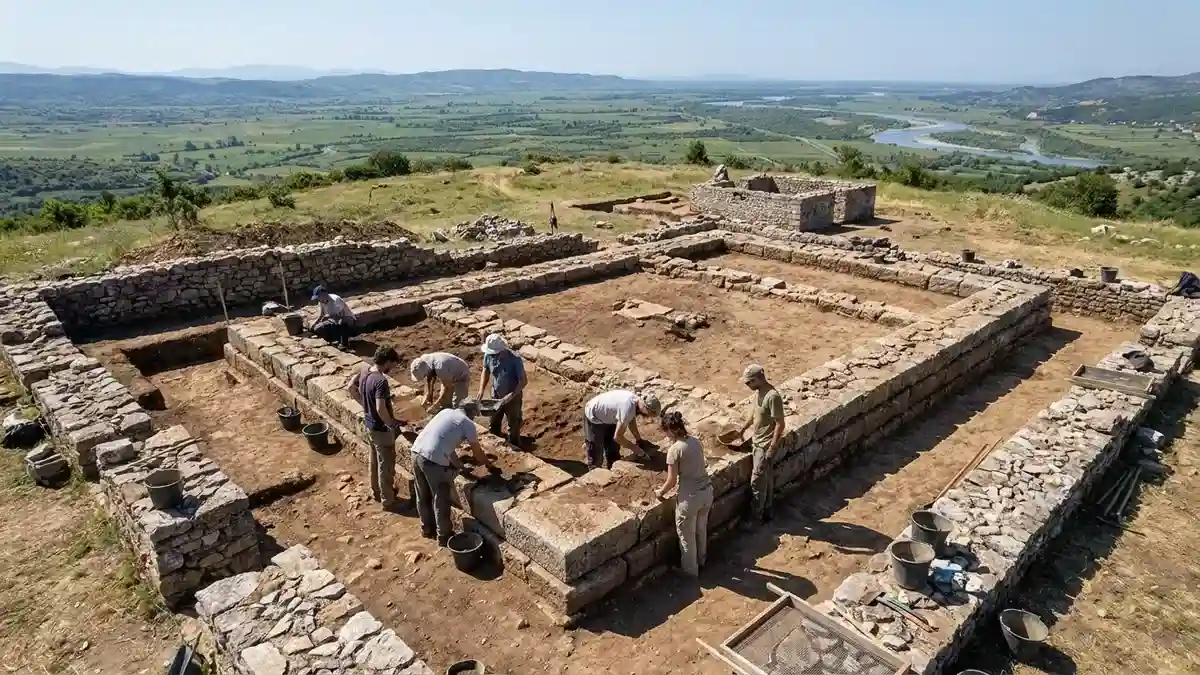
A team of international researchers has made an extraordinary archaeological breakthrough in northern Albania, uncovering the majestic stone foundations of a large Hellenistic temple. Excavated at the enigmatic hilltop site of Bushat, this structural marvel provides the first tangible look at monumental religious architecture belonging to the ancient Illyrian civilization in this region.
The discovery—spearheaded by a joint mission from the University of Warsaw and the University of Tirana—adds a massive piece to the historical puzzle of the western Balkans. More importantly, it offers compelling evidence that this unassuming, vegetation-covered hill is actually the true location of Bassania, a legendary ancient city that vanished from maps and collective human memory millennia ago.
Hellenistic Temple Found in Albania’s Long-Lost Ancient City
Unearthing Bassania: The Resurrection of a Lost City
Located roughly 10 kilometers south of the modern city of Shkodër, the archaeological site of Bushat represents one of Europe’s rarest historical phenomena: a true “lost city.” For centuries, centuries of farming, soil erosion, and changing political borders completely erased the settlement from local memory, leaving absolutely no surface indicators of its ancient grandeur.
 Roman villa and advanced drainage systems unearthed in Aquileia during cycling path construction
                    [ SHKODËR ]
                         |
                         | ~10 Kilometers South
                         v
                [ HILLTOP ACROPOLIS ]  --> Strategic military view of
                (Ancient City Site)        routes to Lissos & Adriatic
                         |
                         v
            [ HELLENISTIC STONE TEMPLE ]
            (Dated: 4th - 2nd Century BCE)
Archaeologists first identified the subterranean urban footprint in 2018 using advanced geophysical surveys. Since then, continuous excavations have exposed a massive, sprawling urban center hidden directly beneath active farmland. By cross-referencing the physical layout of these newly found ruins with geographic descriptions preserved in ancient classical texts, scholars are increasingly confident that they have finally solved the mystery of Bassania’s location.
Anatomy of the Temple: Greek Influence on Illyrian Soil
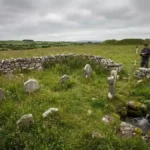
The latest excavation season focused squarely on the acropolis, the highest and most heavily fortified sector of the ancient settlement. Here, dominant over the surrounding plains, the team fully exposed the robust stone foundations of a grand, rectangular building.
The structure boasts highly standardized classical dimensions, measuring precisely:
Length: 13.6 meters (44.6 feet)
Width: 9.6 meters (31.5 feet)
These specific architectural proportions match the strict geometric design blueprints used to construct sacred temples across the Greek world during the Hellenistic era.
Sacred Boundaries and Orientation
Archaeologists date the primary use of the temple to a window spanning between the 4th and 2nd centuries BCE. The structure’s high-altitude positioning at the absolute peak of the acropolis, combined with its meticulous alignment to the cardinal directions, strongly reinforces its role as a premier religious sanctuary.
Furthermore, the team unearthed a heavy defensive stone wall encircling the perimeter of the hill. Rather than serving a purely military purpose, researchers state that this wall likely demarcated the temenos—the sacred, inviolable boundary line separating the holy religious complex from the secular, everyday city below.
Shifting Perspectives on Illyrian Culture
The discovery of the Bushat sanctuary is a monumental event for Balkan archaeology because no other Illyrian temple of this specific Hellenistic style has ever been documented in northern Albania.
Historically, ancient Roman and Greek chroniclers often painted the native Illyrian tribes as decentralized, uncultured barbarians. This temple completely shatters that biased narrative. It proves that the northern Illyrians were not only capable of organizing mass labor to erect complex, permanent stone architecture, but they were also deeply integrated into the artistic, religious, and cultural movements sweeping the Mediterranean during the Hellenistic golden age.
From Hellenistic Peak to Roman Outpost
The archaeological layers indicate that Bassania was abruptly and completely abandoned near the end of the Hellenistic period, likely a casualty of the brutal Illyrian Wars against the expanding Roman Republic. Following its fall, the temple ruins sat empty and silent for hundreds of years.
However, human activity returned to the strategic hilltop centuries later. The team discovered that during the 3rd century CE, Roman builders erected a smaller, utilitarian stone structure directly adjacent to the crumbling Hellenistic temple. This Roman outpost remained actively occupied for nearly a century.
The reason for this late-Roman reoccupation comes down to geography. From the peak of the Bushat acropolis, soldiers and sentries enjoyed an unobstructed, panoramic view of the landscape, allowing them to easily monitor and secure vital trade and military corridors stretching from Shkodër down toward ancient Lissos and the nearby Adriatic coastline.
Conclusion: A New Chapter in Balkan History
The excavation of the Hellenistic temple at Bushat does far more than add another ruin to the map. It resurrects the story of a forgotten city, elevates our understanding of Illyrian spiritual life, and demonstrates the profound cultural interactions that shaped the Western Balkans over two thousand years ago. As researchers continue to clear away the soil, the lost city of Bassania is finally stepping out of the shadows of myth and into the light of historical fact.
Frequently Asked Questions
Where is this newly discovered ancient temple located?
The temple ruins were discovered at the hilltop archaeological site of Bushat, located approximately 10 kilometers south of the city of Shkodër in northern Albania.
What ancient lost city is believed to be at the Bushat site?
Based on the size of the urban ruins and descriptions found in ancient historical texts, researchers believe the site is the long-lost Illyrian city of Bassania, which vanished from historical records millennia ago.
How old is the temple structure?
Archaeologists date the construction and primary religious use of the temple to between the 4th and 2nd centuries BCE, placing it firmly within the Hellenistic period.
What makes this specific architectural find so rare?
This is the very first Hellenistic-style temple ever identified in northern Albania that is directly tied to local Illyrian communities. Its classical proportions and layout provide undeniable proof of deep Greek cultural and architectural influence on Illyrian society.
Did people ever return to the site after the city was abandoned?
Yes. After centuries of abandonment following the Hellenistic era, Roman builders returned to the hilltop in the 3rd century CE. They constructed a smaller outpost next to the temple ruins, utilizing the site’s high elevation to monitor strategic routes leading to the Adriatic coast for nearly 100 years.