
Table of Contents
- 1. Unearthing the Treasures of Havelland
- 2. The “Spandau Cross” Connection: A Perfect Match
- 3. Slavic Resistance and the Lutizen Revolt of 983
- 4. The Power of Citizen Science in Archaeology
- 5. Bridging History in the Museum
- 6. Frequently Asked Questions
- 6.1. What is the Brandenburg bronze wheel cross?
- 6.2. How does this cross connect to a discovery from 1983?
- 6.3. What does this artifact tell us about early Christianization?
- 6.4. Did the local Slavic populations readily accept Christianity?
- 6.5. Who found the bronze wheel cross?
10th-Century Bronze Cross Found in Germany Reveals Early Christian Influence on Slavic Tribes
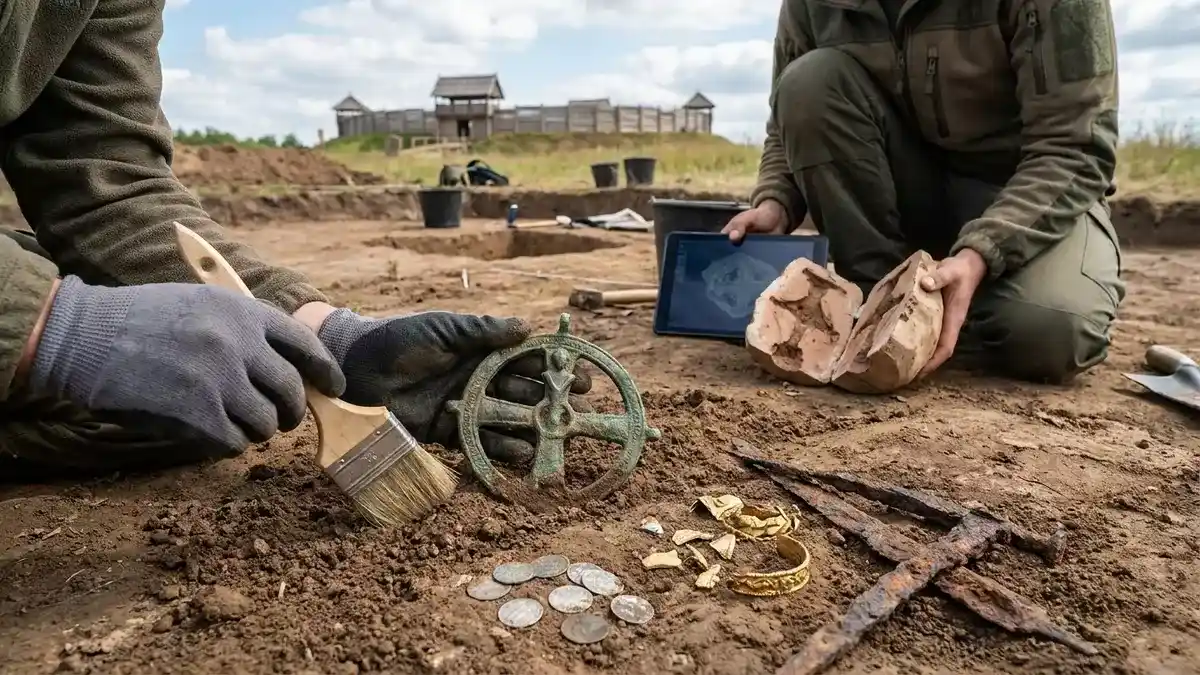
A spectacular archaeological discovery in the Brandenburg region of Germany has provided a crucial missing link in our understanding of early medieval Europe. While conducting a systematic metal-detecting survey in the Havelland region, an officially trained volunteer heritage conservator unearthed a rare bronze wheel cross dating back to the 10th or 11th century CE.
This single artifact offers profound physical evidence of the early, turbulent spread of Christianity among the Slavic populations living east of the Elbe River. More astonishingly, laboratory analysis has linked the cross directly to a legendary archaeological object found more than forty years ago, solving a decades-old historical mystery.
10th-Century Bronze Cross Found in Germany Reveals Early Christian Influence on Slavic Tribes
Unearthing the Treasures of Havelland
The discovery occurred during a field survey led by Juliane Rangnow, a volunteer heritage conservator. While exploring the western Havelland landscape, her detector flagged a dense cluster of metallic signals.
Excavation of the hotspot revealed not just the bronze cross, but a wealthy assortment of contemporary artifacts from the same era:
Silver Coins: Indicating active trade and economic integration.
Gilded Jewelry Fragments: Highlighting the presence of wealthy elites or high-status individuals in the area.
Iron Weapons: Reflecting the militarized nature of the 10th-century frontier.
The “Spandau Cross” Connection: A Perfect Match
The most significant artifact in the hoard was the bronze “wheel cross,” a distinct style of early medieval crucifix characterized by a circular ring connecting the four arms, featuring a stylized, minimalist depiction of Christ at its center.

When the artifact arrived at the Brandenburg State Archaeological Museum, researchers noticed immediate similarities to a famous regional find. In 1983, archaeologists excavating a Slavic hillfort in Berlin-Spandau discovered an ancient clay casting mold near the foundations of a primitive wooden church. Dubbed the “Spandau Cross” mold, it was widely recognized as one of the oldest pieces of physical evidence for Christian symbolism between the Elbe and Oder rivers.
However, for over four decades, scientists had never found a single actual metal cross cast from that specific mold—until now.
[1983 Discovery: Berlin-Spandau] ──► Clay Casting Mold Found at Slavic Hillfort
                                                │
                                       (43-Year Historical Gap)
                                                │
[2026 Discovery: Havelland]      ──► Bronze Wheel Cross Matches Mold Perfectly
Detailed geometric measurements and structural comparisons conducted by the Brandenburg State Archaeological Museum and the Museum of Prehistory and Early History in Berlin confirmed a flawless match. The Havelland cross was cast directly from the Spandau mold, providing an extraordinary, direct connection between a manufacturing site and a finished product traded or carried across the early medieval landscape.
Slavic Resistance and the Lutizen Revolt of 983
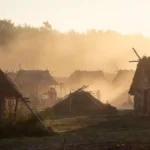
During the 10th century, the territory encompassing modern-day Berlin and Brandenburg was a volatile frontier. The region was heavily influenced by the expansionist East Frankish Kingdom, which sought to bring the local Slavic populations under both political control and Christian spiritual authority.
While the ruling elites and foreign missionaries attempted to enforce conversion—as evidenced by the creation of the Spandau mold and church—the broader Slavic population fiercely resisted giving up their traditional pagan beliefs. This cultural friction reached a boiling point in the Lutizen Revolt of 983.
During this massive uprising, allied Slavic tribes successfully overthrew their Christian rulers, destroying missionary outposts and restoring local political and religious autonomy. This indigenous autonomy endured for roughly 150 years. It was not until the 12th century, following full military integration into the Margraviate of Brandenburg, that sustained Christianization truly took hold in the region. The Havelland cross stands as a rare survivor of that initial, brief wave of Christian influence before the great rebellion.
The Power of Citizen Science in Archaeology
The recovery of the wheel cross shines a bright spotlight on the vital role played by amateur archaeologists and citizen scientists. Brandenburg currently collaborates with roughly 350 officially trained and certified volunteer heritage conservators who work hand-in-hand with professionals at the Brandenburg State Office for Monument Preservation (BLDAM).
This partnership is essential for managing a vast historical landscape that contains more than 40,000 known archaeological sites. The density of history in the region is immense, spanning across vast eras:
| Era / Culture | Artifact Type | Estimated Age |
| Neanderthal | Flint cutting tools | ~130,000 Years Ago |
| Early Medieval | Slavic bronze wheel crosses & coins | 10th–11th Century CE |
| Cold War | Hidden escape tunnels under GDR border | 20th Century CE |
Recognizing the immense value of these contributions, the BLDAM has dedicated specific staff members since 2022 to train, advise, and support these volunteers, ensuring that priceless history buried in open fields is systematically documented rather than lost to looters or decay.
Bridging History in the Museum
To celebrate this monumental find, the Brandenburg State Archaeological Museum in Brandenburg an der Havel organized a special exhibition running from January 24 to March 11, 2026. For the very first time in history, the original 1983 Berlin-Spandau casting mold and the newly discovered bronze Havelland cross were displayed side-by-side.
This historic reunion gives the public a direct look at the exact moment manufacturing and faith intertwined on the early European frontier, highlighting how modern collaborative archaeology can bring ancient stories back to life.
Frequently Asked Questions
What is the Brandenburg bronze wheel cross?
It is a rare religious artifact dating to the 10th or 11th century CE discovered in the Havelland region of Germany. It features a distinct circular ring connecting the arms of a crucifix with a stylized depiction of Jesus Christ.
How does this cross connect to a discovery from 1983?
Microscopic and physical analysis proved that this newly discovered cross was cast directly from a clay mold found in 1983 at a Slavic hillfort in Berlin-Spandau. This is the first time an actual artifact cast from that famous mold has ever been identified.
What does this artifact tell us about early Christianization?
The cross provides concrete physical evidence of early Christian missionary efforts among the Slavic tribes living east of the Elbe River under the influence of the East Frankish Kingdom. It proves that Christian symbols were actively manufactured and circulated in the region during the 10th century.
Did the local Slavic populations readily accept Christianity?
No, the Slavic tribes largely resisted conversion. This cultural tension led to the Lutizen Revolt of 983, a massive pagan uprising that successfully expelled Christian forces and restored traditional Slavic religious and political independence for nearly 150 years.
Who found the bronze wheel cross?
The cross was discovered during a metal-detecting survey by Juliane Rangnow, one of Brandenburg’s 350 officially trained volunteer heritage conservators. These volunteers work directly with professional state archaeologists to locate and preserve endangered historical sites.