
**Stone Age Teen’s Fatal Bear Attack Revealed After 28,000 Years**
Archaeologists have uncovered dramatic new details about the violent death of a Gravettian teenager buried 28,000 years ago in Italy. Known as “Il Principe” for his lavish grave goods, the young hunter-gatherer suffered a brutal mauling by a large bear, according to a groundbreaking forensic study. This rare case offers an intimate glimpse into the dangers faced by early modern humans in Ice Age Europe and the care provided by their communities.
The findings, based on a re-examination of the skeleton from Arene Candide Cave in Liguria, transform our understanding of this iconic burial. They highlight both the perils of living alongside powerful predators and the compassion of prehistoric societies.
Stone Age Teen’s Fatal Bear Attack Revealed After 28,000 Years
 The Archaeology of Portugal Fellowship
### Rediscovering Il Principe: A Gravettian Hunter-Gatherer
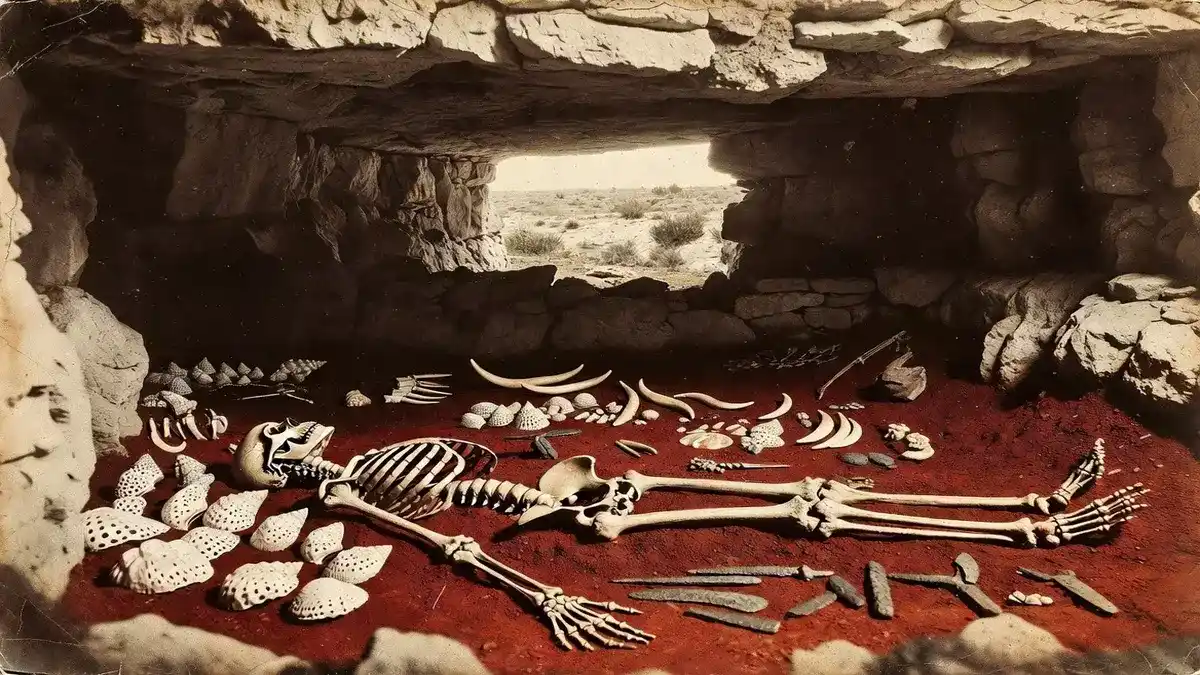
Il Principe, meaning “The Prince,” was excavated in 1942 from Arene Candide Cave along Italy’s northwestern coast. The 15-year-old’s grave stood out immediately due to its richness: a bed of red ocher, a headdress featuring hundreds of perforated seashells and deer teeth, ivory pendants, and a high-quality flint blade sourced from distant southern France. Such elaborate treatment marks one of the earliest formal burials in the cave and reflects the high status or affection his group felt for him.
For decades, researchers noted severe damage to his jaw and left shoulder but lacked a detailed forensic analysis. A new international team gained permission to remove the bones from museum display for close study. Using advanced techniques—including magnification, high-resolution photography, and 3D surface modeling—they reconstructed the tragic events leading to his death.

### Forensic Evidence of a Deadly Bear Mauling
The analysis revealed multiple perimortem injuries—trauma that occurred around the time of death. Massive fractures affected the shoulder region and lower face, with additional damage to teeth and possible neck vertebrae. The overall pattern indicates a powerful crushing force and blow to the upper body, consistent with a large animal attack.
Two specific marks provide the strongest clues. A short linear groove on the left side of the skull matches the expected size and shape of a bear claw. A deep puncture wound in the right fibula (lower leg bone) aligns with a tooth mark from a sizable predator. Given the Late Pleistocene fauna in the region, brown bears or cave bears emerge as the most likely culprits.
These injuries differ from those expected in falls or interpersonal violence. When combined with the broader skeletal damage, they paint a clear picture of a sudden, violent encounter with a powerful carnivore.
### Survival, Care, and the Final Days
Microscopic examination of bone tissue showed early signs of healing, including initial intertrabecular bone formation but no advanced callus development. This indicates the teenager survived for a short period—likely a few days—after the attack. Such survival in the face of severe trauma points to care from other group members, who would have managed bleeding, swelling, and pain.
The extent of injuries suggests complications like internal bleeding, brain trauma, or organ failure ultimately caused death. This evidence of post-attack support adds a deeply human dimension to the story, showing that Gravettian communities looked after their injured despite the harsh Ice Age environment.
### Previous Injuries and Life Challenges
The study also identified older, healed injuries unrelated to the fatal mauling. These include a fractured toe on the left foot and a joint disorder in the right ankle. Such conditions align with earlier research showing that lower limb problems were common among prehistoric foragers and could significantly limit mobility and long-term survival.
These pre-existing issues may have made Il Principe more vulnerable during the bear encounter, though the attack itself appears to have been the decisive event.
### The Lavish Burial and Its Cultural Significance
Despite the traumatic death, Il Principe’s community honored him with one of the most impressive Gravettian burials known. The red ocher symbolized life and vitality, while the elaborate headdress and imported artifacts suggest ritual importance and social connections spanning hundreds of kilometers.
A lump of yellow ocher placed near the injured shoulder and jaw may have held symbolic meaning, perhaps intended to aid healing or provide protection in the afterlife. This careful treatment underscores the emotional and spiritual investment in burying the dead during the Upper Paleolithic.
### Rare Evidence of Human-Animal Conflict in Prehistory
Direct evidence of lethal attacks by large carnivores on early modern humans remains exceptionally scarce in the fossil record. While archaeological sites show that Gravettian people hunted dangerous animals, skeletal proof of maulings is rare. This case from Arene Candide provides some of the clearest signatures yet, offering valuable data on human-predator interactions during the Ice Age.
Brown bears and cave bears roamed Pleistocene Europe, competing with humans for resources and territory. Encounters could turn deadly, especially for young or less mobile individuals. The study emphasizes how reanalysis of old museum collections, using modern forensic methods, continues to yield surprising new insights decades after initial discovery.
### Life in the Gravettian World
The Gravettian culture (roughly 34,000 to 24,000 years ago) represents a flourishing period of Upper Paleolithic innovation across Europe. Hunter-gatherers created sophisticated tools, art, and social networks while adapting to fluctuating climates near the height of the last Ice Age.
Arene Candide Cave served as an important site for repeated occupation, with multiple burials reflecting long-term use. The region’s coastal and mountainous setting provided diverse resources but also exposed people to risks from predators and environmental hazards.
Il Principe’s story fits within this dynamic landscape, where survival required skill, cooperation, and resilience. The bear attack reminds us that life was precarious, yet communities maintained rich cultural practices, including elaborate funerary rituals.
### Scientific Methods Behind the Breakthrough
The research team’s meticulous approach combined traditional osteological analysis with cutting-edge technology. Three-dimensional models allowed precise documentation of fracture patterns and bite marks without further damaging the fragile bones. Microscopic bone histology provided critical timing evidence for the injuries and healing process.
This non-destructive methodology sets a standard for future studies of Paleolithic remains, balancing scientific inquiry with respect for ancient individuals.
### Broader Implications for Paleolithic Studies
This discovery enriches our understanding of Gravettian health, violence, and social behavior. It demonstrates that serious injuries were survivable with group support, at least temporarily, and that burials served important social and symbolic functions even for those who suffered traumatic deaths.
As climate records and genetic studies advance, such cases help connect individual lives to larger patterns of migration, adaptation, and cultural development across Ice Age Europe. They also humanize our ancestors, revealing both vulnerability and strength.
### Why This Ancient Tragedy Still Resonates
Stories like Il Principe’s captivate modern audiences because they bridge deep time with universal human experiences—facing danger, caring for the injured, and honoring the dead. In an era when human-wildlife conflicts still occur, the 28,000-year-old bear attack feels strikingly relevant.
For visitors to museums displaying these remains or reconstructions, the story brings the distant past vividly to life. It underscores the shared humanity linking us to our Gravettian forebears.
### Conclusion: A Tragic Yet Illuminating Discovery
The forensic reanalysis of Il Principe reveals a heartbreaking yet profound story: a Stone Age teenager who survived a savage bear attack for several days, received care from his community, and was laid to rest with exceptional honors. This 28,000-year-old case from Arene Candide Cave stands as rare direct evidence of human-carnivore conflict in prehistory.
Through careful science, researchers have breathed new life into old bones, offering fresh perspectives on survival, compassion, and ritual in the Gravettian world. As we continue exploring our ancient past, stories like this remind us of the resilience and humanity that have defined our species for tens of thousands of years.
### FAQ: Stone Age Bear Attack and Il Principe Burial
**Who was Il Principe and how old was he?**
Il Principe was a 15-year-old Gravettian hunter-gatherer buried around 28,000 years ago in Arene Candide Cave, Italy. His elaborate grave earned him the nickname “The Prince.”
**What evidence shows he died from a bear attack?**
Forensic analysis identified a claw mark on the skull, a tooth puncture in the leg bone, and massive crushing fractures to the shoulder and jaw consistent with a large carnivore mauling.
**Did he survive the initial attack?**
Yes. Microscopic bone healing indicates he lived for a few days afterward, suggesting his group provided care during that time.
**What made his burial special?**
He was placed on red ocher with a shell-and-deer-tooth headdress, ivory pendants, and imported tools. Yellow ocher was placed near his injuries, highlighting ritual significance.
**Why is this discovery important?**
It provides rare skeletal evidence of a lethal human-predator encounter in the Paleolithic and demonstrates the value of re-studying museum collections with modern techniques.
**Were there other injuries in his life?**
Yes. He had a healed toe fracture and ankle joint issues, which may have affected his mobility before the fatal bear attack.