
**Rare 2,000-Year-Old Roman Bread Discovered in Switzerland**
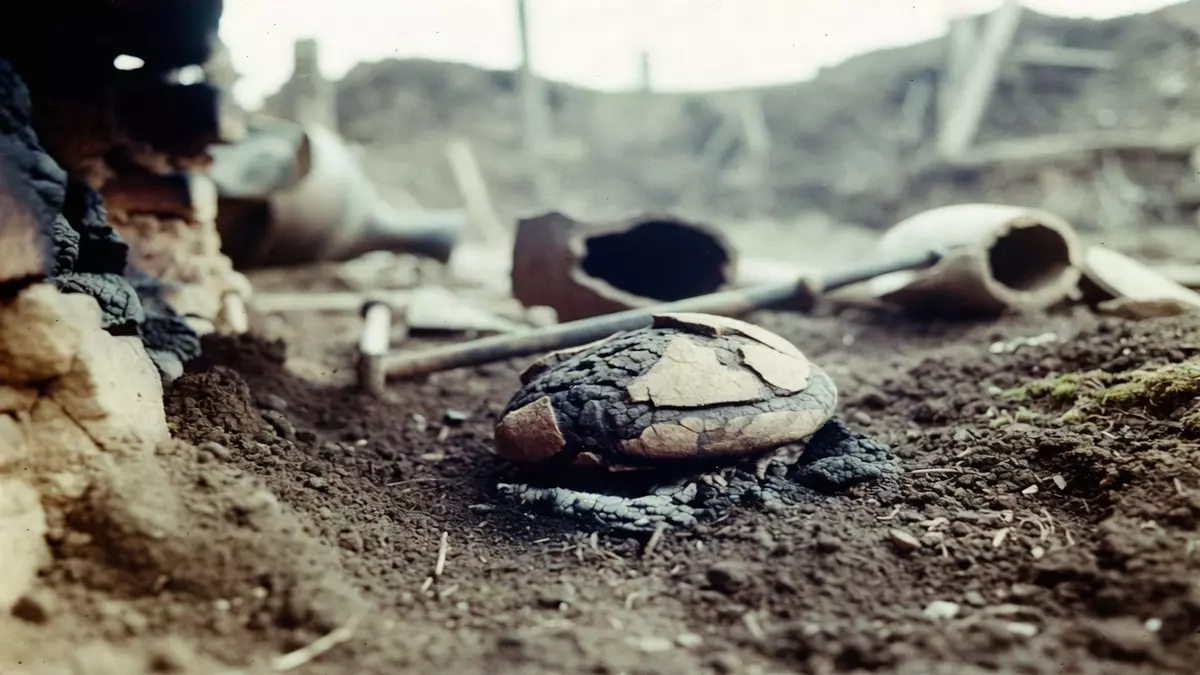
Archaeologists in Switzerland have made a remarkable discovery that brings the daily routines of Roman soldiers to life in vivid detail. A small, charred loaf of bread, preserved for nearly 2,000 years, has been unearthed at the site of Vindonissa, once a key military base in the Roman Empire. This extraordinary find offers a rare, personal glimpse into the food, daily life, and early development of one of the most important legionary camps in the northern provinces.
The bread was recovered during a rescue excavation in Windisch ahead of a new residential development. Its discovery near an ancient clay oven highlights the practical realities of feeding troops and marks the first known example of Roman bread ever found in Switzerland.
Rare 2,000-Year-Old Roman Bread Discovered in Switzerland
### Vindonissa: A Strategic Roman Military Hub
Vindonissa, located in present-day Switzerland, served as a major Roman legionary fortress along the Rhine frontier. The site played a crucial role in securing the empire’s northern boundaries during the early imperial period. Excavations revealed multiple phases of occupation, including an earlier temporary camp built with timber and earth fortifications that later evolved into a more permanent stone-built complex.
The rescue dig, covering about 4,000 square meters near Zürcherstrasse and Scheuergasse, uncovered traces of this early camp. Archaeologists identified parallel ditches, evenly spaced postholes from a timber wall, and a V-shaped defensive ditch. These features suggest the initial fortification stretched nearly 400 meters north to south, providing essential protection for soldiers stationed in the region.
**H3: Inside the Early Roman Camp**
 Ancient DNA links 400-year-old Finland burial to Sámi ancestry and possible Iceland journey
Beneath a later Roman road, excavators found the remains of a well-preserved building with two sets of rooms arranged symmetrically. Each section included smaller chambers alongside a larger room featuring a hearth, pointing to spaces used for both living quarters and craft activities. Nearby finds—metal tools, blacksmithing slag, spearheads, and other weapon fragments—paint a picture of a busy military workshop where soldiers maintained equipment and produced necessary supplies.
The presence of a carefully constructed clay oven nearby indicates large-scale food preparation. Roman military camps required efficient systems to feed hundreds or thousands of troops daily. Bread was a staple of the Roman soldier’s diet, providing essential calories for demanding physical work and long marches. The discovery of the charred loaf right beside this oven connects the archaeological structures directly to the people who once lived and worked there.
### The Extraordinary Bread Find
During careful excavation, archaeologists noticed a dark, rounded object in the soil. They carefully block-lifted it with surrounding sediment to preserve its context and transported it to a laboratory for analysis. Specialists identified it as a small Roman bread loaf, approximately 10 centimeters in diameter and 3 centimeters thick—similar in size and shape to a modern flatbread or small bun.
Preservation of ancient bread is extremely rare. It typically survives only when carbonized by fire, which prevents normal decay. Famous examples come from Pompeii, where loaves were preserved during the 79 CE eruption of Mount Vesuvius. The Vindonissa bread is the first of its kind found in Switzerland, offering a direct and tangible link to Roman military cuisine.
**H3: What the Bread Reveals About Roman Soldiers**
Initial studies at the University of Basel are examining the bread’s ingredients and baking techniques, with further detailed analysis planned in Vienna. Early observations suggest it was made from grains commonly available in the region, baked in the camp’s oven as part of routine food production. The charring likely occurred during an accidental fire or deliberate baking mishap, after which the loaf was discarded or buried quickly.
This humble bread adds a deeply human dimension to the site. Roman soldiers were not just warriors; they were men who ate, worked, repaired gear, and maintained daily routines far from home. Finding their food alongside tools and fortifications helps archaeologists reconstruct the full spectrum of camp life during the transition from temporary earthworks to a permanent legionary base, possibly during the reign of Emperor Augustus or shortly after under Tiberius.
### Broader Significance for Roman Switzerland
Vindonissa was one of several key military installations along the Rhine and Danube frontiers. The legionary camp supported Roman expansion and control over local Celtic populations while facilitating trade and cultural exchange. Discoveries like this bread help scholars understand how the Roman army sustained itself logistically across vast distances.
The excavation also documents the evolution of the site from a temporary marching camp to a more established fortress. This transition reflects broader imperial strategies under the early emperors to secure and Romanize the provinces. Artifacts and structural remains provide clues about construction methods, daily operations, and the interplay between military and civilian activities in the area.
**H3: Challenges and Opportunities in Rescue Archaeology**
The project is a classic example of rescue archaeology, where excavations occur ahead of modern development to salvage information before construction begins. Despite time pressures, the team has meticulously documented features and recovered delicate finds like the bread. An open day planned for May 9, 2026, will give the public a chance to see the site, view artifacts, and learn about Roman life in Switzerland.
Such projects balance the needs of development with cultural heritage preservation. In Switzerland, where Roman history forms an important part of national identity, these efforts ensure that important stories continue to emerge even as communities grow.
### Connecting the Past to Modern Switzerland
For residents of Windisch and the wider Aargau region, the Vindonissa site represents a direct link to their Roman heritage. The bread discovery makes that connection feel immediate and personal. Visitors to the site can imagine soldiers gathered around ovens, sharing meals before patrols or training exercises.
The find also contributes to global Roman studies. Comparable bread remains from other sites help researchers compare military diets, baking technologies, and food supply chains across the empire. In a world reliant on grain shipments from Egypt and North Africa, local production at frontier camps was essential for self-sufficiency.
**H3: Scientific Analysis and Future Research**
Conservators and scientists are applying advanced techniques to study the bread without destroying it. Microscopic analysis, residue testing, and isotopic studies may reveal the exact grains used, any added ingredients, and even environmental conditions at the time of baking. These details could inform reconstructions of Roman recipes and improve understanding of ancient nutrition.
The excavation will continue through mid-2026, with ongoing analysis of other finds. Each new discovery helps refine the timeline of Vindonissa’s development and deepens knowledge of Roman military engineering and daily life in the provinces.
### Why This Discovery Matters Today
In an era of highly processed foods and global supply chains, finding a simple loaf baked by Roman hands feels profoundly human. It reminds us that soldiers throughout history have relied on basic sustenance to perform their duties. The bread humanizes the legions, showing them not as faceless conquerors but as individuals who ate, laughed, worked, and sometimes burned their dinner.
For history enthusiasts, students, and tourists in Switzerland, Vindonissa offers an accessible way to engage with the Roman past. The site’s combination of military architecture, craft evidence, and now food remains creates a rich, multifaceted picture of frontier life.
This rare charred bread transforms an ordinary moment of ancient life into an archaeological treasure. It connects modern Swiss residents to their Roman ancestors and enriches our collective understanding of how the empire fed and maintained its vast military machine.
As work continues and results are published, the Vindonissa bread will likely inspire new research questions about Roman diet, logistics, and adaptation to local environments. It stands as a small but powerful symbol of the enduring human need for nourishment amid the challenges of empire-building.
The discovery underscores the value of careful excavation and scientific collaboration. What began as a routine rescue dig has yielded one of the most relatable artifacts from Roman Switzerland—a humble loaf that survived two millennia to tell its story.
## FAQ: Roman Bread Discovery at Vindonissa, Switzerland
**Q: How old is the Roman bread found in Windisch?**
A: The charred loaf dates to nearly 2,000 years ago, from the early phases of the Vindonissa Roman military camp in the 1st century CE.
**Q: Why is this bread discovery significant?**
A: It is the first Roman bread ever found in Switzerland and provides a direct, personal link to the daily meals of soldiers stationed on the empire’s frontier.
**Q: Where exactly was the bread discovered?**
A: Near a large clay oven inside an early temporary camp at Vindonissa, just outside the later permanent legionary fortress.
**Q: How was the bread preserved for so long?**
A: It was carbonized (charred) during baking or a fire, a process that prevents normal organic decay and allows survival in the soil.
**Q: What else was found at the excavation site?**
A: Timber and earth fortifications, workshops with tools and weapon fragments, hearths, and evidence of the transition to a stone-built legionary camp.
**Q: What will happen to the bread after analysis?**
A: It is being studied at the University of Basel and in Vienna. Results will contribute to publications and likely be displayed for public viewing.
**Q: Can the public visit the Vindonissa excavation?**
A: Yes. An open day is scheduled for May 9, 2026, with guided tours and artifact displays planned.
This incredible find at Vindonissa transforms our view of Roman military life in Switzerland from abstract history into something tangible and deeply human. The small charred loaf reminds us that empires were built not only by generals and legions but also by soldiers sharing simple meals around camp ovens. As excavations continue, Vindonissa promises even more insights into Switzerland’s rich Roman heritage.