
**Rare Ancient Cremation Pyre Uncovered at Sizewell Site**
Archaeologists in England have made a remarkable discovery that offers an intimate glimpse into prehistoric funeral practices. At the Sizewell C excavation in Suffolk, experts uncovered the remains of an ancient cremation pyre at Goose Hill—one of the few surviving examples of these once-common but fragile structures. This find sheds new light on how early communities honored their dead thousands of years ago through elaborate fire rituals that combined practical engineering with deep spiritual significance.
The pyre, dating to prehistoric times, survived against the odds thanks to protective soil layers and careful modern excavation. It provides rare direct evidence of the exact spot where mourners performed cremation ceremonies, revealing details about construction methods, ritual sequences, and burial customs in ancient Britain.
Rare Ancient Cremation Pyre Uncovered at Sizewell Site
### The Discovery at Sizewell C Excavation
The Sizewell C project, involving major infrastructure development, has given archaeologists an unprecedented opportunity to explore Suffolk’s rich prehistoric landscape before construction begins. At Goose Hill, teams from Oxford Cotswold Archaeology identified the pyre remains during routine investigations. The site’s location on a gentle slope with sweeping views toward the modern coastline likely held symbolic importance for the people who chose it for their final farewell ceremonies.
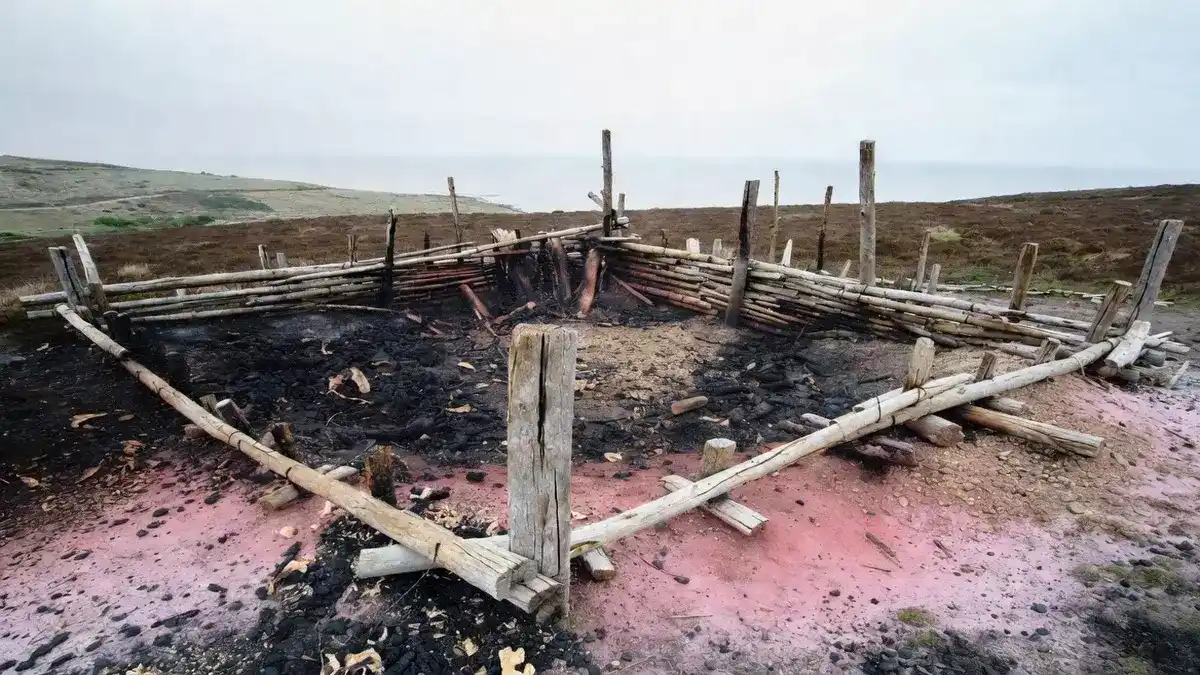
The pyre measured approximately 3 meters by 2 meters. Builders constructed it using a stacked lattice of timbers to form a sturdy platform roughly 1.5 meters high. They filled the interior with kindling and local heath scrub, materials chosen to sustain a hot, sustained fire. Upright posts around the edges probably stabilized the structure during the intense burning process. A body would have been carefully placed atop the platform as part of a public or communal ritual.
What remains today is a rectangular area of dark, charcoal-rich soil with tiny fragments of burnt bone. The heat was so intense that it turned patches of underlying sand pink—a clear sign of prolonged high temperatures. Up to six postholes around the perimeter confirm the original wooden framework. Although World War II military activity disturbed parts of the site, the pyre survived well enough to preserve these critical structural clues.
### Why Cremation Pyres Are So Rare in the Archaeological Record
Most ancient funeral pyres have vanished completely. Built above ground and exposed to centuries of farming, weathering, and erosion, they typically leave little trace. This makes the Goose Hill example exceptionally valuable for understanding prehistoric burial rituals. Archaeologists believe a former burial mound once covered the area, sealing and protecting the pyre remains. A surrounding ring ditch further supported this mound, though later agricultural activity removed the earthwork itself.
The relationship between the pyre and the ring ditch continues to intrigue researchers. Ring ditches frequently encircle prehistoric burial mounds, yet no central burial has been found here. A later ditch cutting through the monument may have destroyed additional evidence. An Iron Age pit intersecting the already-filled ring ditch helps date the feature to before that period. A polished flint axe from the Early Neolithic, recovered from a later ditch, appears to have been a curated heirloom deliberately placed in the ground long after its original use.
**H3: Evidence of Post-Cremation Practices**
Only small amounts of burnt bone survived inside the pyre. This scarcity suggests that participants carefully collected most of the cremated remains after the fire cooled. They likely placed the fragments in pottery urns for secondary burial elsewhere—a widespread custom in prehistoric Britain. Earlier finds at Goose Hill include a confirmed Bronze Age cremation burial in a Collared Urn (roughly 1950–1600 BC) and another possible urned deposit, indicating the area served as an important funerary landscape over many generations.
### Understanding Prehistoric Cremation Rituals
Cremation was a dominant funerary practice across much of prehistoric Europe, particularly during the Bronze Age. It represented a dramatic transformation of the body through fire, symbolizing purification, transition to the afterlife, or release of the spirit. Families and communities invested significant effort in gathering timber, building the pyre, and conducting ceremonies that may have included offerings, feasting, or recitations.
The Sizewell pyre’s sophisticated lattice design shows advanced knowledge of fire management. Different woods and kindling produced specific burn characteristics—some for quick ignition, others for sustained heat. The coastal location might have carried additional meaning, connecting the deceased to ancestral lands, the sea, or cycles of nature. Views from the slope could have allowed participants to watch the smoke rise dramatically against the horizon.
Specialists are now analyzing the bone fragments to determine if they are human and to gather details about the individual’s age, sex, health, or possible injuries. Charcoal and burnt plant remains will reveal the types of wood used and the local environment at the time. Radiocarbon dating of samples should provide a more precise timeline, likely placing the pyre firmly in the Bronze Age or earlier.
**H3: Insights into Ancient Engineering and Community Life**
Building a stable pyre capable of fully cremating a body required skill and coordination. The lattice platform needed to support weight while allowing airflow for efficient burning. Upright posts prevented collapse during the ceremony. Such efforts point to organized communal involvement, with different roles for family members, specialists, or ritual leaders.
The recovery of an old Neolithic axe as a deposited item suggests reverence for ancestral objects. People in later periods collected and buried significant artifacts, perhaps as offerings or to connect with the past. This behavior highlights continuity in sacred landscapes over thousands of years.
### The Broader Context of Suffolk’s Prehistoric Heritage
Suffolk and the surrounding East Anglia region boast a wealth of prehistoric sites. From Neolithic monuments to Bronze Age barrows and Iron Age settlements, the area was densely occupied by early farming communities. The Sizewell excavations add to this picture, showing how people chose prominent, meaningful locations for burials and rituals.
Cremation practices evolved over time. In the Early Bronze Age, urned burials became common, with cremated remains placed in distinctive pottery vessels often deposited in cemeteries or individual mounds. The Goose Hill pyre fits into this tradition, representing the initial stage of a multi-part funeral process that could stretch over days or weeks.
Environmental factors played a key role. Heathland provided abundant fuel, while the coastal setting offered resources and symbolic power. Climate changes during the prehistoric period influenced settlement patterns and ritual behaviors, topics that ongoing analysis at Sizewell will help illuminate.
### Modern Archaeology Meets Ancient Rituals
Large infrastructure projects like Sizewell C demonstrate the value of developer-funded archaeology. By requiring thorough investigations before ground disturbance, these efforts recover priceless information that would otherwise be lost forever. Advanced recording techniques—precise mapping of finds, soil sampling, and digital documentation—allow researchers to reconstruct the pyre in detail despite its fragmentary state.
The discovery also connects to contemporary interest in ancient burial practices. As societies today reconsider death, mourning, and sustainability, learning how prehistoric people managed funerals provides perspective. Fire-based rituals emphasized transformation and community participation in ways that resonate across time.
Future work at the site and on the recovered materials promises more revelations. Isotopic analysis of bones could reveal the individual’s diet and origins. Pollen and plant studies will reconstruct the ancient landscape. Together, these methods transform a patch of burnt soil into a window on lived experiences from millennia ago.
### Why This Find Deepens Our Understanding of Prehistory
The Goose Hill cremation pyre stands out because it preserves the ritual location itself, not just the final burial. Most evidence comes from graves containing urns or bones, but here archaeologists can study the pyre’s construction, the fire’s intensity, and post-ceremony actions. This rare survival helps fill gaps in our knowledge of prehistoric spirituality and social organization.
It also underscores the fragility of the archaeological record. Without the protective mound and fortunate preservation conditions, this pyre would have disappeared like countless others. The discovery reminds us of the importance of protecting heritage sites amid modern development.
For people in the United States and around the world fascinated by ancient history, this Suffolk find humanizes the distant past. It shows families gathering wood, building a platform, tending a fire, and carefully collecting remains—acts of love and respect that transcend eras. These rituals helped communities process grief, honor the dead, and reinforce social bonds.
As analysis continues, the Sizewell pyre will contribute to broader studies of European prehistory. Comparative research with similar rare pyre sites elsewhere could reveal regional variations in ritual practices and their evolution over time.
This ancient cremation feature at Goose Hill enriches our appreciation for the complexity and care embedded in prehistoric burial traditions. It transforms a simple patch of charcoal-rich earth into a powerful story of human connection, loss, and remembrance that still echoes today.
## FAQ: Ancient Cremation Pyre at Sizewell
**Q: How old is the cremation pyre discovered at Sizewell?**
A: The feature is prehistoric, likely Bronze Age based on associated finds like a Collared Urn (1950–1600 BC) and its position relative to Iron Age and Neolithic artifacts. Radiocarbon dating will provide greater precision.
**Q: Why are ancient cremation pyres so rarely found?**
A: They were built on the surface and exposed to erosion, farming, and other disturbances over thousands of years. Protective mounds and lucky preservation conditions made this example at Goose Hill survive.
**Q: What evidence remains of the pyre today?**
A: A rectangular area of charcoal-rich soil, burnt bone fragments, heat-reddened sand, and surrounding postholes. These details reveal the structure’s size, construction, and use.
**Q: What happened to the cremated remains?**
A: Most bones were likely collected after the fire and placed in urns for burial elsewhere, a common prehistoric practice. Only small fragments stayed at the pyre site.
**Q: Why was the location at Goose Hill significant?**
A: The sloping position with coastal views may have held symbolic meaning. The area shows repeated funerary use across prehistoric periods, indicating a long-sacred landscape.
**Q: How does this discovery contribute to archaeology?**
A: It offers rare direct evidence of pyre construction and ritual performance, helping researchers understand prehistoric engineering, community involvement, and beliefs about death.
**Q: What other finds have been made at Sizewell C?**
A: The project has revealed various prehistoric features, including Bronze Age cremation burials and evidence of multi-period activity in Suffolk’s ancient landscape.
The Sizewell cremation pyre discovery brings us closer to the real people who lived, loved, and mourned in ancient Britain. Through careful science and respect for the past, archaeologists continue to uncover stories that connect us all to our shared human heritage.