
**Medieval Art Triggered Sounds in Pilgrims’ Minds**
New research reveals that medieval manuscripts and religious images were far from silent experiences. Instead, intricate illustrations in sacred texts actively sparked imagined sounds in the minds of viewers, creating rich multisensory encounters during the early Middle Ages in England. This fresh perspective transforms how we understand medieval religious life, showing that art engaged not just the eyes but the ears of the faithful through memory and expectation.
The study, focusing on a remarkable 12th- or 13th-century English scroll, demonstrates how artists deliberately included visual details that would evoke familiar noises for contemporary audiences. In bustling churches, cathedrals, and pilgrimage sites, these images blended with real-world sounds to deepen spiritual connection.
Medieval Art Triggered Sounds in Pilgrims’ Minds

### Discovering the Harley Roll and Saint Guthlac’s Story
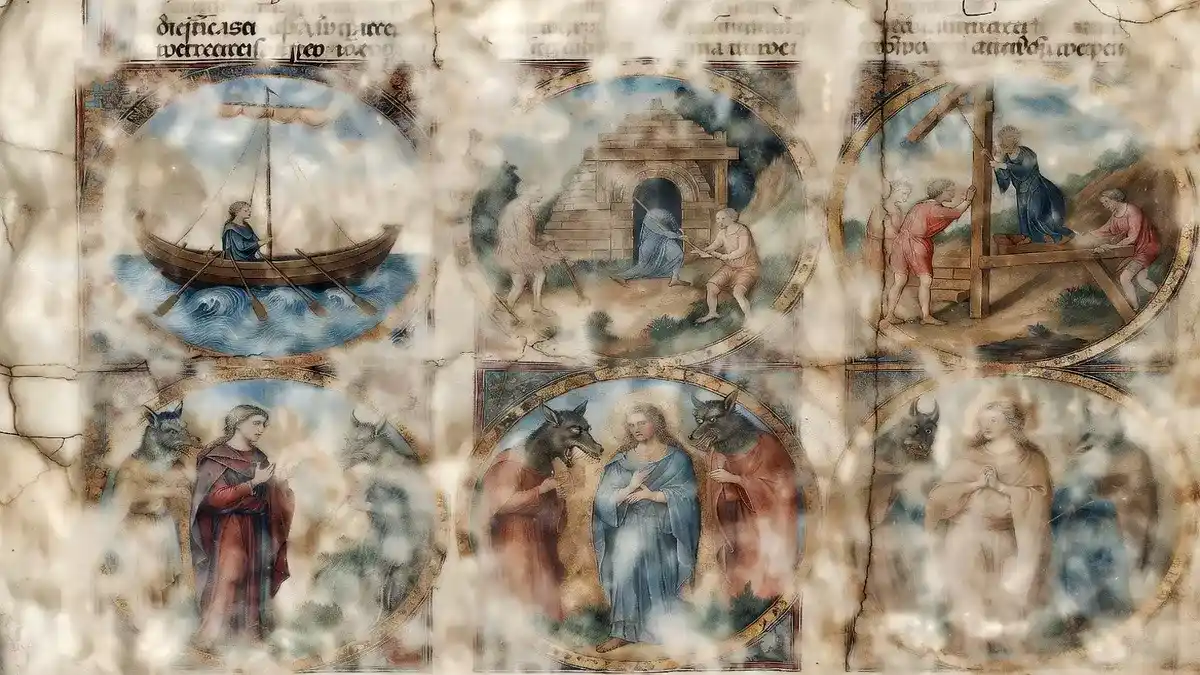
At the heart of the research lies the Harley Roll, known formally as British Library Harley MS Y.6. This beautifully illustrated scroll narrates the life of Saint Guthlac, an Anglo-Saxon warrior who turned hermit and saint. Created centuries after Guthlac’s death around 714 CE, the manuscript features 18 circular roundels depicting key moments from his journey of faith.
Guthlac began as a soldier before renouncing wealth and violence to live as a hermit in the fens of Crowland, eastern England. His hermitage eventually became Crowland Abbey, a major pilgrimage destination that drew devotees seeking miracles and spiritual solace. The scroll brings his story to life through vivid artwork that goes beyond simple illustration.
Researcher Britton Elliott Brooks of Kyushu University analyzed the Harley Roll alongside earlier written biographies of the saint. He found that the artist didn’t just copy texts—he enhanced scenes with dynamic details crafted to stir auditory memories in viewers’ minds.
### How Images Evoked a World of Sound
One striking example shows Guthlac journeying by boat to his new hermitage. Written accounts mention the trip only in passing, but the Harley Roll expands it dramatically. Curved waves, billowing sails, and active oars suggest the splash of water against the hull, the creak of wooden planks, the snap of ropes in the wind, and the steady rhythm of rowing. For medieval people accustomed to river travel, these elements would have mentally filled the scene with realistic sounds.

Another roundel depicts the construction of Guthlac’s humble dwelling. While texts describe a simple structure, the illustration shows multiple workers hauling stones and wielding tools. Viewers could easily imagine the clang of hammers, the scrape of masonry, and the bustle of building activity. Notably, the architecture shown matches 12th-century styles more closely than Guthlac’s 8th-century era, making it even more relatable to the scroll’s audience.
These choices weren’t accidental. Brooks argues they tapped into the brain’s natural predictive processing—the way humans constantly anticipate sensory input based on experience. Seeing objects strongly associated with sound, like boats, tools, or animals, could activate auditory areas of the brain even without actual noise. This created an immersive “sound milieu,” where visual art merged with imagined acoustics and the real auditory environment of medieval religious sites.
### The Noisy World of Medieval Pilgrimage
Pilgrimage centers like Crowland Abbey were alive with sound. Visitors encountered chanting monks, spoken prayers, sermons, feast-day celebrations, and storytelling about saints. Construction and daily monastic life added layers of hammering, footsteps, and bells. Against this backdrop, illustrated manuscripts and other religious art didn’t stand apart—they enhanced and interacted with the full sensory experience.
The Harley Roll also features more intense scenes. In one, Guthlac faces a horde of demons with animal heads and open mouths. Though they don’t physically harm him, their aggressive postures and implied vocalizations convey threat through sound. Medieval symbolism often tied certain creatures—ravens, wolves, or exotic beasts—to evil, evoking screeches, howls, or roars that would heighten drama and spiritual tension for viewers familiar with those animals.
**H3: Neuroscience Meets Medieval Material Culture**
Brooks draws on modern neuroscience to explain these effects. Predictive processing theory suggests the brain doesn’t passively receive information but actively constructs perceptions. In a religious context, this meant images could trigger powerful mental simulations, making sacred stories feel immediate and alive. This “material aurality” — the way physical objects carried auditory potential — offers a new lens for studying medieval art.
Similar techniques likely appeared in stained glass windows, wall paintings, sculptures, and other psalters or biblical manuscripts. Thunder in divine scenes, music in angelic choirs, or the clamor of battles would have similarly animated the viewer’s imagination.
### Why This Changes Our View of Medieval Religious Experience
For too long, modern observers have approached medieval manuscripts as purely visual artifacts in quiet libraries. This study reminds us that they were created for people living in a noisy, vibrant world where faith engaged all the senses. Worshippers didn’t just look at images of saints—they heard them too, through the sounds carried in memory and cultural knowledge.
Archaeological evidence supports this. Excavations at monastic sites reveal spaces designed for acoustics, with echoes that amplified chants and rituals. Illustrated scrolls like the Harley Roll could serve as portable devotional tools, perhaps unrolled during storytelling sessions where oral narration combined with visual cues for maximum impact.
The research highlights the sophistication of medieval artists and audiences. They understood how to leverage everyday experiences—travel, labor, nature—to make religious narratives more compelling and memorable. This multisensory approach likely strengthened faith, aided education, and fostered community among pilgrims from diverse backgrounds.
### Broader Implications for Art History and Beyond
This discovery opens exciting avenues for future scholarship. Researchers can now re-examine other medieval artworks for sonic elements, from the Bayeux Tapestry’s battle scenes to illuminated Bibles filled with musical instruments and natural phenomena. Digital reconstructions could even simulate these sound milieus, letting modern audiences experience something closer to the original impact.
It also bridges humanities and sciences. Combining art history with neuroscience and archaeology provides richer insights into how people in the past perceived their world. For U.S. readers interested in history, this humanizes the Middle Ages, moving beyond stereotypes of grim silence to a lively, immersive culture.
In an era of podcasts, virtual reality, and multimedia storytelling, it’s fascinating to see that medieval creators were already masters of multisensory engagement. Their techniques prefigured modern ideas about how visuals and sound work together to create emotional depth.
### The Enduring Legacy of Sensory Faith
Saint Guthlac’s story, preserved in the Harley Roll, continues to resonate because it captures transformation, resilience, and devotion. The scroll’s illustrations didn’t just document events—they invited participation through the mind’s ear as well as the eye. In churches and pilgrimage routes across medieval England, these images helped turn static depictions into living experiences.
As scholars like Brooks continue this work, we gain deeper appreciation for the complexity of medieval life. Religious art wasn’t background decoration; it was a dynamic part of a holistic sensory and spiritual environment. This research enriches our connection to the past, showing timeless human creativity in blending senses to explore the divine.
The study, titled “Material aurality: Sound milieu(s) in the Guthlac Roll,” was published in the journal *Religions* in 2025. It encourages all of us to listen more closely when encountering ancient art—because the sounds may still echo in our imaginations today.
## FAQ: Medieval Manuscripts and Imagined Sounds
**Q: What is the Harley Roll and why is it important?**
A: The Harley Roll (British Library Harley MS Y.6) is a 12th- or 13th-century illustrated scroll depicting the life of Saint Guthlac. It provides key evidence of how medieval artists used visuals to trigger sounds in viewers’ minds.
**Q: How did medieval people experience religious images differently than we do today?**
A: They engaged them multisensorily. Illustrations evoked imagined sounds based on real-life experiences, blending with actual noises in churches and pilgrimage sites for immersive spiritual encounters.
**Q: What is “predictive processing” and how does it relate to medieval art?**
A: It’s a neuroscience concept where the brain anticipates sensations. In medieval contexts, seeing boats or tools activated mental sounds, making images feel dynamic and alive.
**Q: Did all medieval art include sound elements?**
A: Many did, especially religious works. Scenes with animals, construction, travel, or dramatic events often carried implied acoustics tailored to audience familiarity.
**Q: Where can people see the Harley Roll today?**
A: It’s part of the British Library’s collection in London. Digital versions and detailed studies make it accessible to researchers and history enthusiasts worldwide.
**Q: What does this study mean for understanding Saint Guthlac?**
A: It shows how his story was adapted across centuries to connect with new audiences through relatable sensory details, keeping his legacy vibrant in medieval England.
**Q: How does this research affect modern views of the Middle Ages?**
A: It reveals a more vibrant, sensory-rich culture than often portrayed, highlighting creativity in art, faith, and daily experience that feels surprisingly contemporary.
This groundbreaking study invites us to rethink silent assumptions about the past. Medieval manuscripts weren’t quiet relics—they were vibrant portals that engaged the full human experience. By uncovering these hidden layers of sound, researchers bring us closer to the living heartbeat of medieval religious life. (Word count: 1,278)