
Table of Contents
- 1. The Viminacium Excavation: Unearthing a Brutal Past
- 2. Anatomy of a Fighter: Reading the Skeletal Trauma
- 2.1. 1. Blunt Force Cranial Trauma
- 2.2. 2. The Cycle of Fighting and Infection
- 2.3. 3. Psychological Stress and Self-Harm
- 3. The Daily Schedule of Slaughter
- 4. Local Sourcing vs. Imperial Supply Chains
- 5. The Reality Behind the Glitz of the Games
- 6. Frequently Asked Questions
- 6.1. Why is this specific brown bear skull discovery considered a historical milestone?
- 6.2. How did the bear survive a spear blow to the head only to die later?
- 6.3. What caused the severe damage to the bear’s teeth and jaws?
- 6.4. What was the typical daily routine inside a Roman amphitheater?
- 6.5. Where did the Roman rulers of Viminacium get their wild animals?
First Bone Evidence of Roman Bear Fights Confirms Arena Horrors
For generations, our understanding of the brutal spectacles hosted within the amphitheaters of the Roman Empire relied almost entirely on ancient literature, poems, and mosaic artwork. These historical depictions vividly illustrated armed hunters battling exotic beasts for the amusement of roaring crowds. Yet, concrete biological evidence of these encounters remained frustratingly elusive.
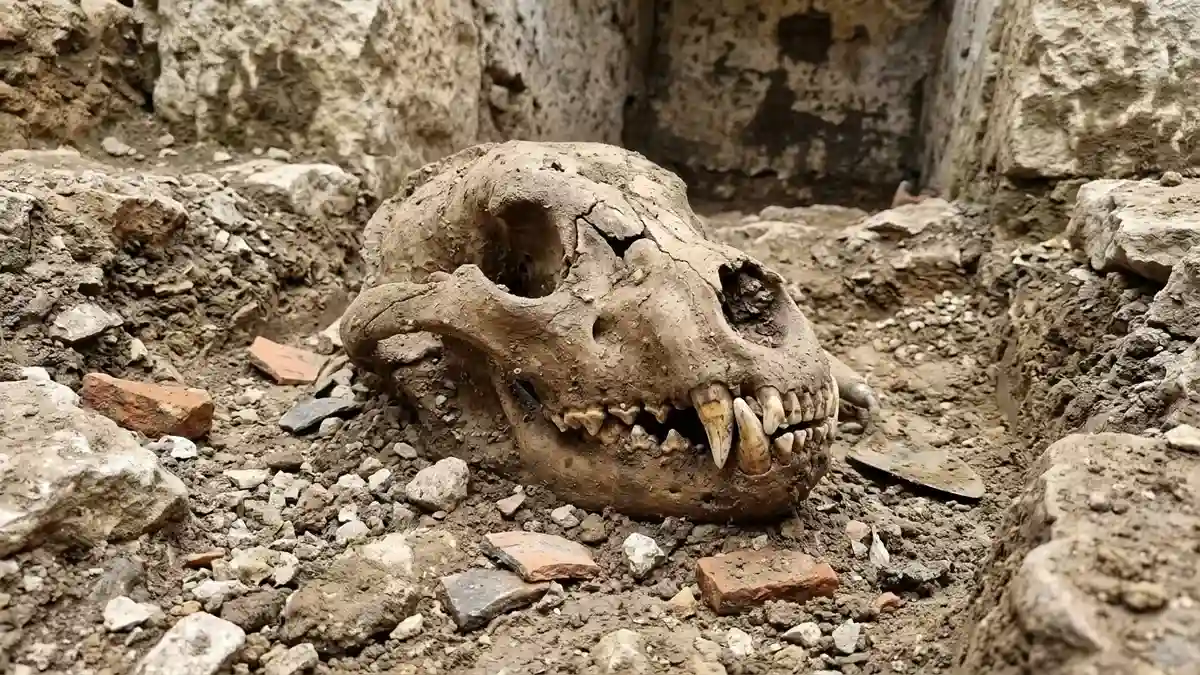
That has officially changed. In a historic archaeological first, researchers excavating a former Roman military base in Serbia have discovered the fractured skull of a brown bear that explicitly participated in the bloody games of the arena. This physical specimen offers an unprecedented, somber look at the reality of animal exploitation, long-term captivity, and systemic cruelty on the Roman frontier roughly 1,700 years ago.
First Bone Evidence of Roman Bear Fights Confirms Arena Horrors
The Viminacium Excavation: Unearthing a Brutal Past
The landmark discovery occurred during excavations at the archaeological site of Viminacium, located along the Danube border in eastern Serbia. During its peak, Viminacium was far more than a simple border outpost; it was a sprawling provincial capital and a vital military stronghold home to nearly 40,000 residents.
While clearing an area near the formal entrance of the city’s ancient amphitheater, archaeologists uncovered the skeletal remains of a six-year-old male brown bear (Ursus arctos). Published in the journal Antiquity, a comprehensive, multi-proxy laboratory analysis of the skull has allowed forensic scientists to reconstruct the animal’s tragic biography, uncovering a narrative defined by prolonged confinement and repeated physical combat.
Anatomy of a Fighter: Reading the Skeletal Trauma
The forensic examination of the bear’s skull revealed extensive, highly distinct pathology that sets it completely apart from any wild animal find. Scientists utilized advanced radiological and microscopic scanning to peer into the bone layers, identifying several clear markers of physical abuse and combat injuries:
 Rare 19th-century bone dental bridge found in Portugal points to early cosmetic tooth replacement
1. Blunt Force Cranial Trauma
The most striking feature of the skull is a massive fracture located directly across the forehead. The shape and depth of the wound indicate it was caused by a severe, localized blow from a heavy weapon, most likely a combat spear or thrusting pike.
2. The Cycle of Fighting and Infection
Intriguingly, the edges of the bone show unmistakable signs of the early biological healing process, proving that the bear did not die instantly on the arena floor. Instead, it survived the initial combat encounter, only to succumb to a secondary, massive infection that ravaged its weakened body. Because the wound went completely untreated by its captors, the animal died of disease inside its cage before it could be forced back into the stadium.
3. Psychological Stress and Self-Harm
Beyond combat wounds, the bear’s jaw and teeth bore the unmistakable hallmarks of severe psychological torment. The canine teeth were heavily worn down, chipped, and fractured in a pattern identical to modern animals suffering from “zoochosis”—a repetitive stress behavior found in poorly treated captive animals. The bear spent years aggressively biting and chewing the iron bars of its small enclosure, permanently destroying its own dental structure out of pure anxiety.

The Daily Schedule of Slaughter
The second-century amphitheater at Viminacium was an impressive engineering feat capable of seating between 7,000 and 12,000 spectators depending on its structural phase. The entertainment schedule inside this stadium followed a strict, highly predictable routine modeled directly after the grand games held in Rome’s Colosseum:
[Morning: Venationes (Animal Hunting)] ──> [Midday: Public Executions] ──> [Afternoon: Gladiator Combats]
Bears, lions, and leopards were the primary stars of the morning venationes (beast hunts). During these morning sessions, professional animal fighters known as bestiarii or venatores would step onto the sands to duel dangerous predators. Alternatively, the animals were chained together, set loose against other exotic species, or used as executioners to tear apart condemned criminals who were sent into the arena completely unarmed.
Local Sourcing vs. Imperial Supply Chains
The trade in wild animals during the Roman era was a massive, highly lucrative commercial network that spanned from the dense forests of Britain to the desert expanses of North Africa. Professional trappers and military units dedicated immense resources to capturing live apex predators, utilizing specialized nets, pits, and cages to transport elephants, leopards, and lions across maritime shipping lanes.
While the elite venues in Rome could afford to import hyper-exotic wildlife from Africa and Asia, the discovery at Viminacium highlights a more practical, regional supply chain for provincial theaters.
| Animal Type | Geographic Origin | Acquisition Cost | Target Venue |
| Lions & Elephants | North Africa & Near East | Extremely High (Premium Import) | Rome (Colosseum / Imperial Games) |
| Leopards | Africa / Asia | High (Specialized Trade) | Major Provincial Capitals |
| Brown Bears | Local Balkan Forests (Regional) | Moderate (Sourced via local garrisons) | Frontier Arenas (Viminacium) |
Because brown bears were naturally native to the rugged mountain ecosystems of the Balkans, the administrators of Viminacium did not need to pay exorbitant import fees to supply their games. Instead, they could easily source powerful local wildlife right in their own backyard, using frontier military patrols to trap native bears and transport them directly to the city’s amphitheater stables.
The Reality Behind the Glitz of the Games
The unearthing of this fractured skull permanently strips away the romanticized, cinematic Hollywood glamour often associated with Roman gladiatorial games. The physical evidence of the bear’s short, agonizing life—marked by dental destruction from cage confinement, the pain of an infected head wound, and a violent existence inside a stone amphitheater—serves as a stark reminder of the immense casual cruelty that anchored Roman popular culture.
Viminacium stands today as a premier open-air museum, its surviving stones a quiet testament to the structural complexities and the harsh realities of life on the ancient Roman frontier.
Frequently Asked Questions
Why is this specific brown bear skull discovery considered a historical milestone?
While thousands of Roman mosaics, poems, and historical texts describe animals fighting in stadiums, this skull represents the first time in history that archaeologists have recovered direct, physical bone evidence of a brown bear used in Roman arena games.
How did the bear survive a spear blow to the head only to die later?
Forensic bone analysis revealed that the skull’s massive frontal fracture showed clear signs of early cellular bone healing, proving the bear survived the initial fight. However, the lack of medical attention allowed a severe infection to develop within the open wound, which ultimately killed the animal inside its enclosure.
What caused the severe damage to the bear’s teeth and jaws?
The wear and destruction seen on the bear’s teeth were caused by a behavior known as cage-chewing. This is a well-documented psychological stress reaction common in captured wild animals, indicating the bear spent years trapped inside a tiny, restrictive iron cage before its death.
What was the typical daily routine inside a Roman amphitheater?
Roman arena games were highly structured, multi-part events. The morning always opened with the venationes (animal hunts and beast battles). Midday was reserved for the public execution of criminals, while the highly anticipated human gladiatorial duels served as the afternoon finale.
Where did the Roman rulers of Viminacium get their wild animals?
While major cities like Rome imported exotic animals from Africa at incredible expense, provincial frontier capitals like Viminacium relied heavily on local wildlife. The brown bear found at the site was captured nearby in the Balkan forests, providing a cost-effective way to entertain the local population.