
Table of Contents
- 1. The Mount Hora Discovery: A Prehistoric Sacred Space
- 2. Anatomy of a Stone Age Pyre: Defleshing and High-Heat Control
- 2.1. The Biological Profile
- 2.2. Pre-Cremation Processing
- 2.3. Pyre Engineering and Temperature Control
- 3. A Fixed Point in Collective Tribal Memory
- 4. Shifting the Paradigm on Ancient Forager Culture
- 5. Frequently Asked Questions
- 5.1. Why is the Mount Hora cremation discovery so important?
- 5.2. Who was the individual burned on the prehistoric pyre?
- 5.3. What evidence shows the body was processed before burning?
- 5.4. How hot did the ancient funeral pyre get?
- 5.5. Did the local people continue to use the site after the cremation?
9,500-Year-Old Funeral Pyre Is Africa’s Oldest Cremation
A groundbreaking anthropological discovery in East Africa has completely rewritten the timeline of ancient human mortuary practices. Scientists have uncovered the oldest known evidence of human cremation on the African continent, pushing back the regional record of this complex ritual by several millennia.
The landmark discovery centers on a 9,500-year-old funerary pyre excavated at the base of Mount Hora in northern Malawi. Published in the journal Science Advances, the study reveals that Stone Age hunter-gatherers engaged in highly sophisticated, labor-intensive, and deeply symbolic death rituals long before the advent of organized farming societies.
9,500-Year-Old Funeral Pyre Is Africa’s Oldest Cremation
The Mount Hora Discovery: A Prehistoric Sacred Space
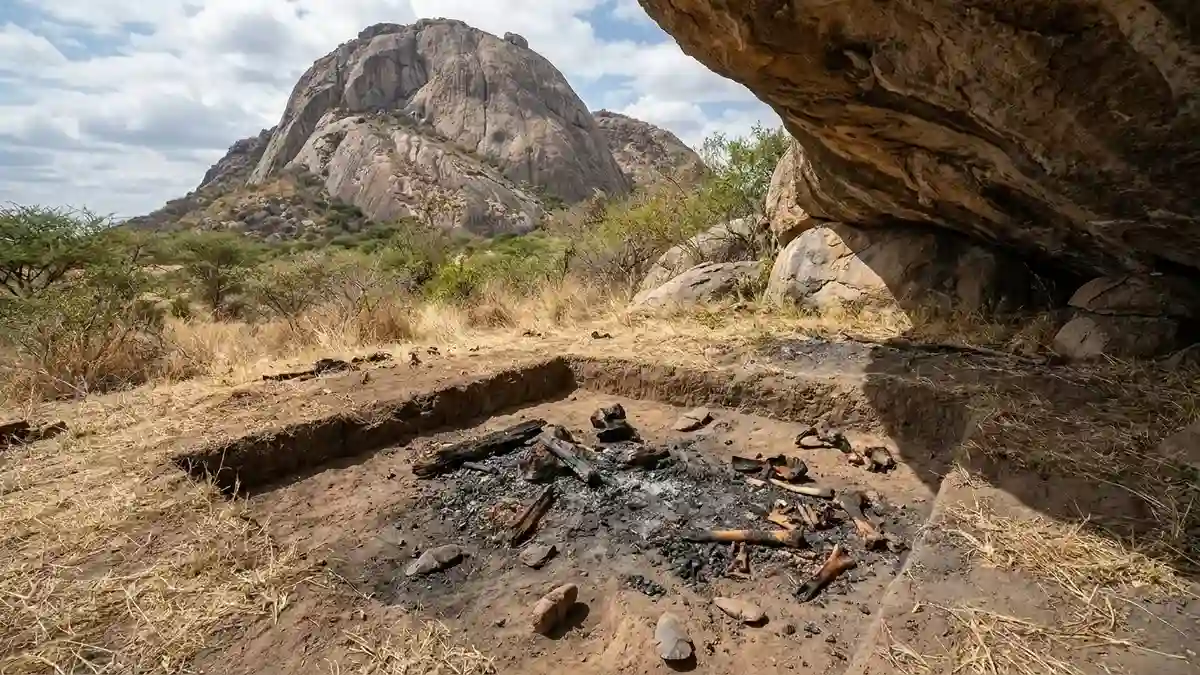
The historic find was made at an archaeological site designated as Hora 1, a protective rock shelter nestled at the foot of a massive granite inselberg (an isolated mountain that rises abruptly from a plain). Mount Hora is a towering geographical landmark that clearly held immense symbolic and spiritual weight for prehistoric communities across vast stretches of time.
 4,000-Year-Old Child’s Skull Surgery Uncovered in Uzbekistan Changes Ancient Medical History
Excavations at the rock shelter show a deep history of human occupation and spiritual reverence:
21,000 Years Ago: The earliest evidence of human habitation begins at the shelter.
16,000 to 8,000 Years Ago: The site serves continuously as a formal tribal burial ground.
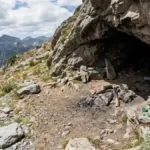
For thousands of years, the standard mortuary practice at Mount Hora was complete inhumation (intact earth burials). However, roughly 9,500 years ago, the local community abruptly deviated from millennia of tradition to perform a single, radical act: the intentional and highly controlled cremation of an individual.
Anatomy of a Stone Age Pyre: Defleshing and High-Heat Control
An international team of scholars from Africa, Europe, and the United States meticulously excavated the extensive ash deposit left behind by the ancient fire. They recovered approximately 170 fragments of heavily charred human bone.
Forensic analysis of these skeletal remains paints a vivid, albeit mysterious, picture of the deceased and the intense rituals surrounding her death.

The Biological Profile
The bone fragments indicate that the cremated individual was a fully grown adult female, notably short in stature, with an estimated age tracking anywhere between 18 and 60 years old.
Pre-Cremation Processing
The fracture and warping patterns on the bones prove that her body was placed onto the pyre shortly after death, well before natural decomposition could begin. More astonishingly, micro-cut marks etched into the limb bones suggest that the body was deliberately defleshed or dismembered prior to being exposed to the flames. Furthermore, the total absence of teeth and skull fragments indicates that the woman’s head may have been intentionally removed and buried elsewhere before the pyre was lit.
Pyre Engineering and Temperature Control
Reconstructing the funeral pyre revealed that it required massive communal effort and an advanced understanding of fire thermodynamics. Prehistoric mourners gathered at least 30 kilograms (66 pounds) of specific wood and grass to fuel the blaze.
Microscopic analysis of the ash and bone calcination proves that the attendants actively managed the fire, continuously feeding it fuel to maintain a uniform temperature exceeding 500 degrees Celsius (932 degrees Fahrenheit). Scattered within the dense ash layers were various stone tools, which researchers believe were cast into the flames as intentional, ritualistic grave goods during the burning process.
A Fixed Point in Collective Tribal Memory
What makes the Hora 1 site truly exceptional is its enduring legacy across generations. The cremation pyre was not an isolated event, but rather a focal point in a centuries-long chain of ritual activity.
Archaeologists discovered that large, non-funerary fires had been lit in that exact same spot several hundred years before the woman was cremated. Incredibly, tribal groups continued to return to the site for centuries after her death, repeatedly building new fires directly over her ash pyre.
While no other humans were ever cremated at Mount Hora, this persistent, multigenerational return to the exact square meter of earth suggests that the location remained fiercely anchored in the collective memory of the region’s hunter-gatherers as a sacred zone of remembrance.
Shifting the Paradigm on Ancient Forager Culture
While older human remains showing signs of burning have been found globally—such as the famous 40,000-year-old Mungo Lady cremation in Australia—this find represents the absolute earliest evidence of an in situ, intentionally engineered and maintained cremation pyre anywhere in Africa.
Why this specific Stone Age woman was singled out for such an elaborate, resource-heavy, and physically demanding mortuary treatment remains a profound historical mystery. Was she a revered tribal matriarch, a feared spiritual figure, or a casualty of a unique cause of death requiring ritual purification?
While her identity remains locked in the past, her final resting place decisively shatters old anthropological assumptions. It proves beyond doubt that early African foragers possessed deeply complex, symbolic belief systems and used both fire and the natural landscape to commemorate life and death in ways far more intricate than science ever previously recognized.
Frequently Asked Questions
Why is the Mount Hora cremation discovery so important?
It is the oldest known evidence of intentional, in situ human cremation ever discovered in Africa, dating back 9,500 years. The find proves that ancient African hunter-gatherers practiced highly sophisticated, symbolic mortuary rituals thousands of years earlier than previously assumed.
Who was the individual burned on the prehistoric pyre?
Forensic analysis of the 170 recovered bone fragments indicates that the cremated individual was an adult female of short stature, aged somewhere between 18 and 60 years old at her time of death.
What evidence shows the body was processed before burning?
Archaeologists discovered distinct cut marks on the woman’s limb bones, which points to deliberate defleshing or dismemberment shortly after death. Additionally, because no teeth or skull fragments were found in the ash, her head was likely removed prior to lighting the pyre.
How hot did the ancient funeral pyre get?
Microscopic evaluation of the burned remains and ash revealed that the prehistoric community carefully managed the fire by feeding it grass and over 30 kilograms of wood. They successfully maintained a intense heat level exceeding 500 degrees Celsius (932 degrees Fahrenheit).
Did the local people continue to use the site after the cremation?
Yes. The site held a long-lasting spot in collective tribal memory. For several centuries after the cremation took place, subsequent generations returned to the rock shelter to build additional ceremonial fires directly on top of the ancient burial pyre.