
9,500-Year-Old Discovery Reveals Africa’s Oldest Cremation
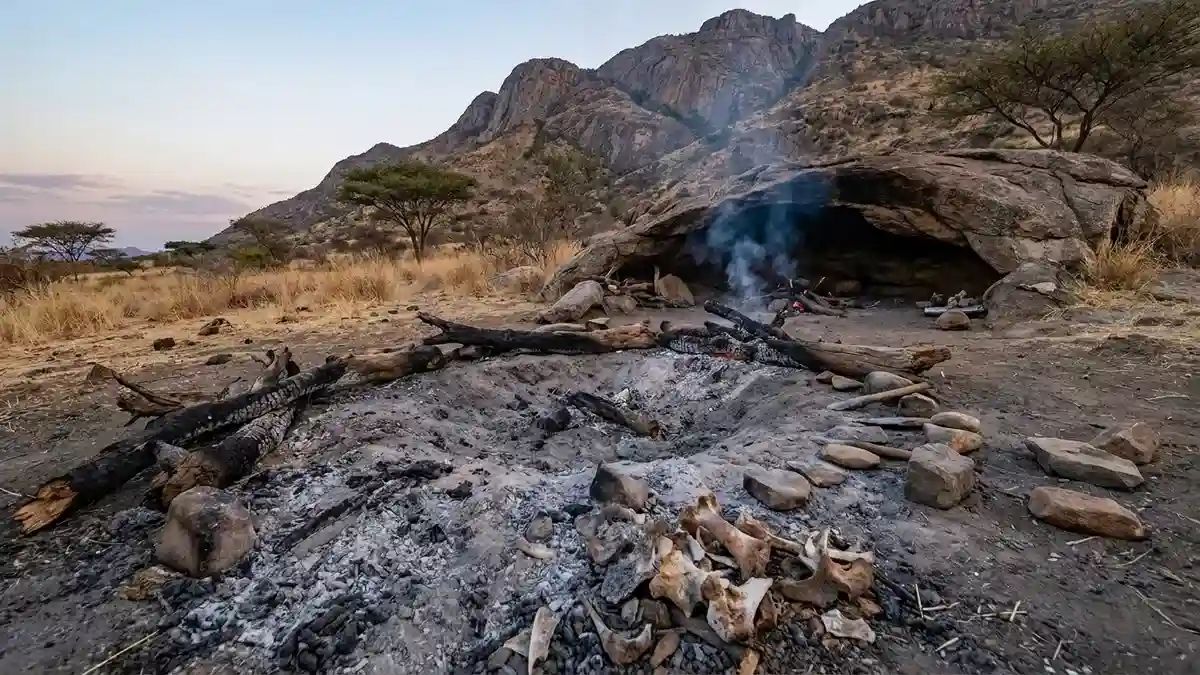
An international team of researchers has uncovered a transformative piece of history at the base of Mount Hora in northern Malawi: the oldest confirmed evidence of intentional human cremation in Africa. Dating back 9,500 years, this discovery, published in Science Advances (2026), significantly expands our understanding of Stone Age funerary rituals and suggests that ancient African hunter-gatherer societies were far more complex and symbolic than previously imagined.
9,500-Year-Old Discovery Reveals Africa’s Oldest Cremation
Unearthing a Prehistoric Pyre
The cremation was found at the Hora 1 rock shelter, a site already renowned for its long history of human activity, stretching back as far as 21,000 years. While excavations at the site have long revealed evidence of standard burials—known as inhumations—occurring between 16,000 and 8,000 years ago, this specific discovery represents a radical departure from those established norms.
The evidence points to a labor-intensive, communal effort. Researchers recovered approximately 170 fragments of human bone from an extensive ash deposit. The state of the bones—which show signs of fracturing consistent with fresh tissue—indicates that the body was placed on the pyre shortly after death. The team’s reconstruction suggests that the pyre required at least 30 kilograms of fuel (wood and grass) and was meticulously maintained at temperatures exceeding 500 degrees Celsius.

A Ritual of Complexity and Mystery
The process was not merely a disposal of remains; it was a highly specific, ritualized event. Forensic analysis revealed unique details about the treatment of the deceased:
Physical Preparation: The presence of cut marks on the limbs suggests that the body may have undergone deliberate defleshing or dismemberment prior to the cremation.
Missing Remains: The notable absence of skull fragments and teeth implies that the individual’s head may have been removed before the burning, pointing to complex mortuary protocols.
Symbolic Offerings: Stone tools discovered within the layers of ash appear to have been intentionally placed, potentially as ritual offerings during the cremation process.

The identity of the individual is estimated to be a short adult female, aged between 18 and 60. Why she alone was selected for such an elaborate and distinct mortuary practice remains a profound mystery, highlighting the potential for social stratification or unique status within these early hunter-gatherer groups.
The Power of Landscape and Memory
Perhaps the most compelling aspect of the Hora 1 site is its role in the “collective memory” of the community. Large fires were documented in that exact location centuries before the cremation occurred, and, remarkably, people continued to return to the site to light additional fires over the pyre for several centuries afterward.
This persistence indicates that Mount Hora was not merely a burial ground, but a place of long-term ritual significance. By using the landscape as a permanent marker for death, these ancient foragers demonstrated a sophisticated ability to weave fire, geology, and memory into their funerary practices.
Rewriting the African Stone Age Narrative
For decades, the archaeological record suggested that complex, labor-intensive mortuary practices like cremation were absent from African hunter-gatherer cultures of this age. This discovery overturns that view, providing firm evidence that ancient African populations were capable of intricate symbolic behavior and complex social coordination.
The Hora 1 cremation serves as a powerful reminder of our species’ deep capacity for ritual. It confirms that thousands of years before the rise of massive civilizations, the foragers of northern Malawi were marking the end of life with a level of care, planning, and symbolic depth that resonates across the millennia.
Frequently Asked Questions (FAQ)
1. How old is the cremation pyre found in Malawi?
The discovery dates back approximately 9,500 years, making it the oldest confirmed instance of intentional human cremation ever found in Africa.
2. Why is this discovery considered significant?
It proves that Stone Age hunter-gatherer societies in Africa possessed the knowledge and social organization to perform complex, labor-intensive funerary rituals, challenging the idea that such practices were “primitive” or absent during this era.
3. How do we know the cremation was intentional?
The team found evidence of a controlled fire that reached temperatures over 500 degrees Celsius, requiring a significant amount of fuel (at least 30 kilograms). The presence of intentionally placed stone tools within the ash also suggests a ritualized process.
4. What was done to the body before burning?
Analysis of the bones shows cut marks, suggesting that the body may have been defleshed or dismembered before being placed on the pyre. Additionally, the absence of teeth and skull pieces suggests the head may have been removed beforehand.
5. Was this the only burial at the Hora 1 site?
No, Hora 1 was a burial ground for thousands of years, and archaeologists have found many other complete burials (inhumations) at the site. However, this specific cremation was a unique departure from the typical burial practices seen at the shelter during that period.