
1,900-Year-Old Roman Vial Reveals Dung-Based Medicine
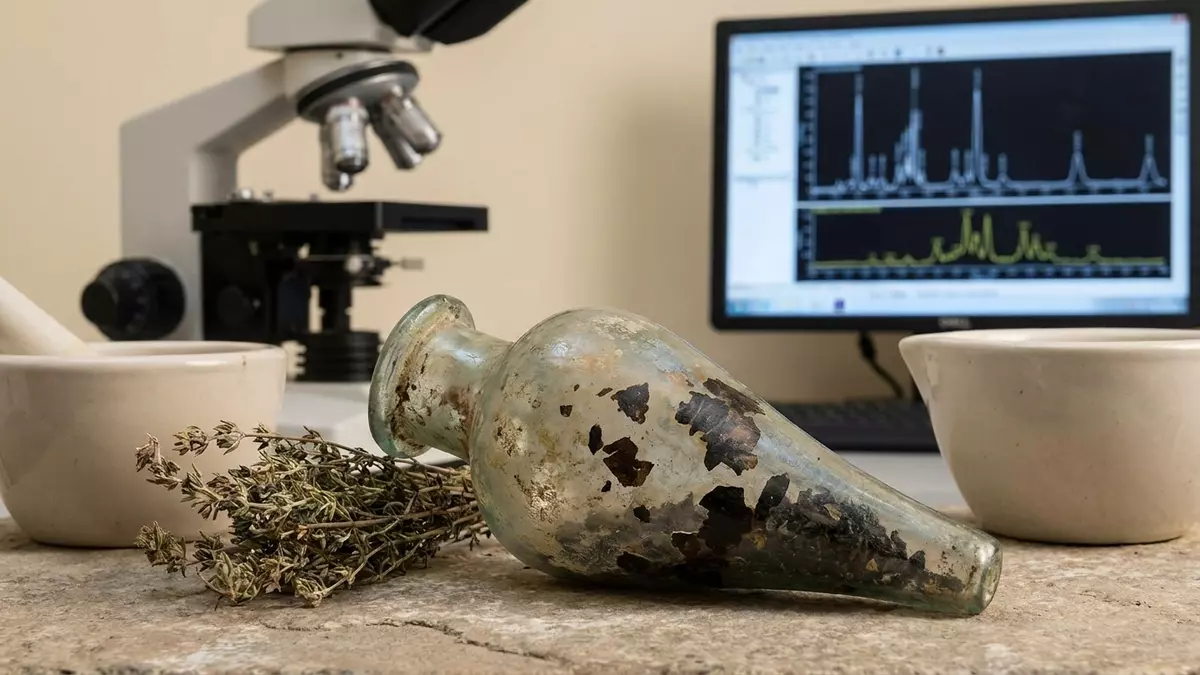
A small, nondescript glass vial—an unguentarium—recovered from an ancient tomb in Pergamon, Turkey, has provided the first definitive physical evidence of a practice long relegated to the fringes of historical debate: the use of human feces as medicine in the Roman Empire. By utilizing advanced chemical analysis, researchers have confirmed that ancient healers not only prescribed dung-based remedies but also employed sophisticated botanical additives, such as thyme, to mitigate the overwhelming odor of their treatments.
1,900-Year-Old Roman Vial Reveals Dung-Based Medicine
A Chemical Discovery 1,900 Years in the Making
For nearly two millennia, the dark brown flakes clinging to the interior of this Roman vessel remained a mystery. While archaeologists have unearthed thousands of similar glass containers across the empire—typically assuming they held perfumes or cosmetic oils—this specific artifact, housed at the Bergama Archaeology Museum, provided a rare opportunity for deeper investigation.
A research team, whose findings were recently published in the Journal of Archaeological Science: Reports (2026), applied gas chromatography and mass spectrometry to analyze the residue. The results were striking:
Human Biomarkers: The team identified coprostanol and 24-ethylcoprostanol. These specific molecular signatures are produced within the digestive systems of mammals, and their specific ratios confirmed that the source was human.
Aromatic Masking: Alongside the fecal biomarkers, researchers detected high levels of carvacrol, a primary component of thyme oil.
Bridging Ancient Texts and Physical Reality
For historians, this discovery serves as a long-sought validation of ancient medical manuscripts. Renowned Roman-era physicians, most notably Galen—who lived and worked in the major medical hub of Pergamon—frequently documented the use of dung to treat inflammation, infections, and reproductive health issues. Other prominent writers of the period, including Dioscorides and Pliny the Elder, also listed similar prescriptions in their pharmacological texts.
Until now, many modern scholars viewed these written accounts with skepticism, often dismissing them as symbolic, metaphorical, or theoretical. The chemical evidence found within this unguentarium proves that these healers were indeed following through on these unconventional recipes in practice.
The Sensory Management of Ancient Therapeutics
The discovery of thyme oil within the vial is perhaps the most revealing detail of the study. It indicates a deliberate, calculated effort by ancient practitioners to manage the sensory experience of their patients.
In the medical culture of the Roman world, smell was far more than a nuisance; it carried both diagnostic and symbolic weight. The inclusion of an aromatic herb to mask the scent of human waste suggests that Roman healers understood the psychological barriers their patients faced. By pairing an unpleasant but “potent” medicinal ingredient with a pleasant-smelling herb, they made these intense therapies more tolerable, blending the clinical with the cosmetic.

Redefining Roman Medical Practice
This research challenges our current understanding of Roman hygiene and medicine. It highlights that the boundaries between cosmetics, daily care, and intense medical therapy were often fluid. A scented vial was not always a sign of luxury or personal vanity; it could just as easily be a vessel for highly specialized, and often drastic, medical intervention.
The rarity of this evidence is largely due to the rapid decomposition of organic materials over centuries, combined with a modern cultural reluctance to engage with the “messier” aspects of ancient life. By breaking this scientific taboo, the research team has opened a new window into the lived reality of ancient patients and the pragmatic, if sometimes difficult, approaches of the physicians who treated them.
Frequently Asked Questions (FAQ)
1. What was found inside the Roman glass vial?
The vial contained chemical residues confirming it held a mixture of human feces and thyme oil. This is the first direct physical evidence that dung was used as a medical treatment in the Roman world.
2. How did researchers confirm the presence of human feces?
They used gas chromatography and mass spectrometry to identify specific molecules called coprostanol and 24-ethylcoprostanol. The ratio of these compounds confirmed they originated from the human digestive system.
3. Why was thyme added to the mixture?
The researchers believe thyme was added to mask the intense, unpleasant smell of the feces. This confirms that ancient healers were conscious of the sensory experience of their patients and used aromatic herbs to make remedies more palatable.
4. Is this consistent with what we know from ancient history?
Yes. Famous Roman physicians like Galen, Pliny the Elder, and Dioscorides wrote about using dung to treat various ailments, including infections and inflammation. This study provides the physical evidence that these prescriptions were actually being used.
5. Why is this considered an important archaeological breakthrough?
Many scholars previously debated whether dung-based medicines were actually used or if they were merely symbolic or theoretical in ancient texts. This study provides concrete proof, proving that at least some Roman healers were actively creating and using these medicinal mixtures.