
**Rare 9th-Century Copy of Earliest English Poem Found**
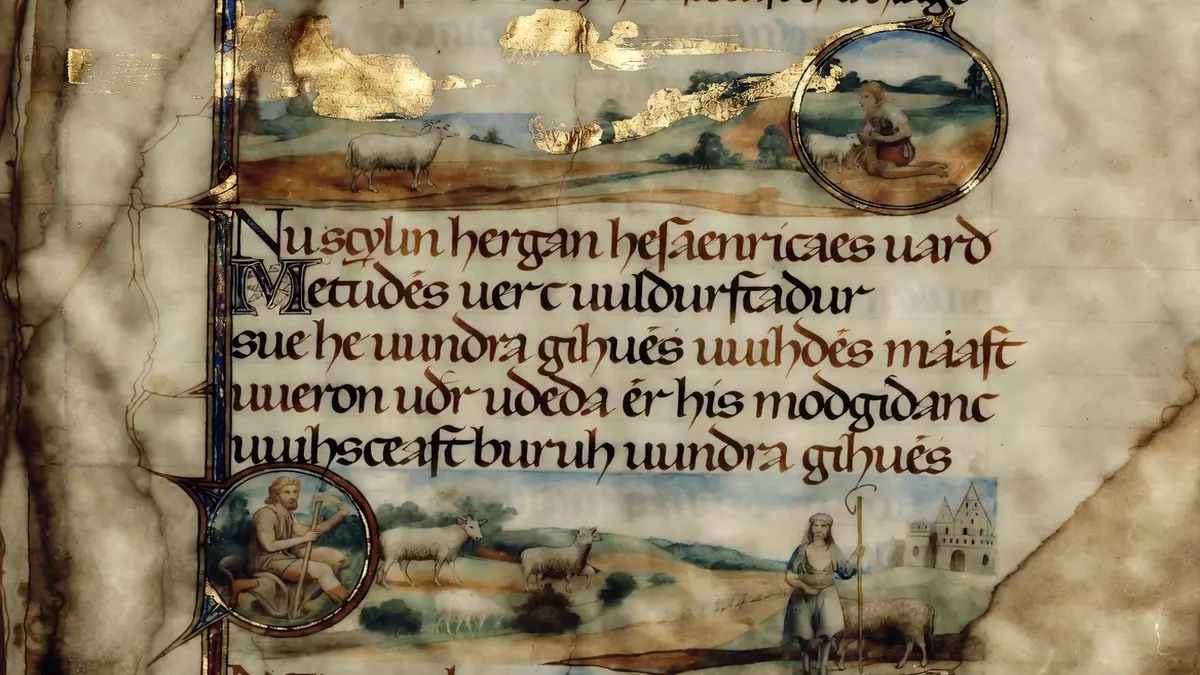
Scholars have made an exciting breakthrough in the history of English literature with the discovery of a previously overlooked copy of Cædmon’s Hymn in a manuscript at Rome’s National Central Library. This early ninth-century find represents one of the oldest surviving versions of what many consider the first known poem written in English, offering fresh insights into how Old English verse spread across medieval Europe more than 1,200 years ago.
Researchers from Trinity College Dublin identified the significant text while examining digitized images of the manuscript. Dating to roughly 800–830 CE, it stands as the third-oldest known copy of the hymn and provides new evidence about the poem’s early transmission and cultural importance.
Rare 9th-Century Copy of Earliest English Poem Found
### The Story Behind Cædmon’s Hymn
Cædmon’s Hymn is a brief nine-line religious poem that praises God as the creator of the heavens and the earth. According to the Venerable Bede’s eighth-century account in his *Ecclesiastical History of the English People*, the poem originated with Cædmon, a humble cowherd at Whitby Abbey in North Yorkshire, England.
The legend describes how Cædmon, unable to contribute verses at a feast, slipped away in embarrassment. That night, he dreamed of a figure who commanded him to sing about creation. Inspired, he composed the hymn—the earliest recorded example of poetry in the English language. This story marks a key moment in the fusion of Christian faith with Anglo-Saxon oral traditions, helping lay the groundwork for English literary heritage.

Bede included a Latin translation of the poem in his history rather than the original Old English. For centuries, scribes typically added the vernacular verses as marginal notes or appendices in surviving manuscripts. The newly identified Rome version breaks this pattern in a meaningful way.
### What Makes the Rome Manuscript Unique
The manuscript, cataloged as Rome, Biblioteca Nazionale Centrale ‘Vittorio Emanuele II’, Vitt. Em. 1452, integrates the Old English text directly into the main Latin body of Bede’s work. This placement differs from the two older copies housed in Cambridge and St. Petersburg, where the English lines appear separately.

This integration suggests that early medieval readers actively valued and restored the original Old English poem within the broader manuscript tradition, doing so within about a century of Bede completing his history around 731 CE. It reveals greater appreciation for vernacular literature among continental audiences than previously assumed.
Beyond its placement, the Rome copy holds special linguistic value. It is the earliest known witness to the Northumbrian “eordu” recension of the poem, distinguished by specific wording in the fifth line. Earlier examples of this textual variant dated only to the late twelfth century, meaning this discovery pushes back the documented history of that version by over 300 years.
Researchers also observed rare interword interpuncts—small punctuation marks separating words in the Old English text. This feature is uncommon in surviving Old English manuscripts and hints that scribal practices in the early ninth century may have been more diverse and experimental than later evidence suggests.
### The Manuscript’s Remarkable Journey
Produced at the Benedictine Abbey of Nonantola in northern Italy during the first third of the ninth century, the codex has endured a dramatic history. During the Napoleonic upheavals, it was relocated to Rome for protection. It was later stolen from the church of San Bernardo alle Terme, circulated through private collections, and eventually found its way into the National Central Library of Rome.
Due to its complicated provenance, many experts believed the manuscript had been lost since the 1970s, with only passing references in older scholarly catalogs. Its significance went unnoticed until the library digitized the pages and made high-resolution images freely available online. This allowed Dr. Elisabetta Magnanti and Dr. Mark Faulkner from Trinity College Dublin to study the text remotely and recognize the embedded poem.
The rediscovery highlights the power of modern technology in unlocking historical treasures. Digitization efforts by libraries worldwide are enabling global collaboration and revealing hidden details in long-familiar collections.
### Cultural Connections Between England and Italy
The presence of an English poem in an Italian manuscript underscores the vibrant intellectual networks of early medieval Europe. Northumbrian monasteries like Whitby maintained close ties with continental centers of learning. Monks, pilgrims, and scholars carried texts across borders, preserving and sharing knowledge despite political fragmentation.
Nonantola Abbey served as an important scriptorium, copying and safeguarding Christian and classical works. That an Italian scribe incorporated Cædmon’s Hymn demonstrates how ideas and literature flowed freely between the British Isles and mainland Europe centuries before the printing press or modern transportation.
Only about three million words of Old English survive today, with the vast majority dating from the tenth and eleventh centuries. Seventh- and eighth-century texts are exceptionally rare, making every new witness to Cædmon’s Hymn invaluable for linguists, literary historians, and manuscript experts.
### Why This Discovery Matters for English Language History
Cædmon’s Hymn captures a pivotal transition in English literary development. It blends traditional Germanic poetic techniques—such as alliteration and rhythmic stress—with Christian themes of divine creation. This fusion helped establish a vernacular literary tradition that would flourish in later works like *Beowulf*.
The Rome manuscript enriches our understanding of textual transmission. It shows how scribes adapted Bede’s Latin history for local audiences while preserving the original English verses. Unusual punctuation and the specific recension provide clues about how the poem evolved as it traveled.
For students and enthusiasts of English origins, this find connects directly to the roots of the language spoken by millions today. It illustrates how a simple cowherd’s inspired verses helped bridge oral culture and written Christian scholarship in Anglo-Saxon England.
**H3: Broader Impacts on Medieval Studies**
The study, published in *Early Medieval England and Its Neighbours*, includes a full transcription and new critical edition of the text. It opens doors for further research into how Old English poetry influenced and was influenced by continental traditions. Scholars can now compare this early copy with later versions to trace changes in language, spelling, and interpretation over time.
This discovery also encourages renewed examination of other Bede manuscripts. Many collections may hold overlooked details waiting to be identified through digital tools and fresh scholarly perspectives.
### The Human Side of Medieval Manuscript Culture
Behind the academic details lies a story of human curiosity and devotion. Cædmon’s dream-inspired composition resonated with medieval audiences because it showed that divine inspiration could touch ordinary people. Scribes who copied the hymn centuries later helped keep that spark alive, even in distant Italian monasteries.
The manuscript’s survival through theft, war, and relocation testifies to the enduring value placed on these texts. Today, digitization ensures that such artifacts reach wider audiences, democratizing access to humanity’s shared cultural heritage.
### Modern Relevance and Future Research
In an age when digital archives preserve and share knowledge instantly, this ninth-century find feels surprisingly contemporary. It reminds us that the English language has deep, layered roots shaped by faith, migration, and cross-cultural exchange.
For American readers with British or European ancestry, it offers a tangible link to the distant past. English literature begins not with grand epics but with a humble cowherd’s nine lines of praise—a story of unexpected creativity that continues to inspire.
Future studies may apply advanced imaging techniques or linguistic analysis to extract even more information from the Rome manuscript and similar sources. Each new detail adds depth to our picture of early medieval intellectual life.
This remarkable discovery transforms a “lost” manuscript into a vital chapter in English literary history. It celebrates the movement of ideas across Europe and the enduring power of poetry to connect generations. As researchers continue to explore digitized collections, more surprises from the early Middle Ages are likely waiting to be found.
## FAQ: Cædmon’s Hymn and the Rome Manuscript
**Q: What is Cædmon’s Hymn?**
A: A nine-line Old English poem praising God as creator, composed in the seventh century by a cowherd named Cædmon at Whitby Abbey. It is the earliest known surviving English poem.
**Q: How old is the newly discovered copy?**
A: The manuscript dates to approximately 800–830 CE, making it one of the three oldest surviving versions and the earliest for its specific Northumbrian recension.
**Q: Why is the poem’s placement in the manuscript important?**
A: The Old English text is embedded directly in the Latin main text rather than added in margins, showing early appreciation and integration of vernacular poetry.
**Q: Where was the manuscript created?**
A: At the Benedictine Abbey of Nonantola in northern Italy. It later moved to Rome and entered the National Central Library after a complex history.
**Q: How was the discovery made?**
A: Trinity College Dublin researchers identified the poem after the library digitized the manuscript and made images available online for remote study.
**Q: What does this tell us about early medieval Europe?**
A: It highlights strong cultural and textual connections between England and Italy, with English poems preserved and copied in continental monasteries.
**Q: Can the public view the manuscript?**
A: Digital images are accessible through the National Central Library of Rome, and the study provides a transcription for scholars and interested readers.
**Q: How rare are early Old English texts?**
A: Extremely rare. Most surviving Old English comes from later centuries, making seventh- and eighth-century examples like this hymn especially valuable for language history.
The Rome manuscript breathes fresh life into the origins of English literature. Cædmon’s ancient hymn, preserved across centuries and borders, continues to remind us of the timeless human impulse to create and share stories of wonder and faith.