
**DNA Study Reveals Small Migrations Reshaped Europe After Rome**
A groundbreaking ancient DNA analysis is rewriting the story of what happened after the Western Roman Empire collapsed in Central Europe. Far from the massive barbarian invasions often depicted in popular accounts, the research shows that smaller movements of families and communities, combined with gradual integration, quietly transformed the population over several centuries.
Published in the prestigious journal *Nature*, the study was led by scientists at Johannes Gutenberg University Mainz. They examined 258 ancient genomes from burials in southern Germany spanning 400 to 700 CE, comparing them to more than 2,800 other ancient and modern DNA samples from the region. The results offer a fresh, evidence-based perspective on one of history’s most dramatic transitions.
DNA Study Reveals Small Migrations Reshaped Europe After Rome

### Rethinking the End of Roman Rule in Germany
The period following the fall of Rome has long been associated with large-scale Germanic migrations that supposedly overwhelmed Roman territories. Many towns and settlements in southern Germany trace their roots to this turbulent time. However, the new genetic evidence points to a more subtle process: incremental relocations by smaller groups rather than coordinated mass movements.
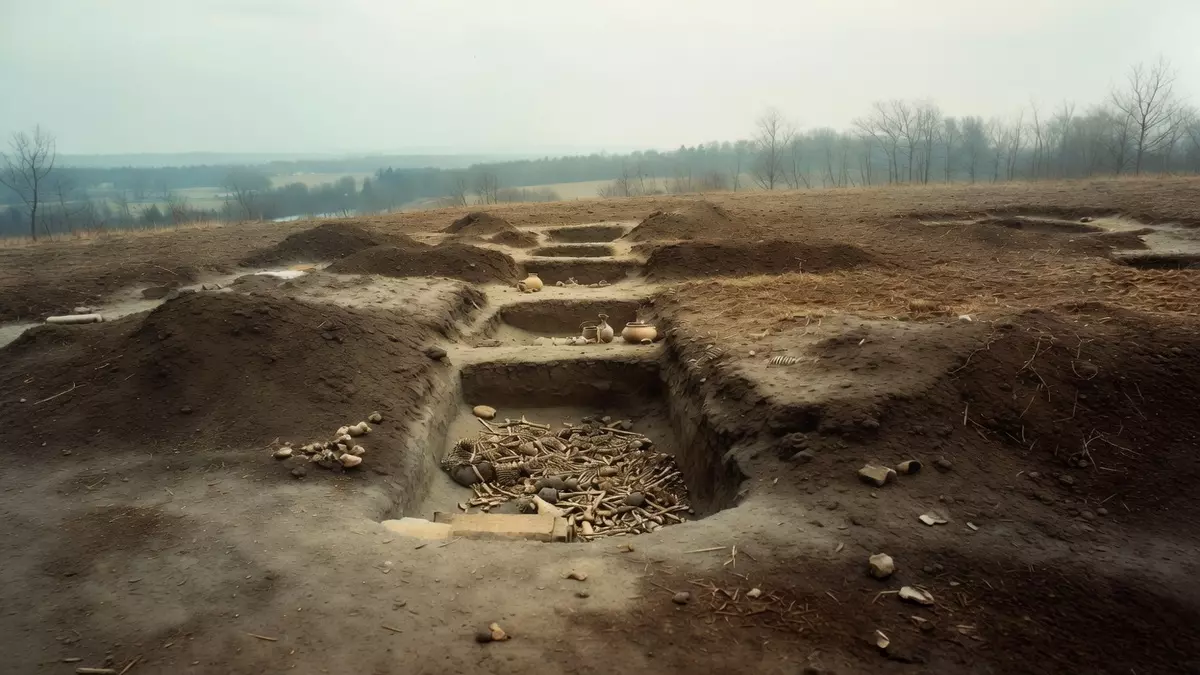
Researchers focused on so-called row grave cemeteries, a burial tradition that became widespread from the mid-5th century onward. These sites revealed two main genetic clusters. One group carried ancestry primarily linked to northern European populations. The other represented the diverse, cosmopolitan makeup of the late Roman provinces, influenced by centuries of mobility stretching from Britain to the Middle East and beyond.

Notably, northern-related individuals had already begun filtering into the Roman frontier areas before imperial control fully disintegrated. They tended to live in distinct communities and practiced endogamy—marrying within their own groups. Roman administrative practices, such as controlled land allocations, may have encouraged this separation initially.
**H3: The Turning Point in the Late Fifth Century**
A significant change occurred as Roman urban centers and military infrastructure declined. Populations shifted toward rural lifestyles. Interactions between the northern newcomers and local provincial descendants increased. Shared cemeteries emerged, and DNA data clearly documents rising intermarriage. By the early 600s CE, the once-distinct groups had blended into a single genetic profile that closely resembles modern Central European ancestry.
This gradual blending challenges older historical models that emphasized sudden conquest and replacement. Instead, it supports emerging views of the post-Roman world as a time of transformation through everyday social and cultural exchanges.
### Family Life and Daily Realities Uncovered by DNA
One of the most compelling aspects of the study is what the genomes reveal about ordinary people’s lives. Family reconstructions show households typically organized around nuclear units rather than large extended kin networks. Marriages were monogamous, and there is no genetic evidence of unions between close relatives. Descent was recognized through both maternal and paternal lines, consistent with surviving historical texts from late antiquity.
Demographic insights bring additional humanity to the data. The average generation interval was approximately 28 years. Women lived to about 40 years on average, with men slightly longer. Child mortality was substantial, yet family support systems proved resilient. Around one-quarter of children experienced the loss of at least one parent before age ten, but many still grew up in households that included grandparents.
These patterns highlight continuity amid change. Even as political structures shifted, core social norms around family and community persisted, helping stabilize society during uncertain times.
### The Science of Ancient DNA and Key Archaeological Sites
Paleogeneticists extracted DNA from tiny bone fragments, such as those from a woman’s skull found in Ergoldsbach near Landshut. Combined with anthropological examination of skeletons—like one from the Altheim site analyzed at the State Collection for Anthropology in Munich—the genetic work provides a multidimensional view of health, mobility, and relationships.
The row grave cemeteries proved especially informative. Used across much of Europe during this era, they captured a snapshot of demographic mixing in action. Southern Germany, with its strategic location along rivers and fertile lands, served as an ideal case study for understanding broader European developments.
**H3: Migration on a Human Scale**
The evidence indicates that northern groups had established a presence in the borderlands while Roman authority was still functioning. As central power waned, people increasingly abandoned declining cities for the countryside. This rural shift facilitated more contact and eventual integration between previously separate communities.
Rather than a single cataclysmic event, the “fall of Rome” in this region appears as a series of adaptive responses. Smaller family-based migrations allowed for cultural continuity alongside innovation, with Roman traditions influencing emerging medieval societies.
### Implications for European History and Identity
This research aligns with a wider scholarly movement away from invasion-centric narratives toward models emphasizing resilience, adaptation, and integration. Cultural practices rooted in the Roman period—such as certain agricultural techniques, legal concepts, and architectural styles—continued to shape daily life well into the early Middle Ages.
By the seventh century, the genetic foundation of southern Germany had largely stabilized. Contributions from both northern and provincial Roman ancestries created a blended population that forms a significant part of today’s Central European genetic landscape. This deep historical continuity underscores how ancient events still echo in modern demographics.
The study also has relevance for contemporary discussions about migration. It demonstrates that population changes are rarely simple or uniform. Small-scale movements, intermarriage, and social mixing often drive lasting transformations more effectively than large-scale disruptions.
### How This Discovery Advances Historical Understanding
Interdisciplinary collaboration between geneticists, archaeologists, and historians made these insights possible. The large sample size—258 new genomes—allows for statistically robust conclusions about changes over three centuries. Comparisons with modern DNA confirm the long-term impact on regional ancestry.
Future work could expand to other parts of the former Roman Empire, exploring regional variations in how the post-imperial world developed. Advances in ancient DNA techniques, such as better preservation methods and higher-resolution analysis, promise even richer details about diet, disease, and individual life stories.
**H3: Broader Lessons from the Migration Period**
The era between 400 and 700 CE, often called the Migration Period or Early Middle Ages, saw the emergence of new kingdoms and identities across Europe. In southern Germany, the genetic data illuminate how ordinary people navigated these changes. Their stories of family, community, and adaptation offer a more relatable view of history than tales of distant emperors and grand battles.
For readers in the United States, where many trace ancestry to European roots, this research provides a tangible connection to the distant past. It shows how the genetic and cultural building blocks of modern Europe were laid through human-scale decisions rather than epic clashes alone.
### The Enduring Legacy of Post-Roman Transformation
The collapse of Roman authority did not create a vacuum filled instantly by outsiders. Instead, existing populations and incoming groups found ways to coexist, intermarry, and build new societies together. This process of gradual integration, supported by shared social norms and practical needs, laid the groundwork for medieval Europe and, by extension, many aspects of the modern world.
As more ancient DNA studies emerge, our picture of the past grows clearer and more nuanced. The Mainz-led research exemplifies how cutting-edge science can refine long-standing historical questions, moving us closer to understanding the real experiences of people who lived through these pivotal centuries.
This study not only enriches academic knowledge but also captivates anyone interested in the roots of European civilization. It reminds us that history is shaped by families, neighbors, and communities working through change—one generation at a time.
## FAQ: Ancient DNA and the Fall of Rome
**Q: What was the main finding about migrations after the Roman Empire?**
A: The study found that small-scale movements by families and local groups, rather than massive invasions, drove demographic changes in southern Germany.
**Q: How many ancient genomes were examined in the research?**
A: Scientists analyzed 258 genomes from 400–700 CE burials, compared with thousands of other ancient and modern samples.
**Q: What are row grave cemeteries?**
A: They are distinctive burial sites from the mid-5th century that contained individuals from both northern European and Roman provincial genetic backgrounds.
**Q: What does the DNA say about family structure?**
A: Households were mostly nuclear families with monogamous marriages. No close-kin marriages were detected, and both maternal and paternal lines were important.
**Q: How did life expectancy and mortality look?**
A: Average life expectancy was around 40 years, with high infant and child mortality. Many children still grew up with extended family support.
**Q: Where were the main excavation sites?**
A: Key locations include Altheim near Landshut and Ergoldsbach in southern Germany, where well-preserved remains allowed detailed genetic analysis.
**Q: Why does this study matter for modern Europeans?**
A: The blended genetic profile established by the 7th century closely matches today’s Central European populations, revealing deep ancestral roots.
This ancient DNA research provides a compelling new chapter in the story of Europe’s formation. By highlighting the human realities behind the fall of Rome, it deepens our appreciation for the resilience and adaptability of past societies—and offers valuable perspective on change in our own time.