
Table of Contents
- 1. Unveiling the Greater Khorasan Civilization
- 2. Inside Grave 12: The Treasure of an Ancient Aristocrat
- 2.1. The Symbolic Art of Snakes and Scorpions
- 3. Inherited Wealth and the Power of Bronze Age Women
- 4. Mapping the Earliest Roots of the Silk Road
- 5. Conclusion
- 6. Frequently Asked Questions
- 6.1. 1. What is the historical significance of Grave 12 at Tepe Chalow?
- 6.2. 2. What was the Greater Khorasan Civilization?
- 6.3. 3. Why do archaeologists believe women held high status in this ancient culture?
- 6.4. 4. What does the age of the individual in Grave 12 tell us about her society?
- 6.5. 5. What unique symbols were carved into the artifacts inside the tomb?
Elite Bronze Age Burial in Iran Unlocks Secrets of Ancient Silk Road
The vast, arid landscapes of eastern Iran have long served as a critical geographic bridge connecting major ancient world powers. While history books frequently focus on the distinct achievements of Mesopotamia, the Indus Valley, and the early dynasties of the Persian Gulf, a sophisticated, highly integrated commercial superpower was quietly thriving right between them during the early stages of human metallurgy. Known to modern researchers as the Greater Khorasan Civilization, this enigmatic network of Bronze Age communities managed some of the earliest international trade highways in human history.
Now, a stunning archaeological excavation in eastern Iran has brought this forgotten empire back into the global spotlight. By unearthing the richest, most meticulously provisioned tomb ever discovered at the Tepe Chalow site, researchers have exposed an incredible treasure trove of gold, ivory, and exotic gemstones. Belonging to a young woman who died before her 18th birthday, this historic find is fundamentally shifting our understanding of prehistoric social hierarchies, proving that women held prominent positions of political power and inherited wealth within this ancient Eurasian trade network.
Elite Bronze Age Burial in Iran Unlocks Secrets of Ancient Silk Road
Unveiling the Greater Khorasan Civilization
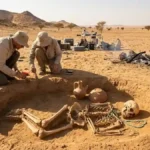
The focus of this major archaeological milestone is Tepe Chalow, a prehistoric settlement located within the fertile Jajarm plain of eastern Iran. Geographically, this site holds a prestigious title: it is currently the westernmost excavated outpost securely tied to the Greater Khorasan Civilization (GKC).
The GKC was a thriving, highly influential Bronze Age culture that reached its cultural peak during the late third and early second millennia BCE. At its maximum height, this massive cultural horizon stretched from northeastern Iran across parts of modern-day Turkmenistan, Afghanistan, and Uzbekistan. Rather than existing in isolation, the GKC operated as an economic hub, maintaining constant commercial, artistic, and diplomatic exchanges with the elite rulers of the Indus Valley, early Mesopotamian city-states, and the seafaring cultures of the Persian Gulf.
[Mesopotamia] ◄───► [Greater Khorasan Civilization] ◄───► [Indus Valley]
                                 │
                                 ▼
                         [Persian Gulf]
Trated heavily by centuries of agricultural activity and intensive natural erosion, no standing architectural monuments survive at the surface of Tepe Chalow today. However, just beneath the topsoil, the site preserves an incredibly dense, undisturbed cemetery. Traditional burials at the location follow a highly uniform, sacred ritual protocol: the deceased were placed inside simple pit graves, arranged carefully in a tightly crouched or fetal position facing directly toward the southeast, and surrounded by dynamic pottery vessels and personal belongings to aid their journey into the afterlife.
Inside Grave 12: The Treasure of an Ancient Aristocrat
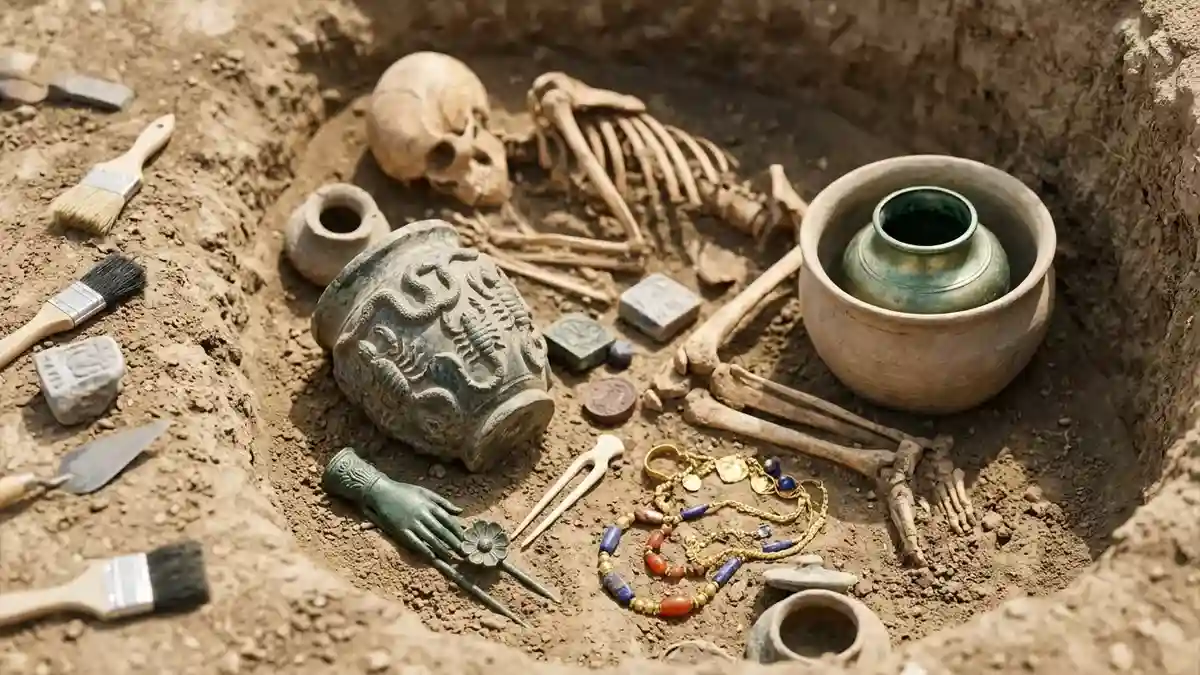
While the archaeological team had previously mapped out dozens of standard burials across the Jajarm plain, nothing prepared them for the sheer opulence locked inside Grave 12. This specific pit grave contained the skeletal remains of a young female under the age of 18. Despite her youth, her burial chamber was packed with a stunning collection of 34 distinct grave goods, making it the absolute richest tomb ever cleared at the site.
The sheer diversity and exotic origin of the materials recovered from Grave 12 read like an inventory of an elite international merchant:
Precious Metals: Brilliant gold jewelry and heavy copper-bronze utilitarian tools.
Exotic Organic Luxury: Intricately carved hairpins manufactured from genuine elephant ivory.
Elite Masonry: Finely polished stone beads, decorative seals, and ceremonial vessels carved out of premium chlorite, vivid blue lapis lazuli, and local limestone.
The Symbolic Art of Snakes and Scorpions
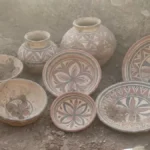
The spatial arrangement and specialized iconography of the artifacts inside Grave 12 point to a deep, complex spiritual world. The collection included twelve beautifully preserved ceramic vessels and seven specialized stone objects—including a highly detailed stone stamp seal used to mark ownership of trade goods.
Among the thirteen metal objects recovered, two items have completely fascinated art historians. The first is a heavy bronze pin masterfully cast into the shape of a human hand holding a delicate rosette flower. The second is a series of ceremonial stone vessels carved with high-relief motifs depicting interlocking snakes and scorpions. In ancient Near Eastern mythology, these predatory desert creatures were frequently utilized as sacred symbols of protection, fertility, and cosmic power, intended to guard the young woman’s spirit from malevolent forces in the underworld.
The symbolic complexity of the burial reached its peak at the individual’s feet. There, archaeologists exposed a large, robust ceramic storage vessel that housed a small, pristine bronze jar hidden entirely inside it—a deliberate, nested arrangement that carried profound ritual significance for the mourners.
Inherited Wealth and the Power of Bronze Age Women
The discovery of such immense material wealth concentrated inside the grave of an adolescent female has triggered a major debate regarding the internal social structure of the Greater Khorasan Civilization. Because an under-18-year-old individual would not have had enough time to accumulate this level of international wealth through personal career achievements or independent trading ventures, historians assert that Grave 12 stands as definitive physical proof of inherited social rank. She was born into an elite dynastic family line, inheriting her high status and immense resources from birth.
Furthermore, a broader comparative analysis of the Tepe Chalow cemetery has exposed a fascinating demographic pattern:
[Tepe Chalow Cemetery Analysis]
   ├── Female Burials: Lavishly supplied with gold, ivory, lapis, and ritual vessels
   └── Male Burials: Consistently modest, featuring basic tools and standard ceramics
Across the entire excavated site, the graves belonging to biological females are consistently and significantly more lavishly supplied with luxury imports, precious metals, and spiritual objects than the burials of adult males. This striking disparity strongly suggests that women were not secondary citizens in GKC society. Instead, they likely held prominent social positions, controlled valuable family estates, and acted as core leaders within the political and economic systems that governed the Jajarm plain.
Mapping the Earliest Roots of the Silk Road
Tepe Chalow’s immense prosperity was directly tied to its exceptional geography. The Jajarm plain sat perfectly adjacent to a natural transit corridor that funneled raw materials out of the mineral-rich mountains of Central Asia down to the urban capitals of Western Asia.
These early trade routes, which transported lapis lazuli from Afghanistan and chlorite from Iran thousands of years before European contact, laid the literal and logistical foundations for what would later become the legendary Silk Roads. The Greater Khorasan Civilization functioned as an essential northern gateway, securing the mountain passes and ensuring that goods could move smoothly across thousands of miles of Eurasian territory.
To extract every possible piece of historical data from Grave 12, an international team of scientists is currently conducting extensive interdisciplinary laboratory testing. Geneticists are processing ancient DNA samples to trace the young woman’s precise ancestral lineage, while anthropologists utilize isotopic analysis on her teeth to reconstruct her exact childhood diet and determine whether she was native to the Jajarm plain or traveled there from a distant GKC capital. Simultaneously, metallurgical and technological reviews of her gold and bronze jewelry are mapping out the exact artisan workshops responsible for creating these masterpieces, tracing the boundaries of ancient global trade with pinpoint accuracy.
Conclusion
The excavations at Tepe Chalow have provided global historians with a vital missing piece of our shared past. By preserving the pristine resting place of an elite teenage girl, this ancient site has shattered old assumptions about prehistoric gender roles and societal structures. The Greater Khorasan Civilization is no longer a historical footnote; it stands recognized as a vibrant, wealthy, and deeply sophisticated superpower where women helped lead a commercial empire that successfully connected the ancient world.
Frequently Asked Questions
1. What is the historical significance of Grave 12 at Tepe Chalow?
Grave 12 is officially the richest Bronze Age tomb ever discovered at the Tepe Chalow site in eastern Iran. It contained the undisturbed remains of an adolescent female under the age of 18 buried alongside 34 luxury grave goods, including gold jewelry, ivory pins, and highly detailed ceremonial stone vessels.
2. What was the Greater Khorasan Civilization?
The Greater Khorasan Civilization (GKC) was an advanced Bronze Age culture that flourished during the late third and early second millennia BCE. Spanning across northeastern Iran, Turkmenistan, Afghanistan, and Uzbekistan, it operated as a powerful economic network that maintained active commercial links with Mesopotamia and the Indus Valley.
3. Why do archaeologists believe women held high status in this ancient culture?
Excavations across the Tepe Chalow cemetery revealed that female burials are consistently more opulent and packed with precious metals, exotic gemstones, and ritual items than male burials. This pattern suggests that women held elite social, political, or economic roles within the society.
4. What does the age of the individual in Grave 12 tell us about her society?
Because the individual was under 18 years old, she could not have accumulated such immense international wealth through personal endeavors. This proves that her high social standing was a result of inherited rank and elite dynastic succession rather than personal achievement.
5. What unique symbols were carved into the artifacts inside the tomb?
The grave goods featured highly stylized representations of snakes and scorpions carved into chlorite and limestone vessels, alongside a unique bronze pin shaped like a human hand holding a rosette. In ancient regional contexts, these animal motifs served as powerful spiritual symbols designed to offer protection and ward off evil forces.