
Table of Contents
- 1. Violence at the Huaca: The Remains of the Condemned
- 2. Pilgrims and Sacred Architecture
- 3. Investigating the Origins of the Sacrificed
- 4. Frequently Asked Questions
- 4.1. What makes the Puémape discovery different from normal ancient burials?
- 4.2. Who built the temple where the sacrifices occurred?
- 4.3. What is a huaca?
- 4.4. How did the victims die?
- 4.5. Were the victims local citizens or captured enemies?
Mass Ancient Human Sacrifices Discovered at Puémape Temple in Peru
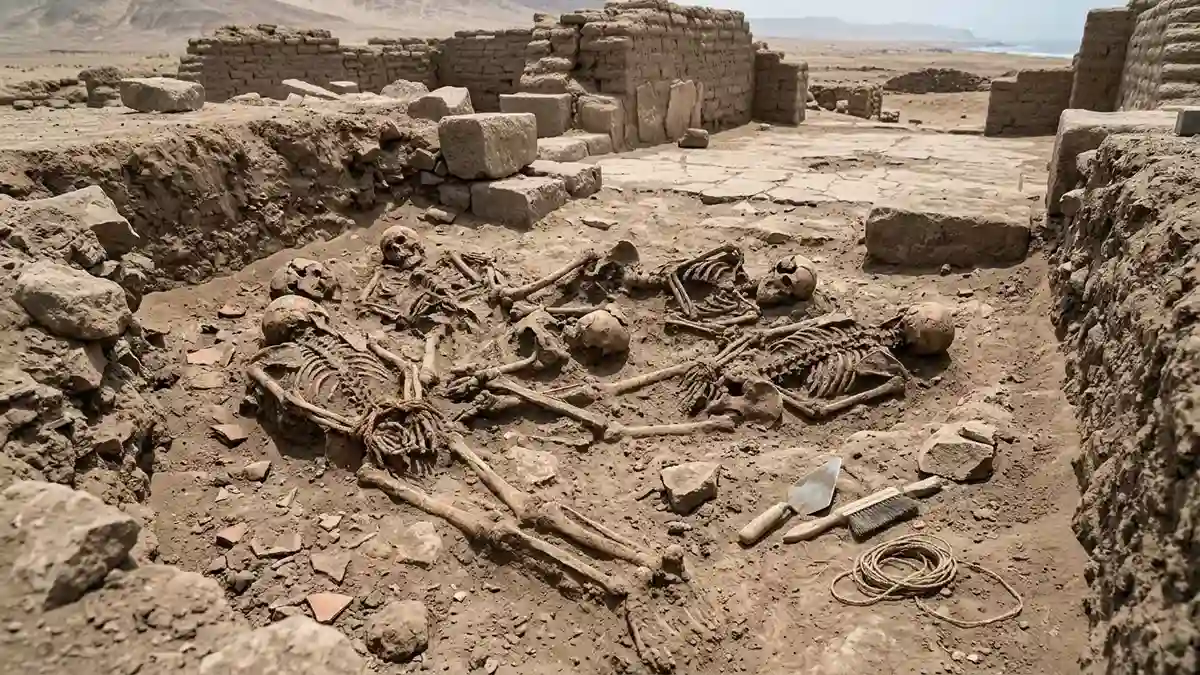
Archaeologists working on Peru’s northern coast have uncovered what is being described as one of the most chilling and definitive examples of ritual mass sacrifice in Andean prehistory. Excavating at the Puémape archaeological complex in the San Pedro Lloc district, researchers unearthed the skeletal remains of at least 12 individuals who were executed and buried under highly unusual, violent conditions dating back more than 2,300 years.
The gruesome discovery adds a dark new chapter to our understanding of early pre-Columbian societies. It reveals that the ancient temple site remained a powerful, terrifying focal point for spiritual devotion and ritualized violence centuries after its primary architectural construction.
Mass Ancient Human Sacrifices Discovered at Puémape Temple in Peru
Violence at the Huaca: The Remains of the Condemned
The victims were discovered clustered near the primary Temple of Puémape, a sacred monument originally constructed roughly 3,000 years ago by the Cupisnique culture and later occupied by the Salinar culture. While the temple itself was falling out of active structural maintenance by the time of the event, radiocarbon dating places the executions strictly between 400 and 200 BCE.
This chronological gap proves that even as the physical buildings degraded, the local populations still revered the landscape as a huaca—a highly sacred Andean space inherently linked to ancestor veneration, cosmic balance, and ceremonial rituals.
The osteological analysis of the 12 skeletons exposed a highly systematic, brutal process of execution that completely contradicts standard prehistoric Andean mortuary practices:
Prone Positioning: Unlike traditional burials of the era, where the dead were carefully wrapped in textiles and placed in a flexed, seated position, these victims were thrown into the earth face down.
Physical Restraints: Multiple skeletons showed clear evidence of bound hands positioned behind their backs, alongside structural rope marks or neck trauma indicating strangulation.
Fatal Trauma: Microscopic and radiological examinations of the bones revealed massive perimortem injuries—including crushing cranial fractures and severe broken bones—proving they suffered violent deaths.
Total Material Stripping: In a culture where even the poorest individuals were laid to rest with basic pottery, tools, or food offerings, these graves contained absolutely zero ceramics, textiles, or personal ornaments. This total absence of grave goods confirms they were viewed as ritual offerings rather than celebrated members of the community.
Pilgrims and Sacred Architecture
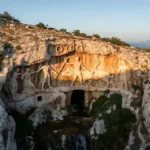
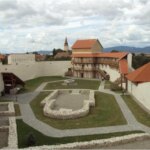
To understand the social scale of these rituals, the research team mapped the surrounding sacred architecture. The temple complex was a heavily engineered, imposing landscape outfitted with a broad ceremonial staircase, monumental stone block walls, and an expansive, cemented gathering plaza.
[Cemented Plaza] ──> Accommodated Mass Crowds ──> Witnessed Ritual Executions ──> Reinforces Social Control
This large gathering infrastructure suggests the temple functioned as a major regional hub for ritual activity, capable of hosting massive crowds of pilgrims traveling from neighboring coastal valleys. Modern satellite imaging and stratigraphic tracking confirm that human occupation at the site actually began as early as 2200 BCE, peaking with the main temple’s construction around 1000 BCE.
Investigating the Origins of the Sacrificed
While the physical evidence of ritual violence is absolute, the exact identity of the 12 individuals remains a mystery. Ongoing laboratory investigations, including advanced DNA sequencing and stable isotope analysis of the teeth, are currently underway to determine their origins.
| Scientific Analysis Method | Target of Investigation | Historical Question to Answer |
| Ancient DNA Sequencing | Genetic haplogroups and familial links | Were the victims local community members or foreign outsiders? |
| Stable Isotope Analysis | Mineral signatures locked in tooth enamel | Did they grow up in the immediate valley or travel from the high Andes? |
| Paleobotanical Studies | Plant and animal remains in sediment layers | What was the local environment and sacrificial diet during the ritual? |
These tests will answer whether the victims were local Salinar citizens sacrificed during a period of intense internal crisis—such as a catastrophic El Niño climate event—or if they were captured foreign warriors brought to the huaca as spoils of inter-valley warfare. Together with expanding botanical data, the Puémape excavation provides science with an extraordinarily detailed look into the complex intersection of climate, religion, and social control in ancient Peru.
Frequently Asked Questions
What makes the Puémape discovery different from normal ancient burials?
Traditional ancient Peruvian burials involved carefully wrapping the deceased in a seated, flexed posture accompanied by ceramics, food, and personal items. In stark contrast, the Puémape victims were buried face down, with no grave goods whatsoever, displaying bound hands, ropes around their necks, and massive cranial fractures.
Who built the temple where the sacrifices occurred?
The primary temple structure at Puémape was originally built around 1000 BCE by the Cupisnique culture. By the time the sacrifices took place between 400 and 200 BCE, the site was being utilized by the subsequent Salinar culture, who still revered the location as a sacred huaca.
What is a huaca?
Huaca is a traditional Andean term used to describe an object, monument, or natural landscape feature that holds immense sacred significance. Huacas were considered physical links to the spirit world and ancestors, frequently serving as the locations for heavy ceremonial offerings and community rituals.
How did the victims die?
Forensic osteological analysis reveals the victims died highly violent deaths. Skeletal evidence shows severe, unhealed cranial fractures from heavy blows, broken bones, and physical signs pointing to bound wrists and strangulation by ropes.
Were the victims local citizens or captured enemies?
Their exact societal status is currently unknown. Geneticists and anthropologists are performing DNA sequencing and isotopic testing on the skeletal remains to discover if these individuals were local residents sacrificed during a cultural crisis or captives taken from rival valleys during a time of war.